Showing posts with label seventies. Show all posts

Tuesday, 10 October 2017

The Sweeney (television series)

When I was very young, there were certain television programmes which retained a mystique, usually because I was never, or rarely, permitted to watch such programmes by my parents!  One of these shows was The Sweeney, the highly influential and acclaimed Seventies crime-drama series.

As I grew older, I was led to understood that The Sweeney had been "ground-breaking" and "gritty", but I had been unable to judge this for myself.  When the series was first broadcast, a combination of factors meant that I was not able to view the show.  The timeslot when it was shown, parental concern over violent content, and our family's mild anti-ITV snobbery were foremost. Whenever any discussion turned to the show, I felt somehow left out.

It was not until the recent past that I was able to watch The Sweeney in any concerted form. It was a revelation to me, although from a 21st century perspective it doesn't seem as innovative or as edgy as it must have done circa 1975/76. And of course some of the attitudes exhibited would not meet the approval of a modern audience.


The series gives a very authentic and honest portrayal of the Seventies in London, and by extension of Britain as a whole during that period of time. An atmosphere of decay and gloom, maybe, but also a sense of community and certainty before technological and socio-economic developments began to change things irrevocably.

The Sweeney follows the adventures of a group of detectives in the Metropolitan Police's Flying Squad. The three main characters are Inspector Jack Regan (John Thaw), Sergeant George Carter (Dennis Waterman) and their boss, Frank Haskins (Garfield Morgan).

Regan is an intriguing and ambiguous character, superbly played by John Thaw. A proponent of unorthodox methods, he seems old-school, but in some ways he might be said to be ahead of his time. He is regularly at odds with his superiors, and even with his subordinates. The writing and the acting combine to make the concept and realisation of Regan very believable and credible, not just as some caricature. A man of contradictions, he appears cynical and jaded, but at the same time seems wholly committed to, and immersed in, his job.

Another key, in my eyes, to the success and appeal of The Sweeney is that it does not over-emphasize or excessively utilize some of the "recurring" themes. For example, Regan and his team are not uniformly at loggerheads with The Powers That Be. Sometimes they find common cause. This measured approach adds authenticity, and prevents the series from becoming stale and predictable.


Dennis Waterman has perhaps not been accorded enough praise or credit for his performance as George Carter. I have always found Waterman likeable in whatever role he happens to be playing, and this series finds him in great, assured form.

The character of Carter perhaps represents the police in a state of flux, incorporating clear elements of the "old school", but also receptive to, and embracing, new methods and tools. Carter often questions Regan's excesses and his outlandish schemes, but is sometimes placated by his "guv'nor"'s self-confidence, his persuasive manner and his track record.

The episode "Hit And Run", in which Carter's wife is killed, provides a fine showcase for Waterman's talents, going way beyond the bravado and machismo for which The Sweeney is, rightly or wrongly, renowned.

It is tempting to see parallels between Jack Regan and Inspector Morse, another detective famously portrayed by John Thaw. An older, cynical, grumpy character, with a penchant for the unorthodox, partnered with a younger, ambitious, more "domesticated" sergeant.

The plaudits extended to The Sweeney are well deserved, but this is not to say that every episode is brilliant. Like other similar television series, it suffered from a lack of continuity and consistency, partly because different episodes had different writers and directors. The ambience and tenor of each story could vary greatly from the next one, with difficulties in maintaining "back story".  Some episodes bordered on comedy - "Thin Ice", "Golden Fleece" and "Messenger Of The Gods" spring to mind. Light relief is all well and good, but not to detract from the mood which is essential to the show.

Few punches were pulled in the depiction of an escalation in the ruthlessness and violence displayed by criminals. I can see how this would have been shocking for the people in the Seventies, raised as they were on a diet of shows featuring gentlemanly, even chivalrous villains, and correspondingly placid and reticent cops. Episodes such as "Taste Of Fear" and " Bait" have the capacity to unsettle and disturb, even after all these years. The rawness set new standards.

The impression emerged that the intricacies of detective work and police procedure had been thoroughly researched, and some things are left unexplained, leaving the viewers to work a few things out for themselves. One eventually gets used to the jargon and slang!

A few episodes did over-reach themselves, and look rather silly today.  One example is "Tomorrow Man", in which John Hurt plays a computer whizz-kid. The word is that Thaw and Waterman grew finally to consider that The Sweeney had run its course. Within the remit of the squad, it was inevitable that genuinely fresh ideas for storylines would dry up eventually. That said, I don't feel that the show went particularly stale or moribund. It ended on a suitably bitter and abrasive note in "Jack or Knave", with Regan feeling highly aggrieved after being investigated for alleged corruption.

Watching The Sweeney is still a rewarding and satisfying experience, sometimes thought-provoking. Dated in some respects, yes, but still quality television.


Tuesday, 5 April 2016

Strawbs - From The Witchwood - album review

Of the many sub-genres which featured on the British rock scene in the period beginning in the late 1960s, those of progressive folk, or progressive folk-rock, spawned some interesting, inventive and highly listenable music. Prominent among the acts which fell into these categories were Strawbs.

To many more casual observers, Strawbs are best-known for having Sandy Denny and Rick Wakeman in their line-up at different times, and for their rather quirky hit single "Part Of The Union". However, closer evaluation of their 1970s work reveals a highly talented group.

One record which stands out for me is their 1971 album From The Witchwood, which showcases strong songwriting and musicianship, and acutely tuneful, compact sensibility.  The production capabilities of Tony Visconti also help to ensure that a cohesive and lively ambience prevails throughout.


Tracks such as the opener, "A Glimpse Of Heaven", mix authentically folk-inflected sections with more exotic instrumental flourishes. Rick Wakeman's keyboards add some texture and occasional dynamism to the arrangements.

Some of the lyrics tackle "traditional" folk topics, centering on rural life and pastoral imagery, but they very rarely descend to the "maypoles and apple scrumpy" territory which characterizes some British folk and folk-rock of the period. Crucially, most of the compositions fall short of being over-earnest.

The captivating, and slightly eerie, title track is one of the highlights of the record. "Thirty Days" carries distinct echoes of the Beatles' work circa 1964/65, by dint of its melody and its vocal harmonies. "Flight" is another number whose vocal sound is rather Beatlesque in flavour.

The contribution of Rick Wakeman is perhaps most keenly felt on "Sheep", and on "The Hangman and The Papist", with their prominent organ components.  In addition to its dramatic words, the latter is another song with a strong melody. And the consistently strong running order is sustained by "Cannondale" and the beautiful and striking "The Shepherd's Song", with its eclectic and surprisingly effective mixture of influences.

From The Witchwood closes with two intriguing and affecting songs.  "In Amongst The Roses" typifies the contemplative and enigmatic leanings of the album's subject matter. "I'll Carry On Beside You" is more upbeat and strident, and features an intricate piano "engine" courtesy of Wakeman. Like many of the pieces on the LP, it is performed with conviction and vigour, and this is important.

Overall, this record is a strong and purposeful collection of songs, well-crafted, controlled and appealingly organic in their execution, the relatively sparing use of electric guitars strengthening this impression. Combining the lyrical and poetical hallmarks of folk music with the odd infusion of rock energy, and the occasional "experimental" passage, it is a most satisfying listen, which still sounds fresh and credible today.

Friday, 25 March 2016

Vive La Trance - Amon Duul II - album review

It is the early albums made by the German rock group Amon Duul II which tend to define their influence, their legacy and their popularity, but my listening allegiance has lately shifted decisively towards their subsequent output.

Later releases, those released between 1972-1974, exhibit more melody, additional flair, and greater variety.  They also sound less forbidding - an easier and more pleasant listen, to be honest. Their level of invention, musical intricacy and elusive mystique has proved a revelation to me in recent times. Prominent among this batch of LPs is Vive La Trance, issued in 1973.

Much of this record is eminently accessible to mainstream listeners, but the adventurous impulses remain. It surprises and disappoints me that Vive La Trance is not singled out for greater attention when their discography is being appraised. Unless I have misjudged things completely?


The production on Vive La Trance has a fluency and freshness which permits the music to breathe and sparkle. The greater utilization of keyboards and other instruments (saxophone, violin, cello and so forth) supplements and enriches what might otherwise have been a stodgy recipe of guitars, bass and drums.

As the opening song, "A Morning Excuse" very much establishes the tone, with its bright and rhythmic foundation. I would have to say, though, that the highlights of the album are the tracks "Fly United" and "Jalousie".  The former is a very diverting piece with several haunting melodic touches, and a highly effective vocal arrangement. Indeed, the satisfying mixture of female and male voices is a hallmark of this record. "Fly United" has an enigmatic beauty which is hard not to find captivating. "Jalousie" is a highly tuneful and seductive affair, driven primarily by a confidently expressive Renate Knaup lead vocal.

"Mozambique" is a politically charged piece, which is hardly surprising for a German "progressive" act of that period, but the lyrics are perhaps more strident and blunt than one had grown to expect from Amon Duul II. "Trap" is another one of those numbers which make Amon Duul II sound uncannily like a New Wave act of the early 1980s, with its energetic, uncluttered flavour. Those looking for more experimental fare will be catered for by "Im Krater Bluhn Wieder Die Baume" and "Apocalyptic Bore".

Another thing to mention about this album is the largely sparing and tasteful use of guitars. The laboured and heavy riffs are few and far between, and there is considerable emphasis on melodic, dynamic and intertwining guitar parts which have an earthiness, but also a delicacy.

Vive La Trance has an enchanting and beguiling air of mystery and freedom which is difficult to resist. It still sounds vibrant after all these years. Give it a listen, and you will be impressed and entertained, believe me.

Sunday, 21 February 2016

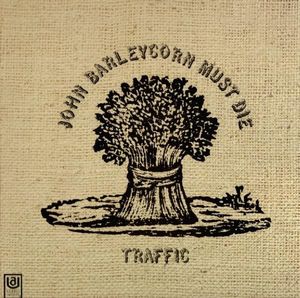
John Barleycorn Must Die - Traffic - album review

One of the bands from the 1960s and 1970s which never quite got the recognition it deserved was Traffic. Perhaps they were a little too eclectic for their own good, their repertoire encompassing psychedelia, folk-rock, soul, progressive-rock, jazz-rock and other styles.

In 1970, they released the album John Barleycorn Must Die, which was, it seems, originally planned to be a Steve Winwood solo project. It remains an intriguing and satisfying work to me, even if critical opinion towards it has been somewhat mixed and even lukewarm.


The album contains only six tracks, but relatively little in the way of instrumental noodling or self-indulgence. There is a pronounced blue-eyed soul and jazzy flavour to the majority of the songs, and also an accent on keyboards, which I find most refreshing. Perhaps unsurprisingly, the multi-talented Winwood pretty much dominates proceedings, in the absence of Dave Mason.

The opening track, "Glad", is a sprightly instrumental, partly in the style of Booker T and the MGs, with some dreamier passages added.  "Freedom Rider" has a similar sonic palette, and Chris Wood's talents on saxophone and flute are also very much to the fore. As elsewhere on this record, the drum and percussion sounds are well captured and very "live" and three-dimensional.

On "Empty Pages", the glorious Hammond organ sound has more of a showcase, and Winwood's expressive voice is projected with more clarity.  "Stranger To Himself" has more raw and passionate vocals, and it is also more guitar-orientated than some of the other pieces here.

The title track could appear on first acquaintance like an unremarkable folk song, but it has a capacity to draw the listener in, through the conviction of the singing and the playing, and the mystique of the lyrics. Again, the textures supplied by instruments such as the flute play a large part in the song's vitality, this organic but diverse and layered flavour very pleasing to the ear.

As the closer, "Every Mother's Son" definitely has its virtues, with a fine Winwood vocal and some quite stirring melodic parts, but I can't help feeling that it becomes a little over-wrought and ponderous in places, particularly after repeated listening.  All praise imaginable is due to the beautiful organ solo section in the middle, though....

The apparent critical ambivalence towards John Barleycorn Must Die may stem from a perception that the album is understated and "unspectacular", even clinical in places. However, it is superbly crafted and produced, and it is an album that demands to be listened to closely and attentively, as its depth and charm are more readily appreciated and savoured under those conditions.


Sunday, 3 January 2016

Judee Sill

Over the decades, much ink and electricity has been devoted to the question of "lost talents" in many spheres of endeavour, including music. One whose claim to this status has greater validity than most is the remarkable American singer-songwriter Judee Sill.

I had known the name Judee Sill for some years, largely as a by-product of my interest in the Californian music scene of the Seventies. However, it was only about four or five years ago that I discovered her compelling music, and the extraordinary and turbulent story of her life. The music instantly spoke to me, both because of its melodic inventiveness and its unusual and challenging themes. Her blend of influences was also untypical for musicians of her time.

Judee Sill was the first artist to be signed to Asylum Records, which was also the home for artists such as Jackson Browne, the Eagles, Joni Mitchell and Tom Waits. She released two albums in the early Seventies, both of which displayed enormous promise and potential. However, various factors led to her disappearance from the scene, and she passed away in 1979, aged just 35.

Her music occasionally exhibits superficial similarities with her contemporaries in the singer-songwriter milieu, such as Browne and Mitchell, but such comparisons grossly over-simplify matters. The lyrics were unlike most of what was around, in their tendency to address spiritual and religious topics, and to employ these things as metaphors. The scope of  her philosophical interests and her musical eclecticism helped to render her work unique and intriguing, and made a pleasant change from the ubiquitous standard navel-gazing of the era.


Her musical legacy may be relatively small in terms of volume of "product" released, but it is far from meagre in its sweep and emotional vibrancy. Apart from the two original studio albums, an album of later demos and other unreleased material ("Dreams Come True...") surfaced in 2005, and a collection of her BBC performances is also out there. Such is the depth and immersive vigour of her work that this canon more than satisfies.

The debut record "Judee Sill" (1971) contains some impressive and likeable songs, and there is an obvious confidence in both her vocal performances and the arrangements, when considering that this is a first attempt. Standout tracks include "Crayon Angels", "The Archetypal Man", "The Lamb Ran Away With The Crown", "Jesus Was A Cross Maker", "Lady-O" (also recorded by The Turtles), "My Man On Love" and "Lopin' Along Thru The Cosmos".

Occasionally hints of the "baroque" pop of The Beach Boys and others come to the fore, but these impulses are more likely attributable to her own varied musical background. Above all, this music is more dynamic and interesting than much of the earnest and stodgy "confessional" fare being produced by "troubadours" at that time.  In approach and ethos I also sense echoes of Laura Nyro's work, namely a self-sufficiency and a distinct and mature artistic vision. If anything, Judee's music is more "compact" and restrained than Laura's, but no less inspiring.

This first release is pleasing to the ear, the vocals are soothing and sometimes ethereal and the arrangements understated.  Strings appear here and there, and some horns are audible on "Enchanted Sky Machines".  By any standards, an assured, credible and enjoyable debut.

Judee Sill spread her wings somewhat on her sophomore offering, "Heart Food" (1973). The selection of songs is more diverse and experimental, and the "folk" element in the music has arguably decreased. Again, a horses-for-courses approach to instrumentation, with violin appearing on the country-tinged opener "There's A Rugged Road", and some pedal steel guitar here and there.

"The Kiss" is one of her best remembered compositions, although I personally prefer the live renditions which she performed at the BBC to this album version. Either way, it is a stirring and absorbing song, addressing weighty philosophical and mystical questions in a most poetic and diverting way.  Not a "pop song" as such, but "The Kiss" does contain some great "hooks".

Other notable songs on "Heart Food" are "Down Where The Valleys Are Low", with its infectious and sprightly melodies, and "Soldier Of The Heart", which possesses a confident and endearing vocal, and which swings noticeably.

"The Phoenix" is another quietly impressive number, its words seemingly examining a restless personal quest for contentment and equilibrium. The penultimate track, "The Donor" is unquestionably the most ambitious track on this record, clocking in at over eight minutes. A mood piece in some ways, and that word "baroque" must rear its head again. To me, it feels ascetic and measured rather than grandiose.

Despite the message being spread through the internet,and through the efforts of fans, my feeling is that Judee Sill has not quite reached the influence of certain other cult singer-songwriters, but it could still happen. Perhaps her music was too esoteric and ambitious to attain mainstream commercial success, but that in no way diminishes its value. She deserves to be recognized as an original and important talent, whose work still sounds fresh, vibrant and distinctive.

Listen to Judee Sill's music.  You'll be glad that you made the effort.


Friday, 1 January 2016

The Lost Generation - David Tremayne


As part of my current campaign of re-reading books, I went back to David Tremayne's "The Lost Generation", his 2006 study of the lives of three British racing drivers (Roger Williamson, Tony Brise and Tom Pryce) who died tragically young during the 1970s.

This book has rightly been the subject of considerable acclaim, and it is even one which can be recommended to the non-motorsport fan, such is the poignancy of its stories and the richness of the author's writing, knowledge and understanding.  The beauty of the photographic content also makes it visually appealing. Both the text and the pictures help to evoke the era, as well as the human qualities of the subjects.

It is tempting to say that those were "simpler times", but it is perhaps more accurate to say that they were more heterogeneous, and less regimented. Corporate conformity was but a cloud on a largely unseen horizon.

This book relates a story of hopes dashed, potential unfulfilled and hearts broken. At the same time it beautifully articulates the attributes and characters of the three young men, as well as many of their associates and contemporaries. As much as it is a portrait of Roger, Tony and Tom, it is also a compelling snapshot of an epoch.

For me, one of the strengths of "The Lost Generation" is the care taken by Tremayne to obtain input and contributions from a wide variety of sources, ensuring many perspectives and angles. The structure of the book, which could have been a tricky task to accomplish, helps to make the story flow quite seamlessly.

The chapters dealing with the drivers' rise through the racing ranks remind us of the highly competitive, but informal, environment which prevailed in those days. The depth of the research also means that misconceptions can be corrected. In this reading, for example, Tony Brise's progress through the junior formulae is less meteoric and easy than can sometimes seem the case. There is some interesting speculation as to how his occasional struggles may have shaped his outlook.

Don't expect a dry, exhaustive chronological or statistical account of the races. The focus is really on how they progressed, and on an examination of their personality traits and abilities.  Negatives are not glossed over, and things are balanced but respectful. Heavy use of contemporary press reports and interviews augments the authenticity and scope appreciably.  All of this contributes to a sense that things are being chronicled in a rounded and representative manner.

An impressive dimension of the book is the care taken to analyse the evolution of driving styles, this being especially pointed in the case of Tom Pryce, who was sometimes forced to temper his exuberant approach when faced with cold motor racing logic.  Also, we are given an insight into what changes, if any, were discernible in the three men as they climbed the ladder.

The chapters which address the deaths of the three drivers are moving, powerful but sensitively done. Equally, the author does not shy away from highlighting thorny issues.

Some of the passages, particularly those which look at the personal and family lives of the subjects, are heartbreaking.  There is some persuasive analysis about "what might have been", and how the three compared with others who survived and prospered in the sport.

"The Lost Generation" is an absorbing, honest and superbly realized work.


Sunday, 27 December 2015

Rush (2013 movie) - more thoughts

When it was first released on DVD, I composed a blog post reviewing the 2013 movie "Rush".  This is the Ron Howard film which tells the story of the Seventies Formula 1 drivers Niki Lauda and James Hunt.  I recently watched the movie again, and wondered whether my views and impressions might have shifted in the intervening period. I propose to leave aside for the most part any historical inaccuracies which I noticed.


From my late 2015 standpoint, I might describe the feel of "Rush" as being slightly "forced", a little airless and compressed. It is visually impressive, but lacking a touch of elegance, guile and finesse, notwithstanding the inclusion of a few powerful and insightful scenes.

It has been suggested that the movie's comparatively modest budget, and associated time constraints, might have contributed to its flavour and to some of its flaws. My thoughts on this are ambivalent - in places the film has a very "professional" look, but elsewhere one can see where corners might have been cut. For my own tastes "Rush" is a touch too "digital" and post-modern, lacking the charm and fluency of some earlier racing films.

Part of my assertion that the film is "forced" is based on something which I observed when I first saw it almost two years ago. The makers appear to have had a "checklist" of anecdotes and stories (some apocryphal) which they felt they had to pack in during the early portions of the picture. My sensitivity to this phenomenon may be traceable to my status as a 70s-F1-anorak. I appreciate that this would not occur as much to more casusl viewers.

The performances of the main actors attracted much comment. Daniel Bruhl rightly received much praise for his portrayal of Niki Lauda. Quite apart from the physical resemblance, he also managed to capture many of the Austrian driver's traits and mannerisms.

Chris Hemsworth as James Hunt was less universally acclaimed, and it is true that he does not quite evoke the nuances of James' inimitable persona, or the voice. The comparison between the two actors is invidious, though. It may well be more difficult to convincingly play Hunt than it is with Lauda.

I think that "Rush" really gets on track during the scenes relating to the close season of 1975/76, when we are shown Hunt's struggles to get a drive for the forthcoming season, as well as his personal problems. Cliches aplenty, of course, but some very fine moments too. In these sequences Hemsworth is very good.  The movie improves at this point because it becomes less about "back-story", composites of events and time-compression and more about a straight account. The dramatic raw-material is also better....

The Nurburgring sequences I think were well produced, without being excessively long or sensationalist, and the hospital scenes were handled more delicately than one has come to expect in films of this sub-genre or in "biopics".

The dialogue between Niki and James at Monza is convincing and credible, and the press conference where Lauda speaks is actually better than similar scenes in most movies. However, the bit where the journalist is beaten up has rightly been deplored as over-the-top and misrepresentative. A real fly in the ointment, that one. On the plus side, the imagery used at the start of the Monza race is highly effective in conveying the tension and the apprehension.

As for the racing action scenes in "Rush", well on reflection they are a mixed bag. Some are good, and CGI is used to fine effect, but others are less dazzling. One wonders why this was.  The "arty" close ups of crash helmets, suspension parts and so forth are entertaining, and a feast for the senses, but hardly original.

The build-up to the final 1976 race at Fuji is also well done, with a "less is more" ethos concerning dialogue. Visuals, sound and music all help to create the mood and the tension before and during the event.

The final scene at the airport is noteworthy both for its quality and its plausibility. It also comes as quite a surprise to have something this reflective and pensive after what had preceded it. Philosophizing, yes, but in a believable and poignant vein.

Looking at it honestly, "Rush" is a good and entertaining, if unexceptional, piece of cinema, its main strengths being Bruhl's performance, the inherent attractiveness of the subject matter and the occasional amusing or poignant scene.


Saturday, 12 December 2015

The Likely Lads (1976) - movie review

In the 1970s and early 1980s there were lots of cinematic spin-offs from British television sitcoms, and the artistic quality of these projects was variable to say the least. One of the better of these spin-offs was "The Likely Lads" from 1976, starring Rodney Bewes as Bob Ferris and James Bolam as Terry Collier.

The original "Likely Lads" TV series from the 1960s followed the fortunes of Bob and Terry as young men, and the follow-up "Whatever Happened To The Likely Lads" picked up the story when they had reached the brink of their thirties, at the time of Terry's return from a stint in the Army.

This film appears to be set a couple of years after the end of the timescale of "Whatever Happened To The Likely Lads", with Bob going through some kind of emotional, existential crisis. Indeed, the central themes of the movie are "there must be more to life than this" and "where has the past gone?", universally understood sentiments which engage the viewer. Times change, but our own routine becomes and remains tedious, and we ask whether the grass is greener elsewhere.

Even more so than the second television series, this film screams "Seventies!", from the fashions, to the backdrops, to the cultural references and the social mores. Added to this are Bob's Vauxhall Chevette, the boutique and the predilection for caravanning!

As ever, the writing of Dick Clement and Ian La Frenais drives proceedings charmingly. The storyline is a good, solid one, with a nicely conceived ending which inverts the conclusion of the original 60s series. The writers specialized in extracting great comedy from mundane, everyday things, and the eccentricities of the tenets of English life. The script of this film, to me, celebrates nostalgia whilst at the same time hinting that there is no easy escape from the pressures of the present. The grass is not necessarily greener, and we sometimes envy the lifestyles of our peers whilst overlooking the pitfalls of those lifestyles and the virtues of our own hard-won stability and security...

One thing which does not feature that prominently in this movie is the tension between Bob and Terry's relative social aspirations, an angle which dominated parts of the 1970s TV series. The emphasis here is on more elusive emotional and spiritual concerns. That said, the characterizations are still endearing and natural.

Rodney Bewes does a fine job in this film of portraying the angst-ridden and preoccupied Bob. The character has moved on from the "upwardly mobile" persona which he exuded during the second TV show. His life has reached a disconcerting and bewildering plateau.

The settings are different from "Whatever Happened To...", but I see this as a strength, as it helps to endow the movie with an identity of its own. The pleasant location shots of the North East England countryside and coastline also contribute to an overall visual appeal, and the "Whitley Bay" sequences are truly evocative!

There are some fine individual scenes, most notably the first one in the boutique, which kick-starts the central portion of the movie. As ever, the most effective comedic exchanges between Bob and Terry are tinged with poignancy and sadness, such as the conversation on the ship near the end.

To my present-day self, the overall effect of this picture is to induce sorrow and regret at a period gone forever, when life was simpler, or so we like to believe. It was released during my childhood, and the imagery brings back fond memories. This kind of nostalgia leavens the sterility and uncertainty of the present.

Opinion of this film among critics has been mixed, but I really like it. It has charm as a period piece, quite apart from the richness of the writing, the humour and the acting. Fine entertainment, and rather heart-warming...


Sunday, 29 November 2015

Rocky (1976)

Having recently watched Raging Bull, I moved on to another famous boxing-themed movie of that time, Rocky, released in 1976 and starring Sylvester Stallone. It may not be considered as "cerebral" as Martin Scorsese's 1980 epic, but it is still an uplifting and highly entertaining film.

The scenes which accompany the opening titles, and those which follow, introduce us to Rocky Balboa's environs and surroundings, and indeed the gritty Philadelphia settings are central to the film's appeal. Early on, we are also given a sound grasp of Rocky's essential goodness and humanity, which does not always sit well with those with whom he comes into contact.

The one sentiment which strikes me whilst watching this picture is that it is not long enough, as there is insufficient time to fully explore both Rocky's burgeoning relationship with Adrian (Talia Shire) and his preparations for the fight with Apollo Creed. Both of these elements of the story feel ever so slightly rushed and compressed.

Of course, the character of Mickey, so wonderfully played by Burgess Meredith, adds the necessary tension and dynamism to the movie, by way of his irascible nature and his sometimes fractious relationship with Rocky. Burt Young as Paulie is another important building-block which elevates Rocky above the ordinary.

It is impossible to dislike the Rocky character, as he is so honest, uncomplicated and endearing. The scenes with Adrian are quite sweet, if initially awkward, and the "romantic" angle is a clever plot device, helping to further illustrate the human and compassionate side of this tough and rugged guy. There are nuances and eccentricities to Rocky which make him quite intriguing, such as the keeping of pet turtles.

Of course, one of the most talked-about scenes in this movie is the one where Rocky runs up the steps in the centre of town and raises his arms in triumph.  It does indeed stir the blood. However, the earlier scene focusing on an early morning training run is equally evocative for me.

The cynics will say that much of this picture is corny and that the plot is far-fetched, especially the notion of an obscure fighter suddenly being granted a world title opportunity, but I think that this film touched people because it went against the grain of much of Seventies cinema in its heart-warming and optimistic tone and outlook.

I had forgotten that Joe Frazier makes a cameo appearance, resplendent in a wonderful turquoise suit! The Balboa-Creed fight scenes start a little shakily, but then improve markedly.  I suppose that the moral of the outcome is that it didn't matter too much who won the bout, but attaining one's personal goals is more important, in this instance "going the distance"...

I wouldn't describe Rocky as a masterpiece, but those who watch it will likely feel better about themselves and their lives.


Thursday, 5 November 2015

French Connection II

A little while ago, I wrote a review here of the classic 1971 movie The French Connection. The sequel, French Connection II, released in 1975, is a creditable effort, if lacking some of the magic of its predecessor. Of course, direct comparisons have to be qualified, as the second picture was entirely fictional, and had different writers and a different director (John Frankenheimer).


The story carries on from where The French Connection left off, Popeye Doyle travelling to France on the trail of the Charnier character, who it transpires had eluded capture. Naturally, there is more of a French or European flavour to this one, and I like the fact that bits of the dialogue are in the local lingo, adding a touch of authenticity. Much of the early part of the film deals with Doyle's difficulties in coming to terms with the French culture and addressing the language barrier.

As a matter of fact, Doyle's struggles in dealing with the French police, and in particular Barthelemy (Bernard Fresson), form a sizeable portion of the narrative. An uneasy relationship prevails, with Doyle's abrasive personality and pugnacious approach clashing with French methods. The more seedy parts of Marseille, and also the waterfront area, make for good settings. The chase scenes (on foot) are also impressive.

For me the heart of the film is Doyle's capture by the villains, and his subsequent agonies as he experiences drug withdrawal under the supervision of Barthelemy. Some of the scenes are quite harrowing and disturbing,  Doyle's ordeal being inter-cut with the frantic efforts of the French police to find him. Even more than the first film this one starkly illustrates the pitiless nature of the drug trade, and the extreme measures to which all parties are prepared to resort.

It seems to me that the nature of the storyline in this picture permits greater scope for Gene Hackman to display his acting range, especially the "cold turkey" sequences. There may be less grit and suspense here than in the original movie, but the "human" aspects largely make up for this, particularly the often bizarre and acrimonious exchanges between Doyle and Barthelemy.

The scenes which happen towards the close of the movie are spectacular, exciting and action-packed.I really enjoy this movie. All things considered, a worthy sequel.


Wednesday, 28 October 2015

Eldorado - Electric Light Orchestra - album review

They may not be too fashionable, but I retain a fondness and respect for the music of the Electric Light Orchestra. My brother got into them long before I fully appreciated their merits. Jeff Lynne's pop craftsmanship and gift for melody were the band's major assets. Refreshingly ELO did not set out to change the world;they simply aimed to make good music.

In declaring my liking for ELO's work, I would stress that my tastes have gravitated more and more to their earlier records, in the main the period ending around 1976/77. This phase of the group's career combines some progressive and experimental elements with impeccable pop/rock influences, most conspicuously The Beatles.

Prominent amongst the early releases is 1974's Eldorado. A concept album, it seemingly explores the dreamlike visions of a person striving to flee his dull existence. It was also their most lush and "polished" album up to that point, from a production and sound standpoint. It is possible to contend that other ELO albums contain stronger individual songs, but few hang together like Eldorado does. 

As befits any self-respecting concept album, this record is bookended by an overture/prologue and an epilogue/reprise/finale. The first proper song is "Can't Get It Out Of My Head". To coin a phrase, this one is more deceptive than it sounds, and which in its ability to implant itself in the psyche more than lives up to its title. It contains a few evocative lines, and was a hit single of some magnitude in the USA.

"Boy Blue" appears to relate a tale of a conquering hero returning to his hometown. There are some mildly interesting lyrics and some pleasant instrumental flourishes, but somehow this song fails to genuinely grab me or animate my imagination.

"Laredo Tornado" is a different matter. There is plenty to hold the interest, including sections which almost verge on the funky (not a word commonly associated with this band!). Jeff Lynne's facility for tunefulness is on display, and effective use is made of electric piano and what sounds like a clavinet. The strings on this track have real personality, presumably because they were performed by the band members rather than the session "orchestra".

The next number, "Poorboy (The Greenwood)" may have been intended as a "cousin" of "Boy Blue". It sounds vaguely similar , but has greater dynamism. The song's "protagonist" evidently sees himself as a Robin Hood type figure. The backing track features the familiar piano-bass-drums set-up which would proliferate on ELO records, although the drums sound sinuous and agile.  The group's drum sound would only become ponderous and excessive a bit later on.

With its blatantly Beatlesque leanings, "Mister Kingdom" is one of the LP's high points. The words directly address the "concept". The chorus is quite stirring, and the orchestration remains just the right side of ostentatious.

"Painted Lady" is somewhat unusual for Electric Light Orchestra, with its almost bluesy or jazzy flavour. Not a very imaginative song for me, and it does feel a little out of place among the more abstract and ethereal excursions which predominate on Eldorado.

A curious piece on more than one level, "Illusions in G Major" clearly owes a lot to Jeff Lynne's rock n roll heritage.  It also reminds me of one or two songs which appeared towards the end of the life of The Move. The lyrics are intriguing, and are possibly the most exotic or surreal on the record.

The title track features a simple but enticing melody in the verses, albeit offset by a dose of bombast in the choruses. I imagine that in studying the lyrics to these songs, many people will allow themselves a knowing smile, having recognized visions and dreams similar to those in their own supernatural wanderings.

So, one or two tracks are functional, but they function as part of the greater whole. An intriguing and entertaining journey, and a brave attempt at doing something different. Not a masterpiece by any means, but it is still one of ELO's most noteworthy achievements, and also serves as a healthy slice of escapism...


Tuesday, 27 October 2015

The Rolling Stones - Exile On Main St. - album review

The apotheosis of the Rolling Stones' 1968-1972 purple patch, Exile On Main St., released in 1972, is for many the ultimate rock n roll album of its type, encompassing most of the styles which had inspired the group, and exuding an inimitable swagger and gritty authenticity.


This may or may not have been the musical blend which the Stones had always coveted, and whether it was arrived at consciously is open to question. I prefer to believe that the circumstances under which it was recorded, added to a myriad of other personal and musical factors, combined to create this compelling and effervescent vibe. Above all, they were not trying too hard, but just playing music and seeing where things took them.

People have often asserted that this is "Keith's" album, citing the evidence of his musical and "spiritual" footprint throughout the record. It is true that the mood and the direction bear the hallmarks of Keith, but I would argue that Mick Jagger and the supporting cast all contribute handsomely towards realizing the intoxicating mix. The fragmented nature of the sessions, together with the fact that the usual, conventional Stones unit did not play together on all the tunes, also played a role.

Exile On Main St. commences with as stark a statement of intent as could be imagined, in the form of the tracks "Rocks Off" and "Rip This Joint". Both songs exemplify the spirit behind the project, and introduce us to the murky mix and endearingly "ragged" sound which permeate so much of the record.

The running order is astutely arranged in order to illustrate the full diversity of roots genres on display - blues, soul, country and so forth. The album also benefits from having few "famous" numbers or hit singles on it. It is an album in the true sense, and not a collection of catchy tunes supported by filler. Despite the variety of styles which we hear, there is also a uniformity of "groove", difficult to describe in words, which is one of the keys to the album's greatness.

The impression of spontaneity which emerges is heightened by the naturalness of the singing and vocal harmonies on many numbers. "Sweet Virginia" is a good exemplar of this trend, a song which one could envisage being sung around a camp-fire....

Several other ingredients embellish the picture. Rarely has the undemonstrative, laconic brilliance of Charlie Watts' drumming been more clearly captured, and Mick Taylor has ample opportunity to exhibit his finesse and versatility on guitar.

Some of the songs on "Exile" are among the most substantial and emotionally gripping in the Stones' catalogue, but these songs do not loom that largely in the wider public consciousness. I am thinking of the likes of "Let It Loose", "Soul Survivor" and "Shine A Light".  "Soul Survivor" is searing and defiant, and appropriately closes out what was the band's most fertile phase, "Let It Loose" a haunting ballad which musically dwarfs other such Stones efforts.

It is possibly true that, individually, some of the lesser songs on this LP are not as strong as their counterparts elsewhere in the Stones' oeuvre. However, this misses the point. The various curios and minor items fit perfectly into the framework of "Exile" (a double album when issued on vinyl)  and thereby endow it with its distinctive character. 

"Loving Cup" has always been a favourite of mine; I adore the melody as well as Keith's heartfelt harmonies. Everybody I suspect has their own favourite tunes from this record, and the fact that opinion is divided on many of them is a strength rather than a weakness.

Of the track listing, "Tumbling Dice" is almost certainly the best-known. Here, it is just another song, and somehow for those who were familiar with it before hearing all of the album, it almost seems out of place, guilty of having puts it head above the parapet and stood out from the crowd....

The outward confidence and unity depicted by Exile On Main St. could be said to be illusory, as the Stones were never to scale these heights again. Circumstances helped create the chemistry which triumphed here, but it could not last. Like so many albums whose reputation and appeal endures, it was met with mixed reviews when it first came out. If anybody asks me these days what the Rolling Stones were, and still are, all about, I would recommend that they listen to this captivating and joyous album.


Saturday, 24 October 2015

News Of The World - Queen - album review

This record, released in 1977, marked a transitional phase for Queen, the end of their "classic" period, and the dawn of a more uncertain time.


Less time was taken recording this album than had been occupied making some previous ones, and the finished product had less polish, and more grit, than people had become accustomed to. Some, but not all, of the songs exhibited a more stripped down feel.

News Of The World also saw Roger Taylor and John Deacon making further inroads into the songwriting dominance hitherto exerted by Freddie Mercury and Brian May. This factor affected the content of the album. Stylistic unity was diluted, but horizons were broadened.

The influence of punk on this record, in purely musical terms, is debatable. However, the energy and spontaneity possibly owe something, even subconsciously, to the shifts in the cultural climate. The album's flavour may simply have been born of a desire, unconnected with new movements, to go in a less complicated or grandiose direction.

Of course, by far the best known songs on the record are "We Will Rock You" and "We Are The Champions", opening the running order and tending to obscure and overshadow much of what follows. Like so many popular songs, these two anthemic tracks enjoy a prominence far out of proportion to their artistic merit.

One of the highlights for me is "All Dead, All Dead", a typically introspective and ethereal Brian May composition. It has a pleasing melody and an understated, enigmatic character. One of the most unjustly overlooked Queen album tracks, in my humble opinion.

"My Melancholy Blues" has received greater recognition, as one of Freddie Mercury's most likeable and dextrous piano ballads. The composer's vocal and piano talents are well projected here, and it was an inspired choice as the closing track.

So where on the record do we encounter the new rougher, leaner Queen? Well "Sheer Heart Attack" is an obvious place to look. Frantic and relentless, with lyrics which touch on sentiments being vented by the younger bands emerging at the time. Lacking the finesse which characterizes many Queen tracks, critics might charge that this was a clumsy attempt to appear "hip" and "relevant". I would disagree with such assertions, as this was no great departure for Roger Taylor, sonically or lyrically. "Fight From The Inside" covers similarly urgent and abrasive terrain.

"Get Down, Make Love" is an unusual track, and one which is in keeping with the disorientating nature of some of this record. It is difficult to know what the melodic or musical origins of this song were, and its structure and rhythmic patterns anticipate other Freddie songs such as "Bicycle Race".

The simple and immediate "Sleeping On The Sidewalk" is also in accord with the overall thrust of News Of The World. It was by all accounts recorded rapidly, and it benefits from the resulting lack of artifice. A chance to hear some bluesy Brian May guitar work, which was a rarity on Queen records. The lyrics' ambivalence about fame and fortune, and the vagaries of the music business, were a recurring theme in the band's catalogue.

Ironically it was John Deacon who contributed one of the most "Queen-like" items on the LP, "Spread Your Wings". In fairness, this may have something to do with the arrangement with which the song was furnished. John also supplies "Who Needs You", a composition more in line with his "pop" reputation.

The other number in the patented Queen mould is Brian May's "It's Late", but even here we discern less emphasis on the perfectionism and layered approach of earlier times. The earthy guitars and the muscular rhythm section are testimony to this. As elsewhere on the set, Freddie's full vocal range is subordinated to a more raspy, throaty sound. That said, the song has a strong and affecting melodic appeal.

Despite new areas being explored, even casual observers would be able to identify this as Queen. In contrast to its predecessor, A Day At The Races, this record at least shows the band evolving. It may not be their best achievement, but the "attitude" and sporadic directness makes it an intriguing and enjoyable listen. It still sounds fresh, partly because it exudes some belief and conviction.

In its eclecticism and nods to "modernity", this record also set the group on the path towards what would start to crystallize on 1980's The Game. It was an uneven and patchy road, but the modern Queen sound began to emerge here.


Sunday, 27 September 2015

Achilles Last Stand - Led Zeppelin

It is the conventional "wisdom" that "Stairway To Heaven" is Led Zeppelin's finest musical achievement, and their most meaningful and enduring legacy to the world. However, this is only the populist view, and I subscribe to the body of opinion that the accolade should really belong to "Achilles Last Stand".

Released in 1976, as one of the tracks contained on the "Presence" album, the song is notable for several reasons. Not only is it Zeppelin's last truly great piece of music, but it also in some ways represents the closing of an era in "classic rock", one of the last hurrahs before the supposed "watershed" of punk which, we are told, changed music forever.


Apart from its minor cultural and historical significance, "Achilles Last Stand" is memorable on so many other levels. The lyrics were at least partly inspired by the travels and experiences of Robert Plant and Jimmy Page. This and other elements and themes are woven into an epic and sweeping tale.

The various musical ingredients of the song are captivating independently, but they coalesce to bring about an invigorating whole. John Bonham's drumming appears in places to defy the laws of physics, helping to propel the backing track as well as inserting numerous unusual fills.

Jimmy Page's guitar work here is some of his most distinctive and incisive on any Led Zeppelin record. From the intro/outro, to his contribution to the basic riff, to the various solo sections. There is abundant spontaneity and technical prowess. Page would have been justifiably satisfied with the finished result, in view of the work which must have gone into the production.

The chugging bass-line performed by John Paul Jones has probably been quite influential, and often imitated. It is a crucial, integral part of the framework which makes the whole thing work, but it is equally understandable how even such an affecting bass part can be overshadowed by the drumming and the guitar parts.

Robert Plant's vocals both evoke the epic quality of the lyrics as well as acting as an additional instrument in themselves, in augmenting the textures created by the pyrotechnics of the other three musicians.

This track, and the album which it came from, were recorded at a transitional time for the band. Not long after it was released, changes were afoot in the wider musical landscape. In my mind, the "Presence" album is a little patchy and inconsistent in its overall quality, but "Achilles Last Stand" is a wonderful endorsement of the theory that "form is temporary, but class is permanent". Talent, imagination and diligence, when operating in unison, could still produce that intangible magic. For a band which many at the time asserted was in decline, or artistically stagnant, it has prodigious energy and self-confidence.

I have said that the song signifies the end of an era, as one of the last "epic" rock tracks to appear before the advent of the British punk movement.  In a sense, though, it also anticipates the musical direction in which Led Zeppelin might have gone, had they had the chance. Little did they know that more difficulties were on the horizon, and that their career would be tragically curtailed.

Saturday, 19 September 2015

Led Zeppelin - The Song Remains The Same - movie review

Led Zeppelin's "concert movie", The Song Remains The Same, has not met with wholehearted approval over the years, often being labelled either lacklustre or self-indulgent, or both. Having not watched the film for quite some time, I recently gave it another viewing, and thought that I would commit my impressions to blog form.

Although the concert footage was recorded in 1973, at Madison Square Garden in New York, the finished product was not released until 1976. The musical content is interspersed and overlaid with behind-the-scenes documentary clips as well as "fantasy" sequences and other assorted visuals.

The first thing to say is that the concert sequences are visually excellent, easy on the eye and technically well executed. The stage lighting is beautifully captured too, in the form of various reds, oranges and greens, giving the images an agreeable warmth and luxury, particularly in the close-up shots. The relatively small size of Zeppelin's stage set also gives the performance an intimacy and a compactness often absent from films set in large venues.


In some quarters I have seen the musical content of The Song Remains The Same uniformly dismissed. I think that this is slightly unjust. To me the quality of the performance is uneven more than anything else. It is true that the band was possibly at its peak as a live act in 1972, a year before this footage was shot, but there is still much to admire here. Even inconsistent and marginally below-par Zeppelin is well worth watching and/or listening to...

The version of "No Quarter" here is perhaps the stand-out piece in the movie. It is more aggressive than the studio version, with a great Jimmy Page guitar solo. Some memorable visuals are super-imposed on the music, including owls and sinister men on horseback. All "very Seventies", but quite effective and diverting, the cliches notwithstanding.

The longer, more "prog"-orientated tracks, especially those from the "Houses of the Holy" album, lend themselves more readily to outlandish visuals and story-telling, possessing a more "cinematic" quality. "The Song Remains The Same" (the song) is another example of this trend, as is "The Rain Song". This portion of the concert set is well suited to the "Arthurian" imagery which accompanies much of it. Actually, watching some of the "videos" produced for the film makes me wonder why Led Zeppelin did not explore these avenues more thoroughly in subsequent years.

The non-musical portions of the film are very much "of their time", but to my eyes they also have a period charm which is rather endearing. The sight of John Bonham driving a tractor is one of the highlights of the whole thing!  The backstage and documentary-style clips very much convey the extravagance, excess and egotism of Seventies rock, which may go some way towards explaining why some "critics" have traditionally found fault with this film.

The sound is pretty good, although some may contend that John Bonham's inimitable drumming is not captured as prominently as it might be. The separation allows the immaculate bass-playing of John Paul Jones to be properly appreciated, and Jimmy Page's Gibson Les Paul and double-neck guitars sound terrific throughout, organic and earthy, sometimes ethereal.  Admittedly,  Robert Plant was perhaps not on peak form vocally here. Was this the period when he was beginning to experience some voice problems?

Some of the performances towards the conclusion of the movie are very strong. "Dazed And Confused" is loose but incisive.  "Stairway to Heaven" is interpreted in an understated but affecting way, with an excellent solo by Page. "Whole Lotta Love" is performed in its familiar format, with more improvisation and ad-libbing in the middle section, although not as much an extended "medley" as on other live renditions.

In spite of this film's reputation and its flaws, I find it quite entertaining and slickly put together, especially when taking into account the various difficulties which were encountered in its production. It is a pretty evocative document of its era.


Wednesday, 9 September 2015

Tago Mago - Can - album review

Few, if any, artists can have created a run of albums of the consistent quality achieved by Can during the early Seventies. Perhaps the most striking and influential of those records was "Tago Mago", released in 1971 as a double album. I have seen it described by one or two critics as one of the greatest albums ever recorded, and to my ears this is no exaggeration of its merits.

Funnily enough, I did not really "get" the music of Can until comparatively recently.  They seem to be one of those acts whose charms take a while to impress themselves on the listener. Once my defences were breached, however, I found it impossible not to immerse myself in their work, especially that run of records from the period 1971 to 1973. The type of material which jolts one out of any musical inertia and complacency which may have amassed.


The astonishing thing about "Tago Mago" is that in 2015 it still sounds so fresh, pristine and "contemporary". Some of the music of that era which also falls under the umbrella of "experimental" has not aged anywhere as gracefully. This album, on the other hand, has an immediacy and a punch which are enduringly compulsive and enthralling, distinct in this respect even from the other ground-breaking music which was emerging from Germany at the same time.

Despite being categorized by many as avant-garde, the outward format of the Can group was very much that of a conventional rock group.  Vocalist, guitarist, bass player, keyboardist, drummer. The most immediately noticeable elements of their work, on this series of albums at least, are Jaki Liebezeit's astoundingly energetic drumming and the vocals of Damo Suzuki, who made his Can debut here. However, this should not make us overlook the contribution of the other instrumentalists, who were all integral elements in constituting the intoxicating Can sound during their best years.

Like so many great pieces of art, the draw and appeal of Can's best music is very difficult to encapsulate and convey in words. At their best, however, they were both rhythmic and blissfully melodic, often exhibiting these traits simultaneously. The terms "avant-garde" and "experimental" can serve to frighten off some people, but Can's music is ultimately as welcoming and comforting as any mainstream pop. Just cast off your blinkers and preconceptions at the door....

On such a uniformly strong record it is difficult to pick out highlights, but the track "Halleluhwah" is a particularly gripping and impressive creation, clocking in at over eighteen minutes, and for many representing the apogee of their journey. Liebezeit sounds like he has grown an extra set of limbs, the rhythm and tone are slightly more aggressive than elsewhere on the set, and the sheer length of the piece gives scope for diversions and more time for a mood and a groove to assert themselves. As elsewhere on "Tago Mago" the keyboards are not generally as prominent as one might imagine, but they are essential in engendering that peculiar ambience. This applies, if not as much, to the guitar work.

Having waxed lyrical about "Halleluhwah", it is fair to point out that the other numbers are almost all strong and interesting in their own right. Aside from "Halleluhwah", the other two more lengthy and "unconventional" pieces are "Aumgn" and "Peking O", the latter featuring some striking sound effects and vocal treatments. One gets the feeling that these two tracks more accurately embody the group's musical heritage than the more compact material. Can had the consummate knack of making such extended pieces seem accessible and benign, however.

Of the shorter items, the opener "Paperhouse" has a laid-back but insistent groove to begin with, before branching out, and it is something of a guitar showcase for Michael Karoli. It is followed by "Mushroom", which feels to me more austere and "minimalist".  One can easily see how this track and its character might have rubbed off on many musicians who emerged later.

"Oh Yeah" is an absolute delight and and an adventure, from the opening "explosion" sound effect, to the propulsive beat, to what sound like backwards vocals. As so often with Can, the rhythm is soothing rather than grating, and the keyboards and guitar both accentuate this flavour and lay textures of their own.

The closing song "Bring Me Coffee or Tea", at its outset at least, displays the mellower side of Can, and is an ideal way to bring us down to earth. There is even what sounds like acoustic guitar in there. More great drumming, if more delicate and understated.

I have not compared Can or their music to other artists, quite simply because there is nothing who they can safely be compared to, certainly among their contemporaries. It is unlikely that you will be open-mouthed with astonishment when first hearing them. More likely, you will eventually, after careful attention, find yourself muttering something like "my word, these guys were good".....


Sunday, 30 August 2015

Apocalypse Now - movie review

I recently watched "Apocalypse Now", Francis Ford Coppola's 1979 movie set during the Vietnam War, starring Martin Sheen, Marlon Brando and Robert Duvall, and inspired at least in part by Joseph Conrad's "Heart Of Darkness".

Of all the classic movies of that era, probably my favourite age of cinema, it has in the past been one of the most enigmatic and elusive in terms of its ability to grip my undivided attention.

To sum up the plot, Willard (Martin Sheen) is ordered by his superiors to locate and assassinate the "renegade" Colonel Kurtz (Marlon Brando). We follow Willard as he travels, by helicopter and boat, to Kurtz's hideout over the Cambodian border.

The narration by the Willard character is very evocative, and helps to hold the whole thing together. This aspect of the movie reminds me a little of the similar device used in "Taxi Driver".

Right from the commencement of "Apocalypse Now", one is made aware of an atmosphere of ennui, exhaustion and disorientation, created by the unreality of the experience. I think that the viewer needs to embrace this dimension of "Apocalypse Now" in order to fully appreciate it.


Of course, the Kurtz character does not appear in person until near to the conclusion of the film. Along the way, however, we learn a good deal about him, his character and his history. Willard at times develops a sense of ambivalence towards what Kurtz and his actions represent. Were his actions any more reprehensible just because they were not "officially" sanctioned?

There is something about the combat and action sequences. To me, they almost intentionally look like a movie set. Were they meant to be realistic and authentic, or were they designed to convey a sense of the chaos and confusion, the surrealistic?  These scenes, paradoxically, also have a certain symmetry and order, almost as if they were choreographed.

I must confess that I did not understand the hype surrounding the character of Kilgore (Robert Duvall). I am not being contrarian when I say that his role in the story did not really grip me or engage me. I was much more interested in Willard and Kurtz. Perhaps I am missing something?

Incidentally, the most notable line of Kilgore's is, in my view, not the "obvious" one, but the one which he utters after the girl throws a grenade into a helicopter, and he accuses his enemy of being "savages". This was a bit rich from a man who orders that napalm be dropped on defenceless peasants....

For me, the film really gets into its stride when the river journey gets under way in earnest, and the personalities, quirks and fears of the crew members rise to the fore. The river journey is punctuated by some powerful, poignant and even bizarre episodes, the latter category epitomized by the "concert". Each man goes through his own trials, anguish and voyage of personal discovery. In this sense, this picture has some similarities to road movies.

The jungle passages are beautifully shot, with clever use of natural light helping to the capture the claustrophobia and the trepidation,  as well as the beauty of the environment. Indeed, the use of light and lighting throughout "Apocalypse Now" is one of the ingredients in making up the film's impact and allure.

There has been intense debate about whether this is an anti-war movie. Anti-war sentiments are not overly pushed, but one cannot fail to be affected by the brutality and callousness occasionally portrayed. The scenes concerned get the message across more effectively and eloquently than any preachy dialogue could ever do.  I got the impression, rightly or wrongly, that any disgust expressed by the protagonists was as much directed at the decadent and aimless way in which the war was being conducted on the ground, as at the war per se.

Despite what many people say, I did not think that the climactic scenes, when Marlon Brando and Dennis Hopper enter the fray, were on a separate plane from what preceded them. Again, though, lighting is used to superb effect to evoke a feeling of menace and unreality.

It is noticeable that the Willard character remains relatively phlegmatic and dispassionate throughout most of the film, certainly in comparison to the demons and anxieties plaguing those around him. Perhaps what he had witnessed had made him impervious and hardened.

The scene where Kurtz dies of course alternates with the footage of the sacrifice of the water buffalo. Plenty of scope for seeing the symbolism of the two acts occurring simultaneously.  Both acts constituting wishful thinking, and a case of missing the point, shutting out realities?

Some people I suspect view "Apocalypse Now" as nebulous, but that surely is part of the point. It leaves us feeling bewildered, empty and unsettled. Popular perception of it as a meandering behemoth of a film is misguided. Having watched it again, I would say that it is a stunning and affecting creation, if not without its flaws. If nothing else, it is the type of movie which erases any complacency and glibness from the viewer's mind concerning the subject of war.  Its quality is all the more remarkable when one remembers the numerous difficulties endured in its production.

It is a memorable film because it is different. It is what it is.


Sunday, 14 June 2015

Merckx : Half Man, Half Bike - William Fotheringham

For some time, I have been fascinated by the great Belgian cyclist Eddy Merckx.  He was one of the world's pre-eminent athletes during the early years of my childhood, and for years afterwards his name was synonymous with the sport of cycling. Fortunately, the world has been quite well served in recent times with books about the great man. I had already read Daniel Friebe's biography, and more recently came across William Fotheringham's book "Merckx;Half Man, Half Bike".


My interest in Merckx was only deepened when I learned more about his approach to his sport, and how he was perceived by his contemporaries. It is probably true to say that he remains something of an enigma.

The thing which stands above all in this relating of the Merckx story is the sheer workload which he took on year after year, There was little picking or choosing of events, by him or his peers, and no concentration on a few select races, as would become the norm in the 1990s.

Fotheringham gives due prominence to the cyclist's upbringing, and how the influence of both of his parents impacted on his temperament and his outlook on life and racing. It is also interesting to note that Merckx came from a slightly different social and cultural background to many of his rivals. This painted him as an outsider, but also has been cited as enabling him to have more universal, less parochial appeal. Of course, how "The Cannibal" sat within the linguistic and cultural make-up of Belgium, and Belgian cycling, is a theme which recurs throughout this work.

One of the things which interests me most about Merckx is how he shunned and broke down many of the cosy conventions and assumptions which prevailed in cycling when he arrived on the scene. This antagonized some, but drew acclaim from others for the way in which it shook up the status quo. It is noted here that his riding style drew ire from some purists, but he won over some sections of the press and public because of the intensity and courage of his modus operandi.

I think that Fotheringham scores highly because he continuously delves into the mind of Merckx, to see what made him tick, how insecurity and a fear of failure, as well a colossal work ethic, drove him on. He was constantly challenging himself, finding out what he was capable of, rather than just doing the minimum necessary to win. These imperatives, coupled with immense natural physical gifts, make a select few sportspeople very special. The author documents how Merckx's methods evolved and were refined throughout his career, from junior days, to the amateur ranks, through to his peak years as a professional, and to the period of decline. The author also draws on his knowledge of the finer technical, as well as tactical, points of cycling.

This book seeks to address some of the mythology which has built up around elements of Eddy's career, including the assertion that he lacked genuine opposition. These themes are explored in a nuanced and balanced way, and I was left with a much enhanced understanding of the Merckx phenomenon.


Monday, 8 June 2015

We Are The Damned United-The Real Story Of Brian Clough At Leeds United-Phil Rostron

The 44-day tenure of Brian Clough as Leeds United manager in 1974 has probably commanded more column inches and popular cultural scrutiny than any other period in the club's turbulent history. An addition to the oeuvre is Phil Rostron's book "We Are The Damned United - The Real Story of Brian Clough at Leeds United", originally published in 2009.


This particular subject touches a raw nerve among Leeds supporters, and there is a tendency for people to become defensive and touchy about it, not always indulging in lucid and critical thinking. The whole affair, I suspect, is somewhat difficult for outsiders and insiders alike to comprehend, and its nebulous and nature still makes it intriguing and frustratingly elusive four decades later.

This book is not a strict chronicle of the 44 days. There is ample build-up and scene setting, and several tangents are pursued. Some readers may seek a little more coherency and focus, but overall I found it enjoyable, if not that comprehensive.

The backbone of the book is formed by the contributions of numerous individuals who were connected or associated in some way with either Leeds United or Brian Clough, or both. We do not just hear from the "usual suspects" either;we get observations and recollections from people whose view of events has perhaps not been widely heard previously. It often seems to me that most of the established Leeds players of the time closed ranks, and decided on a story from which they would not deviate.

A nice touch for me was the inclusion of  excerpts from contemporaneous newspaper reports from the time in 1974 when the drama was unfolding. The match reports do not paint a picture of unmitigated gloom or despair, although the real problems were of course manifesting themselves behind the scenes.

Whilst "We Are The Damned United" is in many ways evocative of the atmosphere and ethos of football in the Seventies, it also serves to remind us that egos and intransigence were just as prevalent in those days, no matter how different the financial ground rules have become. Human nature has not changed in the intervening period.

What shines through here also is Brian Clough's approach to the game and to coaching. The simplicity of his footballing philosophy is something which many could learn from. His laissez-faire style was perhaps one of the things which the Elland Road stalwarts had most trouble adjusting to. The stories here about the regime in training sessions are quite illuminating.  The assertions that Clough's methods would only work with youngsters and misfits, and not established stars, do have some merit, but may be an over-simplification.

Was either side disposed to make concessions and meet half-way, or as the author suggests, was this a case of an irresistible force meeting an immovable object?  It would be nice to think that the impasse could have been resolved, but my feeling is that this was an unusual set of circumstances which made the situation untenable. We do not live in an ideal world, and "ifs and buts" are merely academic in this case.

It is pointed out by several contributors that the absence of Peter Taylor from Clough's side deprived him of a potentially emollient influence when dealing with his new charges. This is often cited as an "excuse", often by those who do not wish to confront more uncomfortable aspects of the saga. At the same time, the Taylor factor is undoubtedly part of the complex state of affairs which together dictated how things would turn out.

There is a wealth of anecdotes here about Clough's idiosyncrasies, and his often unconventional style. and it is hard not to find the eccentricities endearing, even if they were not always appreciated by those on the receiving end. Even in the football landscape of the 1970s and 1980s, his achievements with Derby County and Nottingham Forest still inspire awe and respect. One or two nuggets here also paint an interesting portrait of the man - one story from Duncan McKenzie springs to mind, in which he touches on the loneliness and isolation which Clough may have felt during his sojourn at Leeds.

All in all, this was a pretty good, if rather disjointed read. It is probably true to say that the definitive tome on "Cloughie At Leeds" has still to be written.


Thursday, 14 May 2015

'Til I Die - The Beach Boys

When the music of Brian Wilson and The Beach Boys is discussed, it is invariably asserted that their most "cerebral" and important music was recorded around the time of "Pet Sounds", and in the period shortly thereafter (i.e. "Good Vibrations" the Smile Sessions and so forth).  However, the song "'Til I Die", included on the group's 1971 album "Surf's Up", may well represent the zenith, and the logical conclusion, of what Wilson had been aiming at since 1965 or thereabouts.

"'Til I Die" has nakedly existential lyrical content, and is ethereal to an almost otherworldly degree. I have heard it described as a mantra as much as a song, and I can see why. The inspiration apparently came to Brian Wilson during a night-time visit to the beach. At once, it conjures up the notion of the utter insignificance of each one of us in the grander scheme of things, hence the references to "a cork on the ocean", "a rock in a landslide" and "a leaf on a windy way", and it all ties in with the songwriter's other ruminations about loneliness and alienation.

It is quite pertinent that this track is regarded by many observers as Brian Wilson's last great song. It signifies almost a settlement or reconciliation of the territory which had been explored. Was this the end of the journey which had begun around the time of "California Girls"?  It is significant that this was purely a Brian creation. Input from, or collaboration with, other people would have tainted the purity of the emotions being expressed here.

The song can be interpreted as an expression of resignation, despondency or helplessness, but it can also be seen as a "coming to terms" with the realities of existence. This multi-levelled meaning is one of the things which makes "'Til I Die" so compelling.

Songs about spiritual or cosmic concerns run the risk of being trite or pretentious, but "'Til I Die" pretty much hits the spot. It does not outstay its welcome, having lyrical conciseness and a complementary rhythmic base. The complexity of the harmonies and the melodic nuances merit repeated listening.

It is well worth a listen even for non-Beach Boys fans, and for non-music fans for that matter.