Of the many sub-genres which featured on the British rock scene in the period beginning in the late 1960s, those of progressive folk, or progressive folk-rock, spawned some interesting, inventive and highly listenable music. Prominent among the acts which fell into these categories were Strawbs.
To many more casual observers, Strawbs are best-known for having Sandy Denny and Rick Wakeman in their line-up at different times, and for their rather quirky hit single "Part Of The Union". However, closer evaluation of their 1970s work reveals a highly talented group.
One record which stands out for me is their 1971 album From The Witchwood, which showcases strong songwriting and musicianship, and acutely tuneful, compact sensibility. The production capabilities of Tony Visconti also help to ensure that a cohesive and lively ambience prevails throughout.
Tracks such as the opener, "A Glimpse Of Heaven", mix authentically folk-inflected sections with more exotic instrumental flourishes. Rick Wakeman's keyboards add some texture and occasional dynamism to the arrangements.
Some of the lyrics tackle "traditional" folk topics, centering on rural life and pastoral imagery, but they very rarely descend to the "maypoles and apple scrumpy" territory which characterizes some British folk and folk-rock of the period. Crucially, most of the compositions fall short of being over-earnest.
The captivating, and slightly eerie, title track is one of the highlights of the record. "Thirty Days" carries distinct echoes of the Beatles' work circa 1964/65, by dint of its melody and its vocal harmonies. "Flight" is another number whose vocal sound is rather Beatlesque in flavour.
The contribution of Rick Wakeman is perhaps most keenly felt on "Sheep", and on "The Hangman and The Papist", with their prominent organ components. In addition to its dramatic words, the latter is another song with a strong melody. And the consistently strong running order is sustained by "Cannondale" and the beautiful and striking "The Shepherd's Song", with its eclectic and surprisingly effective mixture of influences.
From The Witchwood closes with two intriguing and affecting songs. "In Amongst The Roses" typifies the contemplative and enigmatic leanings of the album's subject matter. "I'll Carry On Beside You" is more upbeat and strident, and features an intricate piano "engine" courtesy of Wakeman. Like many of the pieces on the LP, it is performed with conviction and vigour, and this is important.
Overall, this record is a strong and purposeful collection of songs, well-crafted, controlled and appealingly organic in their execution, the relatively sparing use of electric guitars strengthening this impression. Combining the lyrical and poetical hallmarks of folk music with the odd infusion of rock energy, and the occasional "experimental" passage, it is a most satisfying listen, which still sounds fresh and credible today.
Showing posts with label folk music. Show all posts
Tuesday, 5 April 2016
Wednesday, 17 February 2016
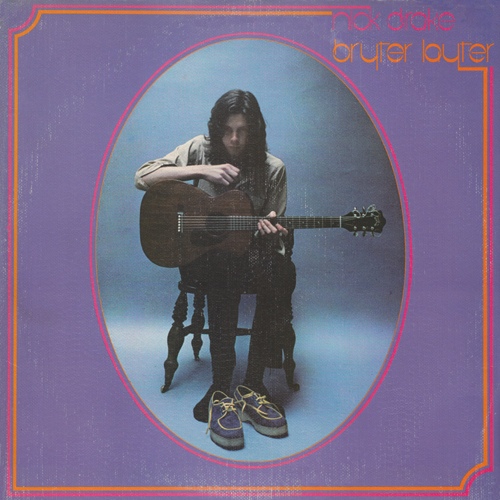
Bryter Layter - Nick Drake - album review
Following on from his 1969 debut release, Nick Drake's 1971 album Bryter Layter saw him exploring some new territory, at least in a musical sense.
The arrangements and melodies here are more expansive and outgoing than those on Five Leaves Left, but it would be a mistake to assume that there is a correspondingly sizeable shift in the subject matter explored. Some of them are what you might describe as deceptively jolly.
Here and there I have seen some criticism of the addition of brass, backing vocals and the like, but to me this is simply a matter of personal taste. Less prominence is given to Nick Drake's acoustic guitar picking than elsewhere in his catalogue. For what it's worth, I think that by and large the arrangements tastefully complement or augment the songs rather than tarnishing them. In any event, it would have been surprising if the artist had been content to tread water and serve up a similar dish to that represented by Five Leaves Left.
Following on from the opener "Introduction", "Hazey Jane II" features some delicate but pleasing guitar by Richard Thompson, and a sprightly enough tune. The enigmatic lyrics may or may not have certain meanings. and like other numbers on the record, they almost lull the listener into a false sense of hope and buoyancy.
"At The Chime Of A City Clock" seems to focus on issues of urban living, the bohemian lifestyle, loneliness and alienation. The saxophone part is an inspired touch, and one of the most effective of the instrumental contributions which characterize Bryter Layter.
Existential topics are explored by "One Of These Things First". The piano, like other instrumentation on the LP, makes the song "swing", if such a term is appropriate to be applied to the singer-songwriter/folk genre.
Other offerings which stand out are the title track which, whimsically, is an instrumental piece, although the flute alone makes it worthwhile. Such textures help to make the album seem less dry and dusty, but also add to its wistfulness. John Cale makes unobtrusive but excellent contributions on viola and harpsichord to the song "Fly".
It seems to me that "Poor Boy" has attracted the most adverse comment, because of the bossa-nova flavoured rhythmic pattern and the backing arrangement, especially the piano solo sections. One interpretation of the song's words is that Nick was utilizing the traits of poverty as a metaphor for a more general emotional malaise.
"Northern Sky" is perhaps one of the better known songs in the Drake canon. I might aver that it lacks the punch of other songs here, and it is less ostentatious melodically, but no worse for that. Like other tracks, this one almost flirts with joy and happiness, but the underlying sentiment is one of pleading and uncertainty. John Cale again features here.
"Sunday" is truly evocative and haunting, and the title is cleverly chosen. Another splendid use of the flute. A reminder that instrumentals can convey just as much as any number of "profound" and earnest lyrical outpourings.
Despite appearances, in the final analysis this album feels like more of a "downer" than Five Leaves Left, partly because of the ambiguity in many of the words. There is an authenticity and starkness about these songs which sets them apart from much of the "confessional" fare being released by other people in the early Seventies.
A fragility, vulnerability and yearning emerge which are quite disconcerting, and the sense of mild disorientation is heightened by the idiosyncratic arrangements. This all makes for a gripping, entertaining but occasionally unsettling listen.
The arrangements and melodies here are more expansive and outgoing than those on Five Leaves Left, but it would be a mistake to assume that there is a correspondingly sizeable shift in the subject matter explored. Some of them are what you might describe as deceptively jolly.
Here and there I have seen some criticism of the addition of brass, backing vocals and the like, but to me this is simply a matter of personal taste. Less prominence is given to Nick Drake's acoustic guitar picking than elsewhere in his catalogue. For what it's worth, I think that by and large the arrangements tastefully complement or augment the songs rather than tarnishing them. In any event, it would have been surprising if the artist had been content to tread water and serve up a similar dish to that represented by Five Leaves Left.
Following on from the opener "Introduction", "Hazey Jane II" features some delicate but pleasing guitar by Richard Thompson, and a sprightly enough tune. The enigmatic lyrics may or may not have certain meanings. and like other numbers on the record, they almost lull the listener into a false sense of hope and buoyancy.
"At The Chime Of A City Clock" seems to focus on issues of urban living, the bohemian lifestyle, loneliness and alienation. The saxophone part is an inspired touch, and one of the most effective of the instrumental contributions which characterize Bryter Layter.
Existential topics are explored by "One Of These Things First". The piano, like other instrumentation on the LP, makes the song "swing", if such a term is appropriate to be applied to the singer-songwriter/folk genre.
Other offerings which stand out are the title track which, whimsically, is an instrumental piece, although the flute alone makes it worthwhile. Such textures help to make the album seem less dry and dusty, but also add to its wistfulness. John Cale makes unobtrusive but excellent contributions on viola and harpsichord to the song "Fly".
It seems to me that "Poor Boy" has attracted the most adverse comment, because of the bossa-nova flavoured rhythmic pattern and the backing arrangement, especially the piano solo sections. One interpretation of the song's words is that Nick was utilizing the traits of poverty as a metaphor for a more general emotional malaise.
"Northern Sky" is perhaps one of the better known songs in the Drake canon. I might aver that it lacks the punch of other songs here, and it is less ostentatious melodically, but no worse for that. Like other tracks, this one almost flirts with joy and happiness, but the underlying sentiment is one of pleading and uncertainty. John Cale again features here.
"Sunday" is truly evocative and haunting, and the title is cleverly chosen. Another splendid use of the flute. A reminder that instrumentals can convey just as much as any number of "profound" and earnest lyrical outpourings.
Despite appearances, in the final analysis this album feels like more of a "downer" than Five Leaves Left, partly because of the ambiguity in many of the words. There is an authenticity and starkness about these songs which sets them apart from much of the "confessional" fare being released by other people in the early Seventies.
A fragility, vulnerability and yearning emerge which are quite disconcerting, and the sense of mild disorientation is heightened by the idiosyncratic arrangements. This all makes for a gripping, entertaining but occasionally unsettling listen.
Wednesday, 5 August 2015
Five Leaves Left - Nick Drake (1969) - album review
The body of work released by Nick Drake during his lifetime, consisting of three studio albums, is intriguing for so many reasons, not least in that each record has its own distinctive character . In view of these differences, it is a little awkward to single out "favourites" as such, but I will admit that Five Leaves Left, his 1969 debut release, is the one which I return to most frequently.
There is a stripped down tenor to much of the album, with pleasant and tasteful instrumental and melodic flourishes. It possesses a deceptive depth, whilst also retaining an earthy and uncomplicated quality . The opening number, "Time Has Told Me" has a simplicity of melody, and lyrical sentiments which are profound but universal, a hallmark of the artist's work. Richard Thompson supplies some nice embellishments on electric guitar.
Drake's voice is to me very natural and comforting, if unusual. Expressive if not exactly mournful, sturdily fragile, and well suited to this genre of music, to the nature of the material being performed. The essence of his acoustic guitar technique is very well captured throughout the record. .
"River Man" is a highly evocative and haunting piece, and the singer's voice is used to good effect to accentuate these traits, almost as a separate instrument in itself. This is one of those tracks which employs strings, and they are judiciously used, although they are a feature of the Drake palette which, I find, occasionally divides opinion in some minds.
"Three Hours" is next, and is another instance of different instruments being utilized to add subtle texture;in this case the double bass and the congas. Drake's guitar style is nicely showcased on this number, too. This song is quite lengthy, clocking in at over six minutes, but that is no bad thing. More of a genuine mood piece than what surrounds it?
"Way to Blue" adds some variety, the intense strings evoking a "baroque pop" ambience. People who approach Nick Drake's music anew are often surprised to find things like this in his repertoire, having been led to expect more traditional "singer-songwriter" fare.
"Day Is Done" is the shortest item on the listing, in terms of duration, but for me it is the most impactful and emotionally resonant song on the whole record. More delicate guitar is here, and the tune is richly melodic . A day as a metaphor for life as a whole, or an examination of life as a ongoing cycle?
I am not sure whether "Thoughts of Mary Jane" is about what we are led to expect it to be by the title. I guess that one's interpretation of lyrics can be stretched to accommodate anything. In any event, the recorder part (?) is a clever and enticing addition, and the lyrics are suitably enigmatic and poetic, and the overall effect is quite ethereal.
"Man In A Shed" is on the surface an odd song, whimsical even. I find it amusing, although on closer inspection its themes are not altogether different from the other songs featured here. The sprightly and dextrous piano playing adds much to the mixture, and the melody swings rather nicely.
"Fruit Tree" is for many listeners perhaps the quintessential Nick Drake song, both sonically, and lyrically. The poignancy of the melody and the imagery contained in the words complement each other beautifully. "Saturday Sun" is the perfect closer to the set. The vibraphone could have been incongruous, but in practice it is absolutely ideal. An inspired addition, in keeping with the apparent trend on this album for instruments to be selected on a "horses for courses" basis, according to how they could convey or augment a mood or an atmosphere.
In many places this LP is low-key in tone, almost apologetic, but that is a large part of its charm and quality. It pleads with the listener to pay attention to the lyrics. When taken on these terms, it is a cerebral, exploratory experience. The subsequent Nick Drake albums are more experimental and even more diverse, but they do not quite embody his vision with the clarity which is found on Five Leaves Left.
There is a stripped down tenor to much of the album, with pleasant and tasteful instrumental and melodic flourishes. It possesses a deceptive depth, whilst also retaining an earthy and uncomplicated quality . The opening number, "Time Has Told Me" has a simplicity of melody, and lyrical sentiments which are profound but universal, a hallmark of the artist's work. Richard Thompson supplies some nice embellishments on electric guitar.
Drake's voice is to me very natural and comforting, if unusual. Expressive if not exactly mournful, sturdily fragile, and well suited to this genre of music, to the nature of the material being performed. The essence of his acoustic guitar technique is very well captured throughout the record. .
"River Man" is a highly evocative and haunting piece, and the singer's voice is used to good effect to accentuate these traits, almost as a separate instrument in itself. This is one of those tracks which employs strings, and they are judiciously used, although they are a feature of the Drake palette which, I find, occasionally divides opinion in some minds.
"Three Hours" is next, and is another instance of different instruments being utilized to add subtle texture;in this case the double bass and the congas. Drake's guitar style is nicely showcased on this number, too. This song is quite lengthy, clocking in at over six minutes, but that is no bad thing. More of a genuine mood piece than what surrounds it?
"Way to Blue" adds some variety, the intense strings evoking a "baroque pop" ambience. People who approach Nick Drake's music anew are often surprised to find things like this in his repertoire, having been led to expect more traditional "singer-songwriter" fare.
"Day Is Done" is the shortest item on the listing, in terms of duration, but for me it is the most impactful and emotionally resonant song on the whole record. More delicate guitar is here, and the tune is richly melodic . A day as a metaphor for life as a whole, or an examination of life as a ongoing cycle?
I am not sure whether "Thoughts of Mary Jane" is about what we are led to expect it to be by the title. I guess that one's interpretation of lyrics can be stretched to accommodate anything. In any event, the recorder part (?) is a clever and enticing addition, and the lyrics are suitably enigmatic and poetic, and the overall effect is quite ethereal.
"Man In A Shed" is on the surface an odd song, whimsical even. I find it amusing, although on closer inspection its themes are not altogether different from the other songs featured here. The sprightly and dextrous piano playing adds much to the mixture, and the melody swings rather nicely.
"Fruit Tree" is for many listeners perhaps the quintessential Nick Drake song, both sonically, and lyrically. The poignancy of the melody and the imagery contained in the words complement each other beautifully. "Saturday Sun" is the perfect closer to the set. The vibraphone could have been incongruous, but in practice it is absolutely ideal. An inspired addition, in keeping with the apparent trend on this album for instruments to be selected on a "horses for courses" basis, according to how they could convey or augment a mood or an atmosphere.
In many places this LP is low-key in tone, almost apologetic, but that is a large part of its charm and quality. It pleads with the listener to pay attention to the lyrics. When taken on these terms, it is a cerebral, exploratory experience. The subsequent Nick Drake albums are more experimental and even more diverse, but they do not quite embody his vision with the clarity which is found on Five Leaves Left.
Thursday, 29 December 2011
Nick Drake
I spent some time with my older brother over Christmas, and the discussion got around to how our respective musical tastes began to diverge as our teenaged years progressed, and we drifted into adulthood. I chuckled when I reflected how I would deride my brother's preferences, but also admitted that I had eventually grown to like and respect much of the music to which he had listened, albeit over two decades later!
One of the artists falling into the above category was Nick Drake. I distinctly recall my brother coming home, clutching those vinyl albums. I did not pay any great attention to the music, and rather arrogantly dismissed it as part of an introspective phase on my brother's part, or an attempt to appear "hip" with his friends. There is a temptation at that age to question the motives of siblings, rejecting any notion that something may actually interest them for purely intrinsic or aesthetic reasons.
Well, two decades passed, and I did finally "find" Nick Drake, via a more circuitous route than my brother had taken. In my twenties and thirties I listened to lots of folk-rock and country-rock, and this led me on to singer-songwriters (Jackson Browne, Neil Young, Gene Clark), and then on to the British exponents of that genre, prominent among them being Drake.
On revisiting the three original studio albums, one thing which struck me is the "pastoral" feel, and also the ease with which one can be carried along by the deceptively complex melodies, and having to re-trace one's steps in order to fully take in the lyrics. The foremost emotion which came to me, though, was "why haven't I been listening to this stuff for the past twenty-odd years?"
The album which appeals to me most overall is Five Leaves Left, with its relatively sparse but subtle arrangements, and varied lyrical themes. Acoustic guitar forms the bedrock of most of the songs here, but other instrumentation is tastefully added to provide texture and depth. The nuances and charm of the songs and melodies are gradually revealed with repeated listening. There is also an almost otherworldly, ethereal feel to some of the tracks, particularly "River Man","Day Is Done" and "Thoughts of Mary Jane".
Lyrically, Five Leaves Left comes across as a mixture of the observational and the introspective, and the listener feels like he or she is being transported to a particular place and time, and also a distinct stage in the songwriter's life. While some of the compositions on this album may initially come across as quite bleak, closer scrutiny uncovers some joy, wonder, awe and optimism.
The Drake album which I suspect divides opinion most clearly, and is also the most troublesome to analyse, is 1970's Bryter Layter. More experimental and inpenetrable than the debut, with a discernible jazz-like feel in places, the songs alternate between the dreamy and the melancholy. Oddly, there are a couple of instrumental tracks. I know that the arrangements on this album can have a polarizing effect, but I find it fascinating to hear these lyrics shrouded in such an unusual, even incongruous, sonic mist.
Pink Moon, the final studio album, is possibly the least melodically diverse of the three, and features none of the augmentation by strings and woodwind instruments. This absence of such embellishments can make the album sound bleak, but also intimate. Drake's distinctive guitar work is projected more keenly, and the sense of intimacy is enhanced by the gritty sound of it, as well as the vocals. Pink Moon has a much more seamless and spontaneous vibe to it than the other material, reflecting the manner and circumstances in which it was recorded. None of the songs particularly stand out - the whole is greater than the sum of its parts.
So, there we have it, a small but impressive and varied body of work. Stylistically, Five Leaves Left stands betwixt the other two LPs, but I sense that there was no calculated career path. The individual albums simply reflect the time and place being inhabited by Nick Drake when they were written and recorded. This is often the case with "singer songwriters".
For those who admire sensitive and literate music, Nick Drake's work is a must. I just hope that other people don't, like me, take twenty years or more to fully embrace it!
One of the artists falling into the above category was Nick Drake. I distinctly recall my brother coming home, clutching those vinyl albums. I did not pay any great attention to the music, and rather arrogantly dismissed it as part of an introspective phase on my brother's part, or an attempt to appear "hip" with his friends. There is a temptation at that age to question the motives of siblings, rejecting any notion that something may actually interest them for purely intrinsic or aesthetic reasons.
Well, two decades passed, and I did finally "find" Nick Drake, via a more circuitous route than my brother had taken. In my twenties and thirties I listened to lots of folk-rock and country-rock, and this led me on to singer-songwriters (Jackson Browne, Neil Young, Gene Clark), and then on to the British exponents of that genre, prominent among them being Drake.
On revisiting the three original studio albums, one thing which struck me is the "pastoral" feel, and also the ease with which one can be carried along by the deceptively complex melodies, and having to re-trace one's steps in order to fully take in the lyrics. The foremost emotion which came to me, though, was "why haven't I been listening to this stuff for the past twenty-odd years?"
The album which appeals to me most overall is Five Leaves Left, with its relatively sparse but subtle arrangements, and varied lyrical themes. Acoustic guitar forms the bedrock of most of the songs here, but other instrumentation is tastefully added to provide texture and depth. The nuances and charm of the songs and melodies are gradually revealed with repeated listening. There is also an almost otherworldly, ethereal feel to some of the tracks, particularly "River Man","Day Is Done" and "Thoughts of Mary Jane".
Lyrically, Five Leaves Left comes across as a mixture of the observational and the introspective, and the listener feels like he or she is being transported to a particular place and time, and also a distinct stage in the songwriter's life. While some of the compositions on this album may initially come across as quite bleak, closer scrutiny uncovers some joy, wonder, awe and optimism.
The Drake album which I suspect divides opinion most clearly, and is also the most troublesome to analyse, is 1970's Bryter Layter. More experimental and inpenetrable than the debut, with a discernible jazz-like feel in places, the songs alternate between the dreamy and the melancholy. Oddly, there are a couple of instrumental tracks. I know that the arrangements on this album can have a polarizing effect, but I find it fascinating to hear these lyrics shrouded in such an unusual, even incongruous, sonic mist.
Pink Moon, the final studio album, is possibly the least melodically diverse of the three, and features none of the augmentation by strings and woodwind instruments. This absence of such embellishments can make the album sound bleak, but also intimate. Drake's distinctive guitar work is projected more keenly, and the sense of intimacy is enhanced by the gritty sound of it, as well as the vocals. Pink Moon has a much more seamless and spontaneous vibe to it than the other material, reflecting the manner and circumstances in which it was recorded. None of the songs particularly stand out - the whole is greater than the sum of its parts.
So, there we have it, a small but impressive and varied body of work. Stylistically, Five Leaves Left stands betwixt the other two LPs, but I sense that there was no calculated career path. The individual albums simply reflect the time and place being inhabited by Nick Drake when they were written and recorded. This is often the case with "singer songwriters".
For those who admire sensitive and literate music, Nick Drake's work is a must. I just hope that other people don't, like me, take twenty years or more to fully embrace it!
Subscribe to:
Posts (Atom)