Showing posts with label review. Show all posts

Saturday, 23 April 2016

The Moon Is A Harsh Mistress - Robert A. Heinlein

I had been meaning to check out the work of Robert A. Heinlein for a while, but was a little unsure where to begin. Well, I took the plunge by checking out The Moon Is A Harsh Mistress, first published in 1966.

Basically, the novel is set in the latter part of the 21st century.  The Moon has been turned into a penal colony, to where Earth's convicts and "undesirables" are transported. A group of revolutionaries, with the help of a "self-aware" computer, seek to overthrow the authority of "Terra" in the lunar colony.

The story is narrated by one of the main characters, Mannie, and he employs a curious Lunar dialect, which may take the reader a little while to become accustomed to. However, once this minor issue is overcome, the book will absorb and captivate.

Only a short way into The Moon Is A Harsh Mistress, I found myself rooting for the characters and their aspirations, even if their methods were sometimes questionable. I had emotionally invested in their fate and their destiny.  A diverse bunch, and this engendered some friction, and a strange chemistry.


The scientific and technical aspects of the story were for me secondary in importance, although I am not sure that by 2075 computers will have advanced to the degree envisaged here. To be frank, I'm not sure that I would want them to, either.  In truth, I usually reverted to "auto-pilot" mode when elaborate telephone systems and the vagaries of "Mike" the computer were being discussed.

I was impressed by the way in which justification for the Lunar revolt was presented, not just in "abstract" matters of freedom and self-determination, but by bringing ecological issues, economic liberalization and free trade into the equation. This demonstrated a real confidence on the part of the writer,  and added depth and credibility to the story.

Much of the nitty-gritty of how the revolt was organized is not presented in exhaustive detail, and the reader is invited to use his or her imagination, and to read between the lines. From this perspective, the novel does require concentration and open-mindedness, to grasp the rationale and implications of some of the deceptions which are committed by the "revolutionists", for example. A similar approach may be necessary when comprehending the social structures and customs which are shown to have evolved on Luna.

This book has a reputation as a "libertarian" novel,  although I think that conspicuous "preaching" on ideological matters is kept to a minimum.  Rather than being obtrusive, such things are generally woven quite seamlessly into the text, and at appropriate points.

The climax to the novel I found truly gripping, largely because, as mentioned above, I had been drawn in by the characters and the subject matter, and the outcome mattered to me.  The moral questions posed by the story line are not straightforward;they are awkward but timelessly pertinent. My curiosity and my senses had been animated, a good barometer, I find, for how worthy and substantial a work of fiction is.

The Moon Is A Harsh Mistress is well worth a read, and not just for dedicated science-fiction fans.

Tuesday, 8 March 2016

Genesis - Selling England By The Pound - album review

In assessing the progressive rock music of the 1970s, certain albums can be seen as important or meritorious examples of the genre. One of these is Selling England By The Pound, released by Genesis in 1973.

The title of the record could easily be construed as a commentary on the "state of the nation" at the time when the album was made. England was enduring a period of industrial strife, economic stagnation and generally diminished influence. It seems, however, that the the moniker signifies the plight of indigenous English folk-culture amid a tide of "Americanization". There are overt English references among the lyrics of one or two songs, and even flashes of folk-tinged music are discernible. Did this very "Englishness" cost Genesis commercial mileage in some territories, such as the US?

Proceedings open with "Dancing With The Moonlit Knight", which contains an eerie motif later reprised in "Aisle of Plenty".  The song has its moments, but to me it feels like they were trying a little too hard, and it almost becomes a case of "Genesis-by-numbers". It does resemble "Supper's Ready", in fact. The lyrics do actually have something to say, and they are not just there to create an aura of erudition or "cleverness".  The instrumental passages ramble unconvincingly on this opener, however.

"I Know What I Like (In Your Wardrobe)" is one of the group's better known songs, because it is concise and whimsical, and also because it was a hit single in Britain.  It is unclear to me whether the track is in keeping with the train of thought suggested by the album's title. I find it difficult to dislike, although I can see why others might be hostile to it. There is a healthy slice of English eccentricity, in a semi-surreal form, and the melodic patterns are sharply executed.


I would contend that "Firth of Fifth" is Genesis's finest recorded achievement, in part because the playing and the arrangement have real conviction and verve, and also because the individual talents of the musicians are permitted full expression. The exciting piano opening may not be as technically demanding as it seems, but it sounds wonderful! The later instrumental passages are exhilarating and dramatic, with special praise due to Steve Hackett's exquisite "slide" guitar solo. Just when it seems to have run its course, it goes somewhere else.  Another ingredient in the song's magnetism is the strident imagery in the lyrics.

"More Fool Me", with Phil Collins on lead vocals, is a ballad, but subjected to the Genesis 1973 treatment, it works very well, sandwiched in between more complicated pieces. It also points the way forward to some of the material recorded by the band in the post-Peter Gabriel era.

The next number, "The Battle Of Epping Forest" is an intriguing song from a lyrical standpoint, but the complex "prog" arrangement is incongruous. The keyboard sounds are nice, but in all honesty the track never truly "happens" for me.

As an instrumental, "After The Ordeal" serves its purpose in helping to break up the rich diet of more "epic" offerings with something more simple, but still pleasing to the ear. Like the whole of this album, it sounds fresh, uncluttered and organic.

The introduction to "The Cinema Show" is almost as glittering and diverting as the one to "Firth of Fifth". The twelve-string guitars underpin the early portion of the song most agreeably.  Another brilliant instrumental sequence follows, as energetic as it is elegant, with Collins in fine form.

It is customarily asserted that British progressive rock reached a tipping point during 1973, and that the genre's decline thus commenced. The music released around that time is assailed and derided as excessive and bloated, having crossed some invisible line. Selling England By The Pound to some degree bucks that trend, as the music is relatively restrained. Genesis still appeared to be flourishing, radiating ideas and creativity, although of course the harmonious state of affairs would not last for long.

The record does not necessarily scream "classic!", but it contains some thoughtful songs and much accomplished playing. Saying that parts of it have not "aged well" may be more a negative reflection of our times than of 1973's musical landscape.  It is a very listenable album, if one approaches it with an open and receptive mind.


Tuesday, 1 March 2016

Pink Moon - Nick Drake - album review

Nick Drake's final studio album, Pink Moon, released in 1972, has a character all of its own. The terse or brief song titles, and the fact that this was the singer-songwriter's last record, have led people to jump to certain conclusions.

The songs have sparse and stripped down arrangements, consisting mostly of the voice accompanied by acoustic guitar. There is none of the decorative instrumentation or trimmings present on Nick's two previous records, Five Leaves Left and Bryter Layter.

It is true that some of the content of Pink Moon is bleak, but it is not unremittingly so, and the general perception of the LP's mood is no doubt compounded by the hypnotic and metronomic nature of a few of the tracks - "Place To Be" springs to mind in this regard. In a few cases the tempo and rhythms suit the atmosphere, but elsewhere things are less straightforward.


Some of the numbers, such as "Road", have a more pronounced "folk" feel to them, and the sparer sound allows Nick's acoustic guitar technique to show through.  I suspect that the word "ascetic" is used with some regularity when Pink Moon is discussed.The melodies are understated and uncomplicated, and the vocal delivery sometimes indistinct, as if the offerings are not really meant for public consumption.

For me the outstanding track is "Things Behind The Sun", which carries the odd echo of Five Leaves Left, in its greater complexity. It is also longer than the other compositions here. "Parasite" is quite unusual for the Drake catalogue, in the relative "crudeness" of its imagery.

Melancholy is the word so regularly, and often blithely, associated with Nick Drake's work. In the confines of Pink Moon, "melancholy", when understood in a broader sense, assumes its own identity, as if it is a realm in itself, existing in parallel with the real world. Without adopting a stereotyped view of Drake-songs, one can see a poetic beauty about this "other" world. People who have been there will doubtless identify with some of the sentiments expressed, even if they are done so cryptically.  This, together with the musical approach, helps to give the album an acute, occasionally unsettling, intimacy.

Pink Moon lacks the conventional "entertainment" value of Nick's other work. It is much more direct, but no less affecting.


Thursday, 25 February 2016

Out Of The Blue - Electric Light Orchestra - album review

In the corridors of music history, there is a curious tendency for a consensus to emerge about what is a particular artist's best album, when that artist has produced other work which is far more deserving of that accolade. I put this down in part to lazy "scholarship", and the herd mentality which guides these matters.


I am inclined to think that Electric Light Orchestra's Out Of The Blue does not quite, in the cold light of day, live up to the uncontested glow which has surrounded it since its 1977 release. It does contain some entertaining and enjoyable tunes, and it is overflowing with the craftsmanship for which Jeff Lynne is rightly famous. The Beatles leanings are still clearly evident, with increasing echoes of Roy Orbison in some of the ballads.

The quality of the songs and the level of inspiration are uneven though, even allowing for the quota of filler material which turns up on most double LPs. The production and sound are steadily growing distant from the more earthy and organic character of the group's earlier works, and too many of the tracks are bathed in a certain clinical sheen, which unnecessarily obscures and stifles potential nuances.

Notwithstanding my criticisms, what is good on Out Of The Blue is very good indeed. The curtain-raiser, "Turn To Stone", does not fall victim to the excessive lushness which is evident elsewhere. There is abundant melodic invention and energy here, the latter largely stemming from the bass-synth which propels the piece along, and the "detached" feel of the vocal.  The song has its own persona and dynamism.

A song which has a similarly infectious charm is "Sweet Talkin' Woman", with some pleasingly intricate vocal arrangements, and the song manages to maintain its bite and momentum, a tribute to Lynne's innate pop sensibility.  These qualities are also on display on "Across The Border", one of those interesting and quirky "minor" tracks which pop up throughout ELO's canon.

Many of the tracks betray a genuine effort to convey atmosphere, story and mood - "cinematic" thinking, one might even say.  "Night In The City" is a case in point, although on reflection the song somehow loses its impetus, and never quite lives up to its impressive and evocative opening stages.

The weaker material is largely concentrated in the "middle" of Out Of The Blue, and this may be one of the reasons why it appears better and more consistently strong than it really is.  "Believe Me Now" is a likeable if throwaway vignette.  The "Concerto for A Rainy Day" (side three of the vinyl LP) was a clever idea, but does not really work for me, with the glaring exception of "Mr Blue Sky".

"Mr Blue Sky" has over the years gradually become Electric Light Orchestra's signature tune, and I discern that it is a distant relative of The Beatles' "A Day In The Life", although it is philosophically much less profound or ambitious. It is the song's innocence and kaleidoscopic zest which I find irresistible, rather than its musical complexity.

The double-album format permits the odd bit of experimentation, such as the instrumental "The Whale", as well as excursions like the endearing paean to the band's home town, "Birmingham Blues".

The album's concluding track, "Wild West Hero", harks back to the Eldorado days in its outlook, and is one of the group's forgotten gems, possibly because it is deemed to be less "radio friendly" than some of their other hits. The production becomes excessive towards the end, and this negates some of the melodic charm, although the bombast may have been intended to sign the album off with a grandiose flourish.

So, there we have it. A collection of melodic, lovingly crafted pop/rock songs, and some vague sense of cohesion,  but the sound is becoming overly formulaic even in 1977.  Out Of The Blue is definitely worth checking out, but for a more satisfying and authentic take on Electric Light Orchestra, seek out On The Third Day, Eldorado or A New World Record, or indeed any of their earlier releases.


Sunday, 21 February 2016

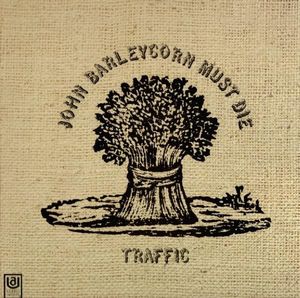
John Barleycorn Must Die - Traffic - album review

One of the bands from the 1960s and 1970s which never quite got the recognition it deserved was Traffic. Perhaps they were a little too eclectic for their own good, their repertoire encompassing psychedelia, folk-rock, soul, progressive-rock, jazz-rock and other styles.

In 1970, they released the album John Barleycorn Must Die, which was, it seems, originally planned to be a Steve Winwood solo project. It remains an intriguing and satisfying work to me, even if critical opinion towards it has been somewhat mixed and even lukewarm.


The album contains only six tracks, but relatively little in the way of instrumental noodling or self-indulgence. There is a pronounced blue-eyed soul and jazzy flavour to the majority of the songs, and also an accent on keyboards, which I find most refreshing. Perhaps unsurprisingly, the multi-talented Winwood pretty much dominates proceedings, in the absence of Dave Mason.

The opening track, "Glad", is a sprightly instrumental, partly in the style of Booker T and the MGs, with some dreamier passages added.  "Freedom Rider" has a similar sonic palette, and Chris Wood's talents on saxophone and flute are also very much to the fore. As elsewhere on this record, the drum and percussion sounds are well captured and very "live" and three-dimensional.

On "Empty Pages", the glorious Hammond organ sound has more of a showcase, and Winwood's expressive voice is projected with more clarity.  "Stranger To Himself" has more raw and passionate vocals, and it is also more guitar-orientated than some of the other pieces here.

The title track could appear on first acquaintance like an unremarkable folk song, but it has a capacity to draw the listener in, through the conviction of the singing and the playing, and the mystique of the lyrics. Again, the textures supplied by instruments such as the flute play a large part in the song's vitality, this organic but diverse and layered flavour very pleasing to the ear.

As the closer, "Every Mother's Son" definitely has its virtues, with a fine Winwood vocal and some quite stirring melodic parts, but I can't help feeling that it becomes a little over-wrought and ponderous in places, particularly after repeated listening.  All praise imaginable is due to the beautiful organ solo section in the middle, though....

The apparent critical ambivalence towards John Barleycorn Must Die may stem from a perception that the album is understated and "unspectacular", even clinical in places. However, it is superbly crafted and produced, and it is an album that demands to be listened to closely and attentively, as its depth and charm are more readily appreciated and savoured under those conditions.


Friday, 5 February 2016

A Brief History Of The Anglo-Saxons - Geoffrey Hindley - book review

The "Anglo-Saxon" period of "British" history I find especially interesting because of the lack of written and documentary records and evidence. What is available is often biased, sparse and hazy. Consequently, this area is subject to almost boundless interpretation, debate and conjecture, even where archaeological findings are to hand.

I sometimes remind myself to be on my guard when being exposed to provocative new theories about the Medieval period. Occasionally, historians go out of their way to be controversial in order to rise above the mass. Often the available evidence lends itself to an equally strident interpretation in an entirely different direction.

Anyway, I recently read Geoffrey Hindley's book A Brief History of The Anglo-Saxons.


The Anglo-Saxons have possibly had a bad press over the centuries. However, I find them fascinating, because of their enigmatic aura, and the period is stimulating, partly because it is so fragmented, nebulous and confusing.

In this book, the author makes allowances for scenarios other than those which have achieved something of a consensus. He often sets the Anglo-Saxon phenomenon in the wider context of Medieval Europe, and the formation of the "post-Roman" landscape. There is necessarily a heavy emphasis on the relations of the new arrivals with the Church, and indeed on how they themselves helped to shape the future of the Church. Some light is also shed on the contributions of Anglo-Saxons to broader European affairs.

From a purely personal viewpoint, I found the passages about Northumbria (and its "golden age") informative and enlightening. This region, certainly in its "English" incarnation, is not always allocated the same amount of popular attention as, say, Wessex, but its importance is underlined here. These sections, as with much of the book, are written in a breezy style, with the occasional slice of humour.

I liked how the notion of an "imperium", or a ruler recognized by the other kingdoms, was developed. Also, people think of "international relations" in those epochs as fuzzy and vague, but Hindley highlights how this was not necessarily so. The way it is documented in "A Brief History...." suggests that it had the appearance of something more coherent and structured.

The role of English clergy in converting the pagans is also explored in some detail, and we are reminded of the sometimes violent means by which the conversion was accomplished. The social structures which linked rulers, warriors and the churchmen have to be understood in order for the nature of the times to be grasped, and this is another area covered by the book.

Needless to say, the years of Alfred The Great are given due prominence, in terms of his role in preserving "England", and the encouragement of the use of the vernacular.  I would have liked more about Athelstan, to be honest.

The dynastic manoeuvrings and intrigues which unfolded prior to the Norman Conquest are examined. I got the impression that the author was not a big fan of the Normans!

I don't think that much of the book's content is startlingly original, but it is told in an entertaining and digestible form. A lot of ground is covered in a limited space, but it is still worth a read.


Tuesday, 15 December 2015

Bodyline Autopsy - David Frith - book review

If I had to make a shortlist of my favourite sports-related books, then pretty near to the top would be Bodyline Autopsy by David Frith, a beautifully written and carefully researched account of England's acrimonious 1932-33 cricket tour to Australia.


The book was originally published in 2002, and the game of cricket has changed a bit since then, but the erudition and sweep of this work are timeless. The author's love for the game and its history leaps from every page, as does an appreciation of the world beyond cricket.

Thankfully, this book does not overplay the political and social importance of the Bodyline series, but at the same time it stresses the context in which the controversy unfolded. The world was a different place in 1932, and the relationship between England and Australia was different to what it is in the 21st century.

Much of the early going is taken up with an exploration of the similar controversies and debates which preceded the infamous tour, and how the tactics of Douglas Jardine and his bowlers might have evolved. This all helps to place what happened in some kind of perspective.

Quite apart from examining the Bodyline phenomenon, this book gives us a lovely window on the world, and cricket, as they were back then. The haphazard and piecemeal nature of England's selection process for the tour, and the informal and leisurely nature of the tour schedule and the social scene, evoke great nostalgia. There are also some charming anecdotes from England's ship journey Down Under.

This was also a world which was only just beginning to grapple with the notion of mass communication, and it was also a time before attention spans began to ebb away and finesse in all things was gradually dispensed with.

Frith sets out to analyze the drama from all angles, dispelling some myths and misconceptions along the way, drawing attention to anomalies and contradictions in the cliched popular version. The level of thoroughness is admirable. A wide range of sources and evidence are drawn upon to paint a vivid and balanced picture. The use of photographs is very tasteful. They are integrated nicely into the text, and their character augments the scholarly texture.

The accounts of the Test matches are absorbing and well-paced, making the reader feel that he or she was really "there". Naturally, the pivotal Adelaide match is accorded special attention, and there is an exhaustive "forensic" examination of the leak of details of the dressing room exchange between the Australian captain and the England management. The fact that a "leak" such as that was so emotive in the Thirties again illustrates just how much times have changed.

Reading this book again, the thought "what was the big deal" springs to mind, but we have to place these events in the context of those times. Bodyline stood out because it was seen to breach unwritten rules. At the same time, it was not really a historical watershed either; it didn't signify the imminent breakdown of civilization, and normal service was resumed, for a while anyway.

One of the book's strong points is the depth of its analysis of the aftermath of Adelaide, the sentiment harboured in both countries, and the attitudes in the corridors of power. The relating of the diplomatic toing-and froing is rounded and realistic, not exaggerating the gravity of the episode, but emphasizing the role of statesmen and civil servants. The priority of the politicians appears to have been to limit the damage beyond the portals of cricket.  The precariousness of the economic and trade situation is also highlighted (these were Depression years, of course). In retrospect, one wonders what might have happened had fences not been mended successfully, given what was to transpire globally in the late 1930s.

A sizeable proportion of Bodyline Autopsy addresses the fall-out from the tour, including the efforts to conciliate the two cricketing cultures, and the machinations which affected Harold Larwood and Douglas Jardine in particular. Interestingly, there is also some effort to look at how perspectives changed in some minds over time. There is a look at the later lives of many of the key participants, as well as how Bodyline was perceived in later decades.

This is a beautifully written work, endlessly stimulating, meticulously researched and also thought-provoking. A perceptive and authoritative look at a seismic sporting controversy, as well as a revealing glimpse at how things were back then.


Thursday, 26 November 2015

Raging Bull (1980)

I recently watched Raging Bull, Martin Scorsese's 1980 biopic of the boxer Jake LaMotta, starring Robert De Niro, Joe Pesci and Cathy Moriarty. Here are a few of my thoughts on the movie....

The film has a distinctive and strong visual appeal, partially based on it being in black and white. Somehow the grittiness, and occasional brutality, of the tale is conveyed much more strongly that way. The film has a great period feel, and not just traceable to the monochrome being chosen. The "retro" settings are beautifully realized and convincing, unlike many movies of this type.

Raging Bull's fight sequences are very famous, and justifiably so, but they take up less of the picture's running time than some people might imagine. Much more of the film is taken up with a compelling, and sometimes unsettling, examination of LaMotta's insecurities and demons.

Of the boxing scenes, some are quite graphic, the final encounter with Sugar Ray Robinson standing out in this respect. These parts of the film, including the crowd scenes, are also well produced, succeeding where so many other sports-orientated pictures fall down. The scenes in the ring are short and snappy, and not quite as "arty" and surreal as is often thought.

In some ways, I think that Raging Bull is a slow burner, and its early stages could strike some observers as slow and pedestrian.  However, its greatness gradually emerges as it goes along, and the stellar performance of Robert De Niro has a strong bearing on this. Strangely enough, he is so consummate, natural and plausible in the role that the brilliance of his portrayal of the boxer can almost pass unnoticed. Of course, Joe Pesci shines in the part of LaMotta's brother Joey, as does Cathy Moriarty as Jake's wife. Whatever happened to Cathy Moriarty, by the way?

This may be a film whose true impact can only be fully absorbed following a few repeated viewings. The "human interest" angles mean that one does not need to be a boxing aficionado to enjoy and embrace it. It can also be argued that it is one of the last examples of a golden age of American cinema which began in the late Sixties.

All in all, a gripping and powerful work.


Tuesday, 3 November 2015

Vertigo (1958 film)

I never really got into Alfred Hitchcock's movies, much to my regret. In my younger days, Hitchcock films would regularly be shown on television, but I would scarcely notice, let alone take in their merits or artistic significance. One picture which belatedly made an impression on me was Vertigo, Hitchcock's 1958 thriller, starring James Stewart and Kim Novak.

Without giving too much away, Scottie (Stewart) is a policeman who is forced to retire because of his acrophobia and vertigo. At the request of an old friend, Scottie follows the man's "wife", who has been behaving strangely. The plot which unfolds is complex and ingenious, but not really bewildering. It involves murder plots, faked suicide and much more.

The title Vertigo is very appropriate, as not only does the condition play a pivotal role at several crucial points in the film, but it is also an unsettling and disorientating work. That said, the aesthetic of the picture I find very appealing. The clothes, the cars and the settings have real style, together with the type of crispness which I somehow associate with 1950s films made in colour.

Bernard Herrmann's music is very important to the atmosphere of this movie. In some scenes there is little or no dialogue, and the music is left to accompany the imagery, which is often the backdrop of San Francisco. The scenes where Stewart follows Kim Novak early in the film are quite eerie, and one can imagine that they have been quite influential in the ensuing decades.

Both James Stewart and Kim Novak have great screen presence, the former being particularly impressive for me in the later portions of the film. A word too for the performance of Barbara Bel Geddes as Scottie's friend and ex-fiancee Midge. She appears not to have received the praise she deserved for her contribution.

No doubt the critics have dissected and analysed Vertigo endlessly, seeking to extract portentous meaning from every frame, but when I saw the film I did not grasp much in the way of profound messages. I was too preoccupied with the central plot, constantly asking myself "Have I understood what's going on here?  Have I got this straight?. Much is left unsaid, this being aggravated perhaps by the relative sparsity of the dialogue.

The story is complicated, strange even, but any concerns on that score are rendered largely immaterial by its sheer magnetism, and the partially-overlapping layers of intrigue, irony and deceit.

Vertigo is a gripping and even occasionally disturbing film, and is well worth a watch.