Showing posts with label 1971. Show all posts

Wednesday, 7 January 2026

The Persuaders (television series)

 I recently watched most of the episodes of 'The Persuaders', the early 1970s British action/comedy/adventure television series. The two main stars of the show were Roger Moore and Tony Curtis.

The series follows the exploits of two playboys, from contrasting backgrounds, who are brought together to investigate and resolve various intrigues and injustices. 

'The Persuaders' is very much of its time, in terms of the aesthetic flavour which it exudes, and the attitudes exhibited by the characters and the scripts/dialogue. However, it is highly entertaining and technically well put-together.

Curtis (who plays the Daniel Wilde character) and Moore (who plays Brett Sinclair), make for an engaging and charismatic pairing, although I'm not entirely sure that their "chemistry" is as terrific as some have made out.

Some of the episodes are set in Southern Europe (Monte Carlo, Italy, south of France, Spain), ensuring some spectacular scenery and some late 'dolce vita' glamour. Other episodes are set in the more prosaic location of England.

I do not think that the scripts and the stories were meant to be taken too seriously, and some of the plot-lines rely heavily on coincidences and good fortune for our heroes.

Curtis hams things up constantly, and this provides a neat contrast with Moore's more reserved, measured and economical delivery.

I was too young to take in the series when it was originally broadcast. It seems to me that it was influenced by shows which had gone before (notably 'the Avengers') and that it itself foreshadowed some other "crime shows", such as 'The Professionals'. 

My impression when viewing 'The Persuaders' is that it is more "Sixties" than "Seventies". It is frivolous (in a good way) rather than gritty or dark, and the bright, shiny colours evoke the optimism of an age more than they do the more "cynical" later decade. 

The episodes achieve a nice balance of espionage-orientated stories with "ordinary" criminal cases and tales of financial or corporate sharp-practice.

A feature of the show is the quality and impact of the guest stars. Harold Innocent, Alfred Marks, Patrick Troughton, Hannah Gordon and Peter Bowles are just some of the notable names who illuminate and elevate various episodes.

A word, too, for John Barry's superbly atmospheric theme music, which still attracts praise and mention to this day.

It is noteworthy that the two lead characters, Sinclair and Wilde, have lived quite dissolute, even aimless, existences, but they rise to their tasks with gusto. Admittedly it takes some "leverage" in the first episode to get them going as a team. They are brought together and suitably "motivated" by Judge Fulton (excellently portrayed by Laurence Naismith). 

So, a highly endearing and watchable series, which has a charm and atmosphere all its own. Some people have said that they should have made more than the 24 episodes, but I think that if they had gone on, they would have started repeating themselves  and treading old ground, a fate which has befallen some other very worthy television shows.


Saturday, 22 August 2020

Hunky Dory - David Bowie

 During the period of lockdown which we were subject to in recent months, I occupied much of my time listening to music, and I acquainted myself with several albums which I had not previously explored in detail. One of these was David Bowie's 1971 release Hunky Dory.


I had long been an admirer of Bowie's work, but Hunky Dory had escaped my full attention. This was partly because the album had been cited as a favourite and a major influence by a few people, critics and broadcasters, whose judgement and taste I did not really trust or respect. However, examining the record in detail has been something of a revelation.

Whilst the "Ziggy Stardust" album leaves the listener open-mouthed and awed with its glitz and directness, Hunky Dory's appeal is rather different, with its mystique, and a seamless and fluent self-confidence which is truly remarkable and humbling.

Hunky Dory is striking for its maturity, as well as its lyrical sophistication. The subject matter and general ambience imbue the album with a vaguely enigmatic, "arthouse" sensibility, but equally and ironically these traits probably render it relatively inaccessible to some people. The production is clear and uncluttered, and the depth of melodic invention hold the attention and the interest.

Several of the songs on the record (Changes, Oh! You Pretty Things, and Life On Mars) are among the most recognisable and famous of Bowie numbers, but it is the remaining tracks which truly determine the record's tone and atmosphere. "Eight Line Poem" is a prime example; the piano sounds great, as it does throughout the album.

Some of the motifs and characteristics which were permitted full rein later are in evidence here, but they are employed more sparingly and less ostentatiously.

"Life On Mars" is hugely affecting, although its grandeur, and the arguably bombastic arrangement, might serve to obscure its genuine strengths and virtues.

There is much stylistic diversity on Hunky Dory, but it is clothed and masked slightly by garb which is peculiar both to Bowie and to this album - "Fill Your Heart" springs to mind. The poetic complexity is both adroit and convincing.

One of the highlights of the record for me is "Quicksand", a strident and dramatic composition which comes across as choate and sincere. It is given an effective arrangement, with some tasteful strings.

"Andy Warhol" and "Song For Bob Dylan" are both typical of the traits which suffuse the album. Again, Bowie ventures beyond the "obvious" and exhibits the grasp and the vision which separated him from his contemporaries.

"Queen Bitch" is both a nod to Bowie's influences of the time, and also a taste of what was to come shortly thereafter. Its relative directness and "decadence" add variety to the Hunky Dory diet. The closer, "The Bewlay Brothers" is stunning, and a highly appropriate way to round off the album.

Overall, the record exudes a zest and a cohesive ebullience which Bowie seldom matched elsewhere in his oeuvre. The arrangements, by and large, are appealing in their organic naturalness. The artist does not sound as though he is trying too hard to impress or dazzle people. The strength and originality of the material, and the ideas, are sufficient to carry the work.

If I was to choose a favourite David Bowie album, it would not be this one. It is less direct and outlandish than "Ziggy Stardust" or even Aladdin Sane, but it is brimming with creativity and inventiveness. It still sounds extraordinarily urgent and mature. A work of beauty, wonder and expressiveness.


Saturday, 8 June 2019

News From Nowhere - William Morris

During my adult life I have tended to read fewer fictional works than I would have preferred, and generally those novels which I have enjoyed have been of the more "philosophical" variety, including some utopian and dystopian science fiction. William Morris' 1890 novel News From Nowhere pretty much corresponds to these tendencies of mine.

In this novel, a man falls asleep in Victorian London, and apparently wakes up in a future society which styles itself as a socialist utopia, and which is agrarian in character.  He is given a tour of this "new world" by the people who he meets, and this takes in boat journeys along the River Thames.

Even allowing for the times when the work was composed, I found the writing style to be an acquired taste. Although not quite archaic in its flavour, in places it may be difficult for some to follow and even understand. Of the novel itself, I was pleasantly surprised by how enjoyable and absorbing I found it.

The fact that the new society outlined in this book is agrarian in nature means that it probably made more sense back in the late nineteenth century than it does to a twenty-first century audience raised in an age of globalization and rapid technological progress. Despite this, some aspects of the utopia envisaged here are very much relevant to our own modern concerns and problems. Perhaps Morris was prescient and astute in observing that technology does not necessarily emancipate the people, or rather is not allowed to emancipate the people.

Whilst the agrarian society portrayed in News From Nowhere seems impractical and implausible to us in our hi-tech world, and the old arguments concerning incentives and competition remain very valid, facets of this utopian vision are worthy of consideration and scrutiny, as part of piecemeal social and economic reform to improve our world and make it more humane, stimulating and equitable.

One feature of the novel which I found slightly disconcerting was the revelation, or insinuation, that all the people were happy, and that they evince a certain kind of serenity.  This seems unlikely and even undesirable.  A place where there is a uniformity of expressions and moods sounds to my antennae like more of a dystopia!

Some of the language used, and the arguments advanced, are quite persuasive, certainly of the evils of 19th century society and its contemporary industrialism, but whether this means that the agrarian route was a practical and workable solution is another matter entirely.  Perhaps there is a gap in the market for someone to write a novel where a person falls asleep in a 21st century environment and wakes up in a future libertarian socialist set-up?  Maybe we are currently at a similar stage, "spiritually" if not materially speaking, as the Victorians were?

I was heartened that some form of "explanation" was offered as to how the old society of "commercial slavery" gave way to the brave new world, but I found myself wanting more.  For example, what was the full human cost of the transition?  In fairness, we are left wondering whether our hero's "experiences" were from a dream, and some minutiae may not have been imparted in such a dream....

Moving on, I was intrigued by one of the central tenets of this utopia; the notion that work can be pleasurable, and vice-versa, and of the idea that the barriers between work and art can be eroded. Weren't we once told that technological advances would allow people more time and space to indulge in stimulating and rewarding artistic, intellectual and leisurely pursuits?

My interpretation of the utopia proclaimed in this work was that it was too uniformly "nice", with little time for dissenting voices, which appeared to be treated with disdain. The tone of the characters seemed to me unduly smug and complacent, with scant allowance for the co-existence of philosophies or the possibility of syncretism. People in that situation may be too comfortable and serene to notice anything sinister or insidious in their midst. In addition, I think there was too easy an assumption that the old habits and vices would simply disappear or fade away.

Much play is made of the populace of this future community being at one with nature, and loving life as opposed to fearing death. Surely we can incorporate some of the more desirable elements of Morris' vision in our future, by way of gradual, rational reform, and the application of reason, if we put our minds to it, without dispensing with some of the dynamic forces which propel human progress?

Overall, I liked this novel much more than I had anticipated beforehand.  It is more "literary" than I thought it might be, and it is well worth a read.


Saturday, 31 December 2016

Le Mans (1971) - movie review

Some time ago, I wrote a blog post about Le Mans, the 1971 movie set around the famous 24-hour race in France, starring Steve McQueen.  Recently I dug out the DVD again to renew acquaintance with the film, and thought that I would share some of my observations.


It is probably fair to say that opinion on this movie has been mixed down the years. Many have pointed to the excellent racing scenes, but poured scorn on the plot and other aspects of the story. Personally I really like Le Mans, but it almost feels more like a documentary in places, and I can readily appreciate how many "laypeople" will find it pedestrian, dull even. Many things are underplayed, which is admirable from an artistic and authenticity standpoint, but people have perhaps become conditioned to expect a racing movie to be over-the-top and hysterical in tone.

The visuals are lovely, the sound impressive and Michel Legrand's music classy and atmospheric. These all help the film to capture the essence of the event and the times. The plot is hardly imaginative, but I feel that it is handled with restraint, by the standards of racing movies anyway. There is less melodrama, or pandering to the base instincts of the audience. Many of the sub-texts are implied rather than outlined explicitly, especially the emotional and "romantic" elements.

The realism of the racing sequences is difficult to dispute, as the footage was shot with real racing cars and drivers, much of it at the time of the 1970 Le Mans race. However, this does make some of the pitlane scenes seem a little "artificial" by comparison, if not excessively so. Another noticeable trait of the picture is the sparsity of the dialogue.  The narrative and the exposition are driven largely by the visuals and the words of the circuit commentators.

A thing which stands out for me in the film is ambiguity in the characters and their attitudes. The awkwardness of Michael Delaney, for example (well suited to McQueen's "underacting" here), an inscrutability which reminds me slightly of Pete Aron in John Frankenheimer's Grand Prix.  Not really cast in the comic-book image of racing drivers, who are not "meant" to be taciturn or reticent.

Of course the story and the characters are fictional, but I don't really blame the film-makers for distilling it down to "Porsche v Ferrari".  The "heartbeat" sequence before the start of the race strikes us now as hackneyed and even corny, but I guess that it may have been innovative and affecting in the early Seventies. The two main crash sequences are well done, evoking the violence and the energy involved.  The slow-motion reply of Delaney's accident has I think become quite iconic in its way.

Apart from McQueen, the cars are the stars, and few of the supporting actors make much of an impression. Ronald Leigh-Hunt is likeable though as the Gulf-Porsche team manager;authoritative but occasionally avuncular. Elga Andersen also has great screen presence as the racer's widow - those eyes!

In its tone and general aesthetic, Le Mans feels more like European art cinema than Hollywood.  We have the obligatory thrilling climax, but even here things are somewhat inconclusive, in keeping with the generally reflective and sober tenor of the movie.

I still think that, for all its faults, Le Mans is a fine document. Technically very good, and the fact that a mainstream audience would assert that as a movie it "happens" only fitfully frankly elevates it in my estimation.

Friday, 1 July 2016

Cahoots - The Band - album review

1971's Cahoots is often seen as continuing The Band's gradual decline in creative energy and vitality, but I do not necessarily endorse that assessment, seeing it more as the onset of a plateau. The album contains fewer "famous" songs than its predecessor, Stage Fright, but I don't see it as significantly weaker.

Stage Fright feels to me like a collection of distinct songs, mostly pretty good ones it must be said, if lacking the charm and mystique of those from the first two records released by the group. Cahoots is more impenetrable, enigmatic and dark, less straightforward to define and, on the surface at least, not as easy to love. Even the mix seems muddy, without the exuberant and sharp clarity of earlier works.


The two best known tracks are featured up-front at the beginning of the record, the New Orleans-flavoured "Life Is A Carnival" and "When I Paint My Masterpiece", composed by Bob Dylan.  The latter is a spirited and likeable effort, with some exotic hues, and elevated by an endearing lead vocal by Levon Helm. It evokes some of the mystery and the qualities which had made The Band so important and refreshing.

"Last Of The Blacksmiths" is a song which in style and tone might have sat comfortably on Stage Fright.  It is ideally suited to Richard Manuel's voice, and he is on fine form here.

Coming up next, "Where Do We Go From Here?" adds credence to the notion that in the early Seventies, The Band's songs were beginning to sound rather too similar to each other.  This may have been a symptom of diminishing creative powers. This number is harmless enough, but it does verge on the anodyne.

"4% Pantomime" is a collaboration with Van Morrison. It has a pleasant R&B character, and Van's contributions alone make it worthwhile, adding an extra dimension. The trademark "Band" organ sound is also much in evidence.  It is a shame that this combination (The Band and Van) did not join forces more frequently on record.

If one was feeling uncharitable, it might be contended that "Shoot Out In Chinatown" represents "The Band by numbers". It is hardly surprising that Robbie Robertson's ideas were less potent and inventive by this time, when one considers the extraordinary burst of fecundity in the period 1968-70.

Next up, "The Moon Struck One" stands out slightly, due to another heartfelt Richard Manuel vocal, and a more inventive, confident melody and arrangement, endowing the track with a more gripping, almost hypnotic atmosphere. Some passionate singing helps "Thinkin' Out Loud", along with Robbie's Robertson's understated but affecting guitar-playing.

Like many Band numbers, "Smoke Signal" has lyrics which are worth taking close notice of, even if the tune here is itself nothing out of the ordinary. As with much of the band's post-1969 output, the vocal harmonies have become too "regular", somehow eschewing the wonderfully ragged vocal style on Music From Big Pink in particular.

"Volcano" constitutes a welcome change, including some lively horns and a nice helping of Robbie's distinctive "brittle" guitar work. This song is minor, but entertaining nevertheless.

The record concludes with "The River Hymn", which is more cinematic in its scope than most of the other items here. A gospel feel is very discernible, with the occasional glimpse of the combo's former magic. It finishes the album on some kind of high note.

It would be erroneous to describe Cahoots as "uneven", because few of its songs really stand out for any reason. The intensity may be lacking, but the music is well-crafted as always, and it is also a document of where the group, and perhaps the world in general, was in the early 1970s. In its own way, it has a nebulous, quirky appeal.

Tuesday, 5 April 2016

Strawbs - From The Witchwood - album review

Of the many sub-genres which featured on the British rock scene in the period beginning in the late 1960s, those of progressive folk, or progressive folk-rock, spawned some interesting, inventive and highly listenable music. Prominent among the acts which fell into these categories were Strawbs.

To many more casual observers, Strawbs are best-known for having Sandy Denny and Rick Wakeman in their line-up at different times, and for their rather quirky hit single "Part Of The Union". However, closer evaluation of their 1970s work reveals a highly talented group.

One record which stands out for me is their 1971 album From The Witchwood, which showcases strong songwriting and musicianship, and acutely tuneful, compact sensibility.  The production capabilities of Tony Visconti also help to ensure that a cohesive and lively ambience prevails throughout.


Tracks such as the opener, "A Glimpse Of Heaven", mix authentically folk-inflected sections with more exotic instrumental flourishes. Rick Wakeman's keyboards add some texture and occasional dynamism to the arrangements.

Some of the lyrics tackle "traditional" folk topics, centering on rural life and pastoral imagery, but they very rarely descend to the "maypoles and apple scrumpy" territory which characterizes some British folk and folk-rock of the period. Crucially, most of the compositions fall short of being over-earnest.

The captivating, and slightly eerie, title track is one of the highlights of the record. "Thirty Days" carries distinct echoes of the Beatles' work circa 1964/65, by dint of its melody and its vocal harmonies. "Flight" is another number whose vocal sound is rather Beatlesque in flavour.

The contribution of Rick Wakeman is perhaps most keenly felt on "Sheep", and on "The Hangman and The Papist", with their prominent organ components.  In addition to its dramatic words, the latter is another song with a strong melody. And the consistently strong running order is sustained by "Cannondale" and the beautiful and striking "The Shepherd's Song", with its eclectic and surprisingly effective mixture of influences.

From The Witchwood closes with two intriguing and affecting songs.  "In Amongst The Roses" typifies the contemplative and enigmatic leanings of the album's subject matter. "I'll Carry On Beside You" is more upbeat and strident, and features an intricate piano "engine" courtesy of Wakeman. Like many of the pieces on the LP, it is performed with conviction and vigour, and this is important.

Overall, this record is a strong and purposeful collection of songs, well-crafted, controlled and appealingly organic in their execution, the relatively sparing use of electric guitars strengthening this impression. Combining the lyrical and poetical hallmarks of folk music with the odd infusion of rock energy, and the occasional "experimental" passage, it is a most satisfying listen, which still sounds fresh and credible today.

Wednesday, 17 February 2016

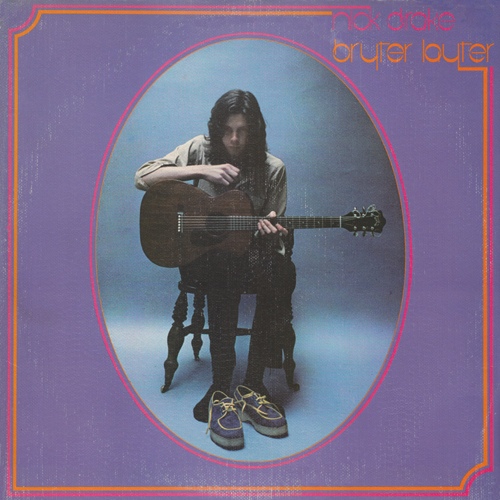
Bryter Layter - Nick Drake - album review

Following on from his 1969 debut release, Nick Drake's 1971 album Bryter Layter saw him exploring some new territory, at least in a musical sense.


The arrangements and melodies here are more expansive and outgoing than those on Five Leaves Left, but it would be a mistake to assume that there is a correspondingly sizeable shift in the subject matter explored. Some of them are what you might describe as deceptively jolly.

Here and there I have seen some criticism of the addition of brass, backing vocals and the like, but to me this is simply a matter of personal taste. Less prominence is given to Nick Drake's acoustic guitar picking than elsewhere in his catalogue.  For what it's worth, I think that by and large the arrangements tastefully complement or augment the songs rather than tarnishing them. In any event, it would have been surprising if the artist had been content to tread water and serve up a similar dish to that represented by Five Leaves Left.

Following on from the opener "Introduction", "Hazey Jane II" features some delicate but pleasing guitar by Richard Thompson, and a sprightly enough tune.  The enigmatic lyrics may or may not have certain meanings. and like other numbers on the record, they almost lull the listener into a false sense of hope and buoyancy.

"At The Chime Of A City Clock" seems to focus on issues of urban living, the bohemian lifestyle, loneliness and alienation.  The saxophone part is an inspired touch, and one of the most effective of the instrumental contributions which characterize Bryter Layter. 

Existential topics are explored by "One Of These Things First". The piano, like other instrumentation on the LP, makes the song "swing", if such a term is appropriate to be applied to the singer-songwriter/folk genre.

Other offerings which stand out are the title track which, whimsically, is an instrumental piece, although the flute alone makes it worthwhile. Such textures help to make the album seem less dry and dusty, but also add to its wistfulness. John Cale makes unobtrusive but excellent contributions on viola and harpsichord to the song "Fly".

It seems to me that "Poor Boy" has attracted the most adverse comment, because of the bossa-nova flavoured rhythmic pattern and the backing arrangement, especially the piano solo sections.  One interpretation of the song's words is that Nick was utilizing the traits of poverty as a metaphor for a more general emotional malaise.

"Northern Sky" is perhaps one of the better known songs in the Drake canon. I might aver that it lacks the punch of other songs here, and it is less ostentatious melodically, but no worse for that. Like other tracks, this one almost flirts with joy and happiness, but the underlying sentiment is one of pleading and uncertainty. John Cale again features here.

"Sunday" is truly evocative and haunting, and the title is cleverly chosen. Another splendid use of the flute. A reminder that instrumentals can convey just as much as any number of "profound" and earnest lyrical outpourings.

Despite appearances, in the final analysis this album feels like more of a "downer" than Five Leaves Left, partly because of the ambiguity in many of the words.  There is an authenticity and starkness about these songs which sets them apart from much of the "confessional" fare being released by other people in the early Seventies.

A fragility, vulnerability and yearning emerge which are quite disconcerting, and the sense of mild disorientation is heightened by the idiosyncratic arrangements. This all makes for a gripping, entertaining but occasionally unsettling listen.


Sunday, 3 January 2016

Judee Sill

Over the decades, much ink and electricity has been devoted to the question of "lost talents" in many spheres of endeavour, including music. One whose claim to this status has greater validity than most is the remarkable American singer-songwriter Judee Sill.

I had known the name Judee Sill for some years, largely as a by-product of my interest in the Californian music scene of the Seventies. However, it was only about four or five years ago that I discovered her compelling music, and the extraordinary and turbulent story of her life. The music instantly spoke to me, both because of its melodic inventiveness and its unusual and challenging themes. Her blend of influences was also untypical for musicians of her time.

Judee Sill was the first artist to be signed to Asylum Records, which was also the home for artists such as Jackson Browne, the Eagles, Joni Mitchell and Tom Waits. She released two albums in the early Seventies, both of which displayed enormous promise and potential. However, various factors led to her disappearance from the scene, and she passed away in 1979, aged just 35.

Her music occasionally exhibits superficial similarities with her contemporaries in the singer-songwriter milieu, such as Browne and Mitchell, but such comparisons grossly over-simplify matters. The lyrics were unlike most of what was around, in their tendency to address spiritual and religious topics, and to employ these things as metaphors. The scope of  her philosophical interests and her musical eclecticism helped to render her work unique and intriguing, and made a pleasant change from the ubiquitous standard navel-gazing of the era.


Her musical legacy may be relatively small in terms of volume of "product" released, but it is far from meagre in its sweep and emotional vibrancy. Apart from the two original studio albums, an album of later demos and other unreleased material ("Dreams Come True...") surfaced in 2005, and a collection of her BBC performances is also out there. Such is the depth and immersive vigour of her work that this canon more than satisfies.

The debut record "Judee Sill" (1971) contains some impressive and likeable songs, and there is an obvious confidence in both her vocal performances and the arrangements, when considering that this is a first attempt. Standout tracks include "Crayon Angels", "The Archetypal Man", "The Lamb Ran Away With The Crown", "Jesus Was A Cross Maker", "Lady-O" (also recorded by The Turtles), "My Man On Love" and "Lopin' Along Thru The Cosmos".

Occasionally hints of the "baroque" pop of The Beach Boys and others come to the fore, but these impulses are more likely attributable to her own varied musical background. Above all, this music is more dynamic and interesting than much of the earnest and stodgy "confessional" fare being produced by "troubadours" at that time.  In approach and ethos I also sense echoes of Laura Nyro's work, namely a self-sufficiency and a distinct and mature artistic vision. If anything, Judee's music is more "compact" and restrained than Laura's, but no less inspiring.

This first release is pleasing to the ear, the vocals are soothing and sometimes ethereal and the arrangements understated.  Strings appear here and there, and some horns are audible on "Enchanted Sky Machines".  By any standards, an assured, credible and enjoyable debut.

Judee Sill spread her wings somewhat on her sophomore offering, "Heart Food" (1973). The selection of songs is more diverse and experimental, and the "folk" element in the music has arguably decreased. Again, a horses-for-courses approach to instrumentation, with violin appearing on the country-tinged opener "There's A Rugged Road", and some pedal steel guitar here and there.

"The Kiss" is one of her best remembered compositions, although I personally prefer the live renditions which she performed at the BBC to this album version. Either way, it is a stirring and absorbing song, addressing weighty philosophical and mystical questions in a most poetic and diverting way.  Not a "pop song" as such, but "The Kiss" does contain some great "hooks".

Other notable songs on "Heart Food" are "Down Where The Valleys Are Low", with its infectious and sprightly melodies, and "Soldier Of The Heart", which possesses a confident and endearing vocal, and which swings noticeably.

"The Phoenix" is another quietly impressive number, its words seemingly examining a restless personal quest for contentment and equilibrium. The penultimate track, "The Donor" is unquestionably the most ambitious track on this record, clocking in at over eight minutes. A mood piece in some ways, and that word "baroque" must rear its head again. To me, it feels ascetic and measured rather than grandiose.

Despite the message being spread through the internet,and through the efforts of fans, my feeling is that Judee Sill has not quite reached the influence of certain other cult singer-songwriters, but it could still happen. Perhaps her music was too esoteric and ambitious to attain mainstream commercial success, but that in no way diminishes its value. She deserves to be recognized as an original and important talent, whose work still sounds fresh, vibrant and distinctive.

Listen to Judee Sill's music.  You'll be glad that you made the effort.


Tuesday, 20 October 2015

Sticky Fingers - The Rolling Stones - album review

Sticky Fingers, released by the Rolling Stones in 1971, is deserving of its place in the company of the other great studio albums issued by the group between 1968 and 1972. Of the albums from that era Sticky Fingers has the lowest emotional pull for me, even though it contains some truly great tracks, and it has also stood the test of time well.

The reason why it doesn't chime as richly as the others is that it is rather "neat and tidy". It is in fact a stylistically diverse record, but is structured in such a way that it feels very orderly. So it serves more as a collection of songs rather than an overall musical or philosophical statement. Saying that it lacks the social relevance of Beggars Banquet and Let It Bleed is not wholly fair. One could argue that Sticky Fingers reflects the jaded resignation and stagnation of the early Seventies. Whilst in the late Sixties people were seeking to change the world, or to vent their anger, by 1971 the trend was towards looking inwards or numbing the pain.


The opening number on the LP, "Brown Sugar", is one of the band's signature tunes, although I have heard it so often that its impact has become progressively dulled, and there is a danger that it can begin to feel like a self-parody or "Stones-by-numbers". Viewed objectively, it is a musical tour-de-force, although the lyrics are dated to put it kindly, regardless of how much tongue might have been embedded in the collective cheek of the musicians. Keith Richards' riffs and Charlie Watts' drumming are still worth hearing, no matter how much familiarity has eaten away at the song's freshness.

This was the first Stones studio album to feature Mick Taylor throughout as a full member, and it is noticeable how his presence and abilities augment the group's palette. "Sway" is one instance of this, his guitar prowess adding much subtlety and melodic texture, as it does on other numbers.

"Wild Horses" is one of the band's most enduring and heartfelt ballads, benefiting from one of Mick Jagger's most impressive and underrated vocals. Keith's electric guitar flourishes are very evocative and significantly enhance the mood of the piece.

I find "Can't You Hear Me Knocking" to be quintessential early Seventies Stones, at least in its early stages. The angry rhythm, the lyrical subject matter, the murky vocal harmonies in the chorus, nicely buried slightly in the mix. The closing instrumental section is slightly untypical of the Stones, but is beautifully executed, with significant contributions from Bobby Keys and Mick Taylor. These passages have a vaguely Latin feel, and are in keeping with the laid-back, "decadent" feel of much of the record.

"You Gotta Move" in some respects harks back to the stylistic territory covered by Beggars Banquet and Let It Bleed, and it is another showcase for the talents of Mick Taylor.  The song "Bitch" is so wonderfully taut, urgent and airless that it can almost pass by unnoticed. It has some nicely ragged vocal harmonies and effective brass parts.

The influence of the Stax sound is clearly evident on "I Got The Blues", most conspicuously in its horn arrangement and the organ playing of Billy Preston.  Another fine Jagger vocal here, and although overall the song is relatively "minor", it is just too good to be deemed filler.

"Sister Morphine", co-written by Mick and Keith with Marianne Faithfull, is a haunting creation, and it also sounds like a hangover from the material of the late Sixties, which is not surprising when one realizes that this version was recorded during the Let It Bleed sessions. The slide playing of Ry Cooder is a key element of the song's power. Of course the subject of the words was a theme which ran through Sticky Fingers, in one form or another...

The penultimate track on the album, "Dead Flowers", is one which I suspect divides opinion. One of the band's first overt excursions into the world of country-rock. It may be tongue-in-cheek lyrically, and to some degree musically,although not without its merits. The chorus harmonies are quite stirring, and the song helps to lighten the mood amidst the weightier and more earnest material which surrounds it.

"Moonlight Mile" deserves its reputation as one of the most effective album-closers in rock music. Atmospherically and spiritually it complements the rest of the record, and it arguably encapsulates where the wider music scene was in 1971. Mick's vocal shows some versatility and range, and strengthens the view that this album is one of those which displays his voice at its strongest and most flexible. Strings are employed judiciously, and other instrumental touches accentuate the tone and ambience of the song.

So in summary it takes a little work to absorb and appreciate the strengths of Sticky Fingers. It can be seen as a summation and a rounding up, or polishing, of what had gone immediately before. As an entity in itself it may be perceived as less iconic and "important" than the other classic Stones releases of the period, but on closer examination it is as substantial as any of them, and arguably contains less in the way of lightweight material.

The music is still earthy and authentic, but also focussed and self-assured. A very fine album.


Wednesday, 9 September 2015

Tago Mago - Can - album review

Few, if any, artists can have created a run of albums of the consistent quality achieved by Can during the early Seventies. Perhaps the most striking and influential of those records was "Tago Mago", released in 1971 as a double album. I have seen it described by one or two critics as one of the greatest albums ever recorded, and to my ears this is no exaggeration of its merits.

Funnily enough, I did not really "get" the music of Can until comparatively recently.  They seem to be one of those acts whose charms take a while to impress themselves on the listener. Once my defences were breached, however, I found it impossible not to immerse myself in their work, especially that run of records from the period 1971 to 1973. The type of material which jolts one out of any musical inertia and complacency which may have amassed.


The astonishing thing about "Tago Mago" is that in 2015 it still sounds so fresh, pristine and "contemporary". Some of the music of that era which also falls under the umbrella of "experimental" has not aged anywhere as gracefully. This album, on the other hand, has an immediacy and a punch which are enduringly compulsive and enthralling, distinct in this respect even from the other ground-breaking music which was emerging from Germany at the same time.

Despite being categorized by many as avant-garde, the outward format of the Can group was very much that of a conventional rock group.  Vocalist, guitarist, bass player, keyboardist, drummer. The most immediately noticeable elements of their work, on this series of albums at least, are Jaki Liebezeit's astoundingly energetic drumming and the vocals of Damo Suzuki, who made his Can debut here. However, this should not make us overlook the contribution of the other instrumentalists, who were all integral elements in constituting the intoxicating Can sound during their best years.

Like so many great pieces of art, the draw and appeal of Can's best music is very difficult to encapsulate and convey in words. At their best, however, they were both rhythmic and blissfully melodic, often exhibiting these traits simultaneously. The terms "avant-garde" and "experimental" can serve to frighten off some people, but Can's music is ultimately as welcoming and comforting as any mainstream pop. Just cast off your blinkers and preconceptions at the door....

On such a uniformly strong record it is difficult to pick out highlights, but the track "Halleluhwah" is a particularly gripping and impressive creation, clocking in at over eighteen minutes, and for many representing the apogee of their journey. Liebezeit sounds like he has grown an extra set of limbs, the rhythm and tone are slightly more aggressive than elsewhere on the set, and the sheer length of the piece gives scope for diversions and more time for a mood and a groove to assert themselves. As elsewhere on "Tago Mago" the keyboards are not generally as prominent as one might imagine, but they are essential in engendering that peculiar ambience. This applies, if not as much, to the guitar work.

Having waxed lyrical about "Halleluhwah", it is fair to point out that the other numbers are almost all strong and interesting in their own right. Aside from "Halleluhwah", the other two more lengthy and "unconventional" pieces are "Aumgn" and "Peking O", the latter featuring some striking sound effects and vocal treatments. One gets the feeling that these two tracks more accurately embody the group's musical heritage than the more compact material. Can had the consummate knack of making such extended pieces seem accessible and benign, however.

Of the shorter items, the opener "Paperhouse" has a laid-back but insistent groove to begin with, before branching out, and it is something of a guitar showcase for Michael Karoli. It is followed by "Mushroom", which feels to me more austere and "minimalist".  One can easily see how this track and its character might have rubbed off on many musicians who emerged later.

"Oh Yeah" is an absolute delight and and an adventure, from the opening "explosion" sound effect, to the propulsive beat, to what sound like backwards vocals. As so often with Can, the rhythm is soothing rather than grating, and the keyboards and guitar both accentuate this flavour and lay textures of their own.

The closing song "Bring Me Coffee or Tea", at its outset at least, displays the mellower side of Can, and is an ideal way to bring us down to earth. There is even what sounds like acoustic guitar in there. More great drumming, if more delicate and understated.

I have not compared Can or their music to other artists, quite simply because there is nothing who they can safely be compared to, certainly among their contemporaries. It is unlikely that you will be open-mouthed with astonishment when first hearing them. More likely, you will eventually, after careful attention, find yourself muttering something like "my word, these guys were good".....


Thursday, 14 May 2015

'Til I Die - The Beach Boys

When the music of Brian Wilson and The Beach Boys is discussed, it is invariably asserted that their most "cerebral" and important music was recorded around the time of "Pet Sounds", and in the period shortly thereafter (i.e. "Good Vibrations" the Smile Sessions and so forth).  However, the song "'Til I Die", included on the group's 1971 album "Surf's Up", may well represent the zenith, and the logical conclusion, of what Wilson had been aiming at since 1965 or thereabouts.

"'Til I Die" has nakedly existential lyrical content, and is ethereal to an almost otherworldly degree. I have heard it described as a mantra as much as a song, and I can see why. The inspiration apparently came to Brian Wilson during a night-time visit to the beach. At once, it conjures up the notion of the utter insignificance of each one of us in the grander scheme of things, hence the references to "a cork on the ocean", "a rock in a landslide" and "a leaf on a windy way", and it all ties in with the songwriter's other ruminations about loneliness and alienation.

It is quite pertinent that this track is regarded by many observers as Brian Wilson's last great song. It signifies almost a settlement or reconciliation of the territory which had been explored. Was this the end of the journey which had begun around the time of "California Girls"?  It is significant that this was purely a Brian creation. Input from, or collaboration with, other people would have tainted the purity of the emotions being expressed here.

The song can be interpreted as an expression of resignation, despondency or helplessness, but it can also be seen as a "coming to terms" with the realities of existence. This multi-levelled meaning is one of the things which makes "'Til I Die" so compelling.

Songs about spiritual or cosmic concerns run the risk of being trite or pretentious, but "'Til I Die" pretty much hits the spot. It does not outstay its welcome, having lyrical conciseness and a complementary rhythmic base. The complexity of the harmonies and the melodic nuances merit repeated listening.

It is well worth a listen even for non-Beach Boys fans, and for non-music fans for that matter.

Friday, 3 April 2015

The French Connection - movie review

I recently watched the classic 1971 movie "The French Connection", directed by William Friedkin, and starring Gene Hackman and Roy Scheider.

The plot, which is based on a non-fiction book by Robin Moore, revolves around the attempts of two New York detectives, Jimmy "Popeye" Doyle (Hackman) and Buddy Russo (Scheider), to apprehend a gang of narcotics smugglers.


The factors which in my opinion pervade this whole movie are darkness of tone and a corresponding darkness of scenery and imagery. Most of the scenes are located either at night or in cavernous and forbidding, dimly lit daytime settings. These elements, together with the camerawork and lighting, accentuate the claustrophobia and insidious tension. The fact that the most of the movie appears to have been filmed in cold weather may also have assisted.

Sweeping, panoramic shots are few and far between. The scenes in Washington DC, in bright sunlight, serve as an exception. The accent is firmly on urban decay and the toughness of inner city existence. Even the policemen themselves appeared to pursue a frugal and unostentatious lifestyle.

An intimacy and realism characterizes many of the scenes, including the surveillance and undercover sequences.  "Cinema verite" is probably not the correct term, but it nearly borders on "fly on the wall" at times. The editing also contributes to the overall effect.

The rawness and immediacy are also augmented by the sparsity of the dialogue, and the sparing and judicious employment of music, the visuals often sufficing to tell the story. In highlighting the "dark" motif, it should be stressed that both natural and artificial light are utilized beautifully to capture and convey the mood.

The Doyle character, as played by Hackman, is a very plausible and rounded one. The words pugnacious, irascible and even avuncular all spring to mind. Doyle could be seen as a forerunner for other prickly, unorthodox detectives who appeared in films and television later in the 1970s, inducing suspicion and disquiet in his superiors, but surviving by virtue of the results which he delivered.

The popular image of this movie is largely associated with the Doyle character, and this tends to overshadow the role of  Russo, so ably portrayed by the excellent Roy Scheider. One of the more intriguing, but less discussed, aspects of the picture is the nebulous relationship between Doyle and Russo. It does not necessarily conform to the audience's expectations of how two "partners" should deal with each other.

One or two things occurred to me during my most recent viewing. One relates to the scene where Doyle uses the pretext of a raid as a "smokescreen" to enable him to speak to an informant.  Is this a common device in crime shows and movies?  Later in the decade, a similar scene was included in an episode of the British television series "The Professionals". This also begs the question, is the practice a regular one in the real world?

I had also totally forgotten that The Three Degrees make an appearance in a nightclub scene!

Another important, if minor, touch was the decision to include some French dialogue, with subtitles. They add to the authenticity and the realism of the film.

After the absorbing but relatively sedate start to "The French Connection", the pace quickens,  around the point where Doyle and Charnier engage in a battle of wits on the New York subway. The climactic phase commences with the attempt on Doyle's life and the iconic and pulsating chase scenes.

I find some of the scenes towards the end unsettling, this sensation compounded by the contrast with the more measured fare which precedes it. Did the owner of the vehicle commandeered by Doyle receive compensation, I wonder?

Some people might regard the enigmatic ending as unsatisfactory, but on reflection I think that it is in keeping with the edgy and uncompromising nature of the film. "The French Connection" is riveting viewing.  It might not have been appreciated at the time, but in some ways its appearance heralded a golden period for American cinema, and cinema in general.  Its style and tone were at least partially indicative of what was to follow during the remainder of the decade.


Friday, 30 May 2014

Little Feat - the first album - review

It is common to assert that Little Feat's best work centred around the period 1972-74, but their 1971 debut album was a substantial record, featuring, albeit in embryonic or prototype form, some of the hallmarks which would dominate their future endeavours.
On the surface, Little Feat seems a conventional effort, not as experimental, esoteric or eclectic as the group's subsequent recordings, but closer scrutiny reveals a distinct character, if enclosed within a relatively uniform veneer. The background of the musicians (some of whom had inhabited the Zappa/Beefheart arena) blends with the blues rock/country rock backbone to create something endearingly idiosyncratic, refreshing and entertaining.
The sound on this record is more streamlined and ascetic than the later Little Feat releases, and this is partly determined by the line-up of the band at the time, which was a comparatively straightforward four-piece (guitar,piano,bass,drums). The exotica of the later more "funky" style is largely absent here, and this less ambitious foundation is anchored by the proficient piano work of Bill Payne and a solid rhythm section. Lowell George's slide guitar is to the fore on several tracks. The group's acknowledged virtuosity is thereby more concentrated and less diffuse.
It is fair to say that some of the compositions on this album edge more towards the "conservative", in musical terms, but this should not mislead us as to its level of melodic invention, and the quality of the lyrics. Several of the more "mellow" numbers, such as "Brides of Jesus", "Takin' My Time" and "I've Been The One", can almost seem to drift by unnoticed, and real attention is required to appreciate their charms and depths. In that sense, this is a record to really listen to, rather than simply permit its vibes to seep into one's sub-conscious.

The lyrical content and general atmosphere are very varied, from the light-hearted ("Crack In Your Door", "Crazy Captain Gunboat Willie") to the vaguely surreal ("Strawberry Flats", "Hamburger Midnight") , to the poignant ("Truck Stop Girl") to the ethereal.

I'm not sure whether it was intentional, but the running order places two very meaty and energetic rockers up front. This may have been a way of emphasising that for all the diversity of styles and genres, Little Feat remained in essence a bluesy, rootsy rock n roll band. "Snakes With Everything", with its marvellous intro, is an ideal opener, and I can imagine that the members of the Black Crowes may have come across it at some point in their youth!

If there is any one feature of Little Feat which lingers in the psyche it is Bill Payne's superb piano playing, a foretaste of the artistry which would form a large part of the bedrock of the band's appeal and unique pull. His contributions here are almost exclusively on acoustic piano, in contrast to the more varied diet of keyboards (organ, electric piano, synths etc) which featured on the later albums. There is an agility and sprightliness about these parts, and it is a tribute to Payne's abilities that they almost overshadow the presence and guitar/vocal prowess of Lowell George.

If not as infectious, libidinous and irresistibly rhythmic as Little Feat's later releases, their debut LP betrays many of the characteristics which made them so special, and which continue to make them so cherished and fondly remembered. If people do nothing else, they should try at some point in their lives to check out "Crack In Your Door" - hilarious lyrics, beautiful guitar and piano work, and an overall effect which will make one both smile and marvel. An overlooked gem on an album which can justifiably fit the same description....