Showing posts with label 1974. Show all posts

Monday, 8 March 2021

Red - King Crimson

From time to time, and by and large this is a process that first made itself visible to me around my  mid-twenties, my musical horizons and my musical sensibilities undergo a realignment. Over the past couple of years, I sense that I have gone through one such phase. If my musical world-view is like a living creature, then its sinews become stronger and more dextrous, and the process feels like a natural companion to the cycles of life.

Part of this latest renewal was fuelled by my properly exploring the music of King Crimson for the first time. All of their albums from the period 1969-1974 are noteworthy in their own right but Red, released in 1974, warrants special praise and examination.

I think that one of the things which sets Red apart is its deceptiveness.  It perhaps has a reputation as 'uncompromising' and 'challenging', and early exposure can reinforce this notion, but more careful inspection reveals the marrying of differing tendencies. Moments which might induce a sense of foreboding are tempered by flourishes of melody and finesse. Importantly, the instruments are allowed space in which to breathe, and John Wetton's purposeful but soothing vocals introduce an extra dimension.

It is worth noting that even before this record was released, King Crimson had disbanded, a move which in fact turned out to be a mere hiatus. I have heard it postulated that this move demonstrated great savoir-faire, by anticipating dramatic shifts in the direction of rock music. From my point of view, in any just, rational world King Crimson should not have had anything to fear had they remained together.

Red is portentous, in the creative and constructive senses of the word, and indicative of a cultural time and place, but without the posturing. Just look at some of the people who 'name-check' the record. Its aesthetic, and the brand of edgy and challenging prog-rock which it exemplifies, endure brightly. King Crimson's music from this period has a curious and invigorating quality. Melodic yet propulsive, organic yet modernistic, crystalline yet strangely calming. 

The original LP had just five tracks, but it doesn't need any more to make it fulfilling and impactful. 

The (instrumental) title track really does set the tone. For 1974, this is heavy stuff.  Bill Bruford's work on drums and percussion definitely imbued the group with additional depth and Robert Fripp's guitar teeters on the verge of losing control. There is a menace and a sense of purpose which for me are emblematic of Crimson at this stage of their evolution.

'Fallen Angel' benefits from a strong melodic base, an endearing John Wetton vocal and a reflective, almost wistful quality, but it also emits some of the darkness and anger which permeates the record as a whole.

In my estimation 'One More Red Nightmare' is the centrepiece, epitomizing the 'duality' which is one of the album's most striking traits. The saxophone passages, some 'surreal' percussion, the driving guitar riffs and the energetic vocal all form part of the mixture. 

The track 'Providence' is very 'experimental', it must be admitted, but it does have its pleasing moments, and the vitality of what surrounds it perhaps excuses some indulgence.

And then to 'Starless', one of the group's signature songs. The central guitar motif is highly lyrical, seductive almost, and the separation between instruments, and between instruments and vocals, is in keeping with the album's general orientation. Saxophone is employed again, this time more softly, and greatly enriching the palette. The 'middle section' of the track might seem uninspired at first, but stick with it! 

This is the kind of album which reveals more of its secrets and its dark recesses with each successive listen. Not always a comforting experience, but invariably a rewarding one.



Wednesday, 11 September 2019

The Enigma Of Kaspar Hauser - 1974 film

One of the most affecting films which I have seen recently was The Enigma Of Kaspar Hauser, written and directed by Werner Herzog, and released in 1974.

Based on real events, and set in the 19th century, the movie follows the experiences of Kaspar, who had spent the first seventeen years of his existence imprisoned in a cell, with little or no contact with society or other people. One day he is released from this captivity by a mysterious man dressed in black who had apparently fed him previously.

Initially Kaspar is "abandoned" in a nearby village, and is viewed with curiosity by the locals. Having been cut off from "civilization", he has not been nurtured, or raised on societal norms. He therefore exhibits different thresholds, interpretations and reactions towards things around him.

The spectacle of Kaspar getting used to his new surroundings got me thinking.  Perhaps people don't realise what "natural" is, and overlook the impact of man-made customs and laws. Because Kaspar does not conform to society's conceptions of "civilized" behaviour, it seems that the people decide that he has to be exploited, demeaned and humiliated. Fear and ignorance come into play here, in addition to deference to the status quo and "how things are done".

Kaspar was taught by the villagers largely on their terms.  Later, after being rescued and "adopted" by a professor,  he was allowed to find his own way more, and to express himself.  Unsullied by the strictures of mainstream society, he is not brainwashed and indoctrinated like others, on questions of religion, social status and morality. Also, he refrains from subscribing to conventional wisdom on some academic matters.

Kaspar has not been tutored in the niceties of polite society.  He is not aggressive, but he has developed differently. In seeing his musical inclinations, we perhaps see a hint that some things transcend social mores and hierarchies.

The concluding passages of the film are pleasingly ambiguous, and are open to various interpretations. One idea in my mind was that Kaspar was physically attacked because he was not "developing" or assimilating in the manner hoped for or anticipated, and that the "experiment" was going awry.

I found the autopsy scenes fascinating. The participants were arguably missing the point on the question of "abnormality".  Perhaps it is the others who are strange and abnormal, rather than Kaspar himself?

This film was a very interesting and intriguing watch, posing some fairly profound questions about how our society, and our perceptions of normality, have developed over the centuries.

Wednesday, 4 September 2019

Ali: Fear Eats The Soul - 1974 film

Increasingly I have been drawn towards European art cinema, and in particular the simpler works with restrained production values, which make the viewer think rather than assaulting the senses with special effects and action sequences.

One such film which I watched recently only reinforced the direction of my movie-viewing habits.  This was Ali:Fear Eats The Soul, a 1974 film written and directed by Rainer Werner Fassbinder.

Set in Munich, the film focuses on the relationship between a 60 year old German woman (Emmi) and a younger Moroccan guest-worker (Ali).  They are subjected to much prejudice and hatred, and Emmi is ostracized by many of those around her, particularly after the pair get married.

The dialogue between the two main characters is very natural and charming, and I found myself rooting for the two main characters (Emmi and Ali), as they are both sympathetic and likeable.

As much as the relationship between Emmi and Ali is endearing and touching to behold, the attitudes of many of the people around them are troubling and disturbing.  I guess that Fassbinder was shining a light on the darker aspects of the German economic miracle, and of West German post-war society generally.

The contrast between the humanity and genuineness of Ali and Emmi, and the rigidity and bigotry of other people is very stark.  The film also explores themes of loneliness, isolation and alienation. The settings are quite austere and bleak, exacerbating these sensations. Interestingly, and disconcertingly, many of the issues brought up by this picture are still resonant today.

In addition to the other merits of the film, the acting is of a high order, and special praise has to go to Brigitte Mira, who plays the role of Emmi.  Fassbinder himself  acts in one of the supporting roles.

There is some fine symbolism in this movie, and Ali and Emmi are often shown alone, with other people either absent or at some distance, as if to emphasise how they are alone, shunned by the rest of the population.

Ali: Fear Eats The Soul I found to be an absorbing and engaging film, the kind of work which really makes people think.


Sunday, 16 April 2017

The Damned United (2009 film)

Some time ago I wrote a short blog post about the 2009 movie The Damned United. I recently watched the film again, and thought that I would put together a slightly more substantial and considered assessment.

The film chronicles the ill-fated forty-four day tenure of Brian Clough as manager of Leeds United football club in 1974, and is adapted from David Peace's book.


Michael Sheen delivers a superb performance in the Brian Clough role, although some may contend that the depiction of Clough's well known character traits and mannerisms is slightly exaggerated and lacking in nuance. However, as the film progresses the portrayal does become more rounded, showing frailties and insecurities.

The "aesthetic" of the picture to me brings across some of the gritty authenticity of English football, and indeed England in general, during the late 1960s and early 1970s. Images of terraced houses and so forth evoke feelings of "dark Satanic mills". There is not much sunshine and levity, but much honest toil and plain-speaking.  I find some modern films to be bland and clinical in their visual backcloth, but this doesn't fall into the trap as much as most.

A large portion of the movie is given over to "flashback" sequences which chronicle the relationship, and the animosity, between Clough and the long-time Leeds manager Don Revie. The football action sequences are deeply unconvincing, the actors being too old and not athletic enough, although these scenes do succeed in creating atmosphere and context for the overall story. The producers sensibly employed archive footage to help document the tale.

When I first viewed the film, I did not fully appreciate or take in the excellence of Timothy Spall's performance as Clough's assistant Peter Taylor.  In this depiction, Taylor was often the voice of reason and common sense amidst Clough's excesses and flights of fancy.  Assertive, pugnacious, but less egotistical.

Whether the characterization of Taylor presented here is an accurate representation of the true picture is another matter, but it makes for good drama, and occasionally even good comedy. The movie also acknowledges and emphasizes Taylor's input and contribution to the partnership - his eye for a player, his practicality, his contacts and his all-round knowledge of the game.

I won't ramble on about any technical or historical inaccuracies which spring up, because they always occur in films of this nature. Anyway, they are kept to a tolerable minimum, as far as I could ascertain.

As a supporter of Leeds United, I will try not to be overly paranoid concerning the film's portrayal of the club and of Don Revie. Overall, I would say there is relatively little to complain about on this score, and after all, some of the characteristics and tendencies which are highlighted are ones which we relish and glory in...

Michael Sheen has been lauded for his portrayal of Brian Clough's public persona, but for me the most impressive aspect of his performance was how he conveyed the sense of doom and helplessness, as the forty-four days unfolded, and as his position at Leeds gradually unraveled. Lonely, isolated and vulnerable, and missing the wise counsel and comradeship of Peter Taylor.

So, still a film very much worthy of  a watch, and praise also for the use of "Flight Of The Rat" by Deep Purple!

Wednesday, 28 October 2015

Eldorado - Electric Light Orchestra - album review

They may not be too fashionable, but I retain a fondness and respect for the music of the Electric Light Orchestra. My brother got into them long before I fully appreciated their merits. Jeff Lynne's pop craftsmanship and gift for melody were the band's major assets. Refreshingly ELO did not set out to change the world;they simply aimed to make good music.

In declaring my liking for ELO's work, I would stress that my tastes have gravitated more and more to their earlier records, in the main the period ending around 1976/77. This phase of the group's career combines some progressive and experimental elements with impeccable pop/rock influences, most conspicuously The Beatles.

Prominent amongst the early releases is 1974's Eldorado. A concept album, it seemingly explores the dreamlike visions of a person striving to flee his dull existence. It was also their most lush and "polished" album up to that point, from a production and sound standpoint. It is possible to contend that other ELO albums contain stronger individual songs, but few hang together like Eldorado does. 

As befits any self-respecting concept album, this record is bookended by an overture/prologue and an epilogue/reprise/finale. The first proper song is "Can't Get It Out Of My Head". To coin a phrase, this one is more deceptive than it sounds, and which in its ability to implant itself in the psyche more than lives up to its title. It contains a few evocative lines, and was a hit single of some magnitude in the USA.

"Boy Blue" appears to relate a tale of a conquering hero returning to his hometown. There are some mildly interesting lyrics and some pleasant instrumental flourishes, but somehow this song fails to genuinely grab me or animate my imagination.

"Laredo Tornado" is a different matter. There is plenty to hold the interest, including sections which almost verge on the funky (not a word commonly associated with this band!). Jeff Lynne's facility for tunefulness is on display, and effective use is made of electric piano and what sounds like a clavinet. The strings on this track have real personality, presumably because they were performed by the band members rather than the session "orchestra".

The next number, "Poorboy (The Greenwood)" may have been intended as a "cousin" of "Boy Blue". It sounds vaguely similar , but has greater dynamism. The song's "protagonist" evidently sees himself as a Robin Hood type figure. The backing track features the familiar piano-bass-drums set-up which would proliferate on ELO records, although the drums sound sinuous and agile.  The group's drum sound would only become ponderous and excessive a bit later on.

With its blatantly Beatlesque leanings, "Mister Kingdom" is one of the LP's high points. The words directly address the "concept". The chorus is quite stirring, and the orchestration remains just the right side of ostentatious.

"Painted Lady" is somewhat unusual for Electric Light Orchestra, with its almost bluesy or jazzy flavour. Not a very imaginative song for me, and it does feel a little out of place among the more abstract and ethereal excursions which predominate on Eldorado.

A curious piece on more than one level, "Illusions in G Major" clearly owes a lot to Jeff Lynne's rock n roll heritage.  It also reminds me of one or two songs which appeared towards the end of the life of The Move. The lyrics are intriguing, and are possibly the most exotic or surreal on the record.

The title track features a simple but enticing melody in the verses, albeit offset by a dose of bombast in the choruses. I imagine that in studying the lyrics to these songs, many people will allow themselves a knowing smile, having recognized visions and dreams similar to those in their own supernatural wanderings.

So, one or two tracks are functional, but they function as part of the greater whole. An intriguing and entertaining journey, and a brave attempt at doing something different. Not a masterpiece by any means, but it is still one of ELO's most noteworthy achievements, and also serves as a healthy slice of escapism...


Monday, 8 June 2015

We Are The Damned United-The Real Story Of Brian Clough At Leeds United-Phil Rostron

The 44-day tenure of Brian Clough as Leeds United manager in 1974 has probably commanded more column inches and popular cultural scrutiny than any other period in the club's turbulent history. An addition to the oeuvre is Phil Rostron's book "We Are The Damned United - The Real Story of Brian Clough at Leeds United", originally published in 2009.


This particular subject touches a raw nerve among Leeds supporters, and there is a tendency for people to become defensive and touchy about it, not always indulging in lucid and critical thinking. The whole affair, I suspect, is somewhat difficult for outsiders and insiders alike to comprehend, and its nebulous and nature still makes it intriguing and frustratingly elusive four decades later.

This book is not a strict chronicle of the 44 days. There is ample build-up and scene setting, and several tangents are pursued. Some readers may seek a little more coherency and focus, but overall I found it enjoyable, if not that comprehensive.

The backbone of the book is formed by the contributions of numerous individuals who were connected or associated in some way with either Leeds United or Brian Clough, or both. We do not just hear from the "usual suspects" either;we get observations and recollections from people whose view of events has perhaps not been widely heard previously. It often seems to me that most of the established Leeds players of the time closed ranks, and decided on a story from which they would not deviate.

A nice touch for me was the inclusion of  excerpts from contemporaneous newspaper reports from the time in 1974 when the drama was unfolding. The match reports do not paint a picture of unmitigated gloom or despair, although the real problems were of course manifesting themselves behind the scenes.

Whilst "We Are The Damned United" is in many ways evocative of the atmosphere and ethos of football in the Seventies, it also serves to remind us that egos and intransigence were just as prevalent in those days, no matter how different the financial ground rules have become. Human nature has not changed in the intervening period.

What shines through here also is Brian Clough's approach to the game and to coaching. The simplicity of his footballing philosophy is something which many could learn from. His laissez-faire style was perhaps one of the things which the Elland Road stalwarts had most trouble adjusting to. The stories here about the regime in training sessions are quite illuminating.  The assertions that Clough's methods would only work with youngsters and misfits, and not established stars, do have some merit, but may be an over-simplification.

Was either side disposed to make concessions and meet half-way, or as the author suggests, was this a case of an irresistible force meeting an immovable object?  It would be nice to think that the impasse could have been resolved, but my feeling is that this was an unusual set of circumstances which made the situation untenable. We do not live in an ideal world, and "ifs and buts" are merely academic in this case.

It is pointed out by several contributors that the absence of Peter Taylor from Clough's side deprived him of a potentially emollient influence when dealing with his new charges. This is often cited as an "excuse", often by those who do not wish to confront more uncomfortable aspects of the saga. At the same time, the Taylor factor is undoubtedly part of the complex state of affairs which together dictated how things would turn out.

There is a wealth of anecdotes here about Clough's idiosyncrasies, and his often unconventional style. and it is hard not to find the eccentricities endearing, even if they were not always appreciated by those on the receiving end. Even in the football landscape of the 1970s and 1980s, his achievements with Derby County and Nottingham Forest still inspire awe and respect. One or two nuggets here also paint an interesting portrait of the man - one story from Duncan McKenzie springs to mind, in which he touches on the loneliness and isolation which Clough may have felt during his sojourn at Leeds.

All in all, this was a pretty good, if rather disjointed read. It is probably true to say that the definitive tome on "Cloughie At Leeds" has still to be written.


Friday, 27 June 2014

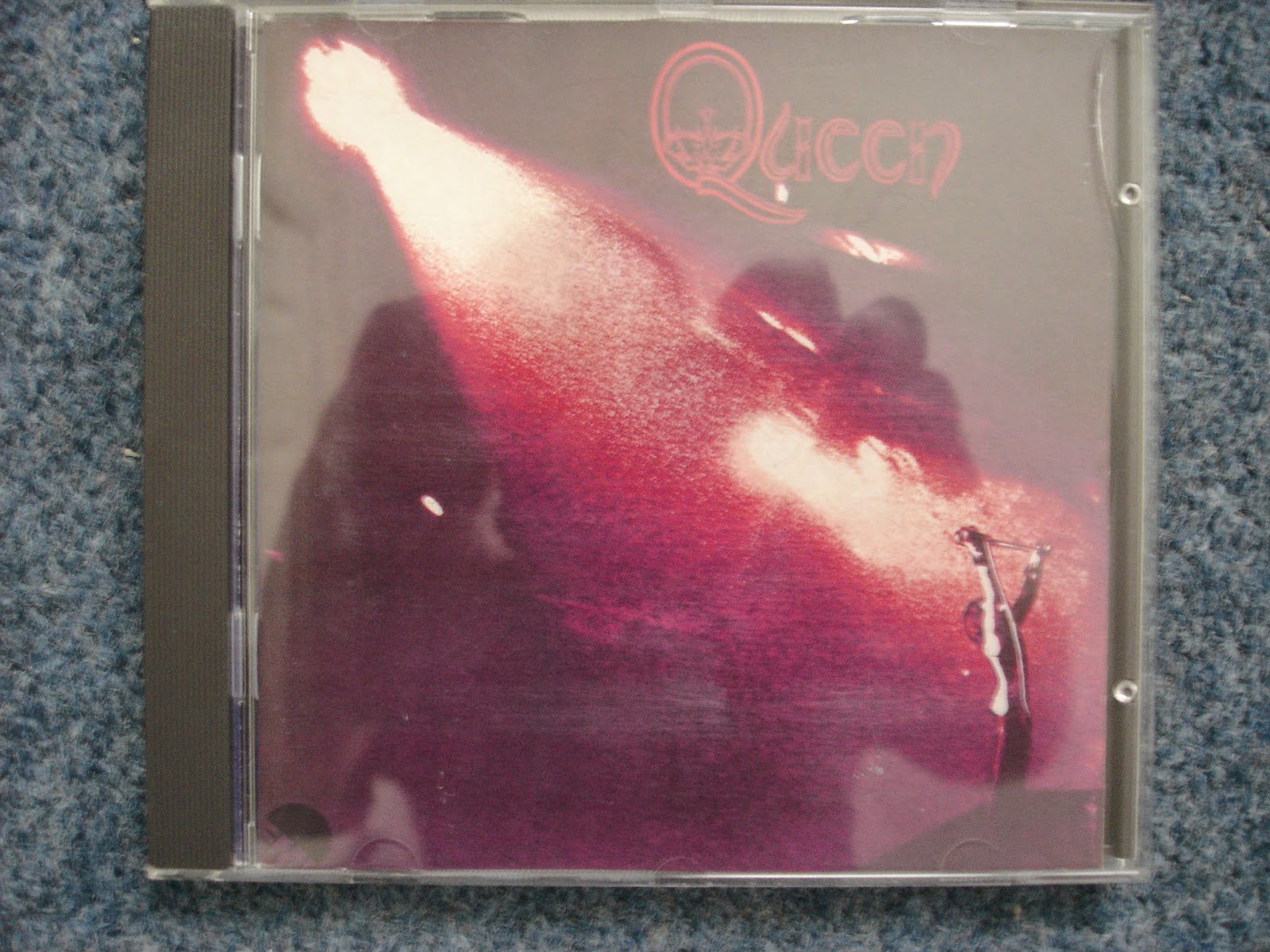
Queen - the debut album - review

Judgement of debut albums is fraught with distortions and wishful thinking, particularly those by artists who subsequently go on to achieve great things. There is a tendency to retrospectively attribute to them merit and qualities which they do not really possess.

I often think of Queen's debut album in these terms. A few pundits have hailed it as a minor classic, but their arguments rarely hold up to scrutiny. Yes, there is some promise there, but it is hardly the masterpiece which some maintain that it is. There is very much a sense of a work in progress, of a sound and style taking shape and not yet crystallized, and of a group still fumbling for a firm direction.

A distinct sound would not truly emerge until the third or fourth record, and this was in part due to the circumstances under which the guys were forced to record their music.  It was put together in fits and starts, with the four musicians apparently grateful just to be in the studio at all, but the situation was scarcely ideal if one was seeking to develop something genuinely coherent and well-crafted.

The spasmodic and rushed nature of the sessions is perhaps reflected in the relative lack of polish in some of the tracks, certainly when compared with their later work. The sound sometimes feels "half-baked", scrappy rather than genuinely raw. Only fleetingly does the trademark Queen sound, or indeed the hallmark of star quality, shine through brightly. "Keep Yourself Alive" remains impressively vigorous and fresh, but one or two other songs sound perfunctory and uninspired, and "Son And Daughter" and "Jesus" have not aged too well...

I have heard it suggested in the past that one of the deficiencies of this album is a failure to adequately project the talent and personality of Freddie Mercury. I am not sure that this criticism is fully justified. Upon closer inspection, his vocal range is quite well captured. The problem for me is the slightly nebulous and tentative feel of the album overall.

At this early stage, we can discern the beginnings of the complexity of "Bohemian Rhapsody", mostly in the structure and lyrical content of "My Fairy King" and "Liar". Brian May's ethereal and reflective songs, an often overlooked and important facet of Queen's 1970s albums, are strongly represented by "Doing All Right" and "The Night Comes Down".  These numbers help to provide texture and balance, and are probably the most pleasing to the ear for this listener in the 21st century.

It is also clear that the various members were still very much learning the art of songwriting, a process which began to bear real fruit on "Sheer Heart Attack".  The occasional rambling instrumental section betrays a lack of focus, and they would eventually learn how to achieve a more tasteful balance between grandeur and tightness, reducing the tendency towards self-indulgence whilst still allowing the band's talent and inventiveness to flourish and display itself.

It is often said that Queen were aiming for a "layered" sound, but they do not achieve that here, probably due to a combination of the circumstances under which the record was made and their own lack of experience and confidence. This may explain why on their second album, they went to extremes in terms of multi-tracking and overdubbing! The follow-up does have an identity, a sweep and a sense of drama which "Queen" lacks, even if the band in early 1974 was again still not the finished article.

This album does have a certain period charm, and of course historical curiosity and significance. It would be dishonest and foolish, however, to pretend that Queen's first record was of the same quality as the debut efforts by the likes of Led Zeppelin, Van Halen and Boston, and I say this as a Queen fan of 35 years standing!. It is not a bad album, but they did not arrive fully developed like some of their contemporaries.


Tuesday, 20 May 2014

Early World Cup Memories

With the football World Cup rapidly approaching, I am trying to summon up some enthusiasm for the tournament. Even the current flurry of squad announcements has not totally succeeded in this regard, and my next resort may be to watch some old footage. Of course, wallowing in nostalgia may also aid the process...
 
I was a mere toddler when the much-mythologized 1970 World Cup took place, so the 1974 version is the first one which I can vaguely remember, although clear recollections are cloudy and elusive. By 1978 I was a fully paid-up football fanatic, and so Argentina 78 was a big deal, although I was oblivious to some of the manifold unsavoury aspects of that tournament, and the fact that in strict footballing terms, it was quite mediocre.
 
Because of the time difference between South America and Europe, many of the games were televised live late in the evening here, and satellite technology was thankfully still a touch rough and ready, so the picture quality was not always pristine, and the commentary came through in that gloriously evocative "telephone line" flavour. Digital technology soon arrived and ruined everything....
 
My chief recollections of the 1978 edition are falling asleep shortly after the start of the epic Argentina v France match, and being told the next morning by my brother of the numerous dramas which had unfolded. Another incident which lingers in the mind is the France v Hungary encounter, where a clash of kits resulted in the French players donning the shirts of a local club team.  In another match, a pitch-side microphone picked up a piercing cry of pain from one of the Italy players who had been heavily fouled - I think it was Renato Zaccarelli. Of course, any summary of 1978 would not be complete without mention of Archie Gemmill's slalomesque exploits against the Netherlands, or indeed of the two remarkable long-range goals scored by Arie Haan, or the "plaster-cast" gamesmanship immediately before kick-off in the final...
 
A central part of World Cup culture in those days was the Panini sticker album. Agonisingly, my older brother collected all the stickers in 1978 except one.  I recall that the missing player was one of the Scotland squad;it might have been someone like Bruce Rioch or Don Masson...
 
In 1982, I was at secondary school, and I vividly recall the customary rush home after lessons to catch the beginning of the afternoon game. It was faintly surreal to see England involved, after their absence in the previous two World Cups, and many must have found this disorienting. The preponderance of bubble perms and excessively tight shorts could not disguise our abject mediocrity, despite a misleading opening win against France. We duly ran out of steam and ideas in the second phase games. Unbeaten, yes, but that was really meaningless.
 
Spain 1982 was a curate's egg, featuring some excellent football alongside some less appetizing aspects. The Brazil team of that year entranced everyone with its panache and flair, and I was one of many who struggled to come to terms with their exit at the hands of Italy. Even then, I failed to grasp the idea that a team needed to defend as well as attack in order to prevail against the better opposition. It was only with the benefit of time and discernment that I was able to recognise the overall quality of that Italian team, and the fact that they were very worthy winners.
 
People generally tend to wax lyrical, and make inflated claims, about "cultural" events which occurred just as their consciousness of those types of events was dawning. 1978 and 1982, I can see now, were nowhere near as good as 1974. Indeed, I think there is a strong argument for saying that 1974 was the best World Cup, in terms of the strength in depth of the teams involved, and the overall quality and tactical interest of the football on display. 1970 and 1986 were both lavishly entertaining, but the altitude and heat distorted matters, leading to tired defences and innumerable mistakes. 1974 was "proper" football, physically robust but enterprising.

I just hope that the 2014 competition approaches the glories of the past.


Wednesday, 12 February 2014

The Seventies

My first clear memories of watching news, or being aware of what was going on in the world, stem from around 40 years ago. This was from vaguely, selectively, almost subliminally absorbing images and words from television news, and occasionally the radio. I don't remember seeing many newspapers in our household in those times, other than the painfully parochial local publications.

It is a time popularly associated with economic stagnation, industrial strife, terrorist outrages, global instability and general misery. But did the reality match the retrospective perception?  There is plenty of "retro" newscast footage online, from several countries, and I have been studying some of it from that period, to try to obtain a genuine flavour of what was "going on", divorced from what we see through the opposite of rose-tinted spectacles.

If those old news bulletins are to be viewed as representative, then Europe circa 1973/74 was indeed a depressed and insecure place. It was as if somebody somewhere had decreed that the Sixties would indeed be primarily swinging, and that all the anger and unrest would be bottled up and then compressed into the early-to-mid 70s. One of the clear recollections of my early years is of one or two candle-lit evenings in '74, prompted by power cuts...

Matters economic appear to have been very corporatist and nationalistic in Europe back then. The impression is of more talking and posturing than genuine activity. It is little wonder that while the parties were sitting around tables in smoke-filled rooms, people in other parts of the globe were just getting on with the job, making things and influencing people. There were also signs of an obsession with inflation and the cost of living generally.

It is amusing, in the light of its subsequent development and expansion, to see an EU (EEC in those days) with membership still in single figures. The leaders seemed to have summits or get-togethers every couple of weeks!  Easier to arrange things more informally with a small roll-call, clearly. And of course, the range of topics deemed worthy of discussion was very limited, mostly to do with agricultural quotas and the like. Compared to today's behemoth, it was all very quaint, and that is not meant as a criticism.

It is fashionable to assert that the 1970s was a decade which most who experienced it would like to forget. It lacked the conventional "dynamism" of the decades either side of it, but its grimness and its traumas imbued it with a vitality and rawness which is still compelling and intriguing, particularly for those who see the 60s as too-good-to-be-true, and the 80s as soulless and synthetic.

A truly enigmatic decade, the 70s, and endlessly fascinating. In spite of the shrill and gloom-ridden headlines, people who lived through those years simply got on with life, and felt that they were living in the best of times, which many felt were simpler and more caring than what we have today. Another reason why I sometimes feel that I was born twenty years too late....


Thursday, 6 September 2012

Eddy Merckx - La Course En Tete

In recent months, I have become increasingly interested in the career and life of the legendary Belgian cyclist Eddy Merckx.  I have been delighted to discover that there is an abundance of material and literature available concerning the great man.  One of the most effective and cohesive documents is the film La Course En Tete, which was released circa 1974, when Merckx was at, or around, the height of his considerable powers.

I found the film to be quite riveting, and there were several reasons for its effectiveness.  Narration in the conventional sense is virtually non-existent, save for the occasional caption or subtitle.  The pictures, sounds and music are allowed to drive the story and convey the points which need to be made.

La Course En Tete is quite an intimate piece, and it seemed almost cinema verite or "fly on the wall" at times.  Some of the footage is quite raw and spontaneous, offering an often unflinching portrayal of the life of Merckx, and the workings of professional cycling in the early 1970s.

We are afforded a close-up view, behind the glossy facade,  capturing some of the anguish, suffering and self-doubt prevalent in this sport, then and now. Another thing which jumped out of the screen to me was the contradiction of the claustrophobic atmosphere created by the intensity of competition and public adulation, working hand-in-hand with the sometimes lonely and empty existence of the professional athlete.  Merckx often seemed to be in the eye of the hurricane himself....


This documentary also epitomised for me the essence of 1970s sport and "popular culture".  Organic, a state of flux, the new commercial and media age co-existing uneasily with older values and practices.  It also offers a great snapshot of Continental Europe in 1973/74, and the passion which cycling, and other sports, evoke in some countries, especially Italy.

The accompanying music, almost Elizabethan in style and tone, is an inspired touch, and serves as a backbone to the entire film.  Much of the footage appears to emphasise the relentless nature of Merckx's riding style and approach, and the music perfectly complements and accentuates this.

Most facets of the life of Merckx are covered in La Course En Tete, including training and preparation, competitions, home life and media and public relations commitments.  Plenty of blood sweat and tears are evident.  The cultural and social impact of Merckx is also touched upon. 

I detected little in the way of airbrushing or sugar-coating.  Some of the less savoury episodes in the cyclist's career are looked at, as are his frailties, insecurities and flaws.

Another theme which emerged was the sacrifice which he was required to make to get to the top, and stay here. Family life was one thing to be affected, and we go behind the glamour to witness the pain, the rigours and the perils of his chosen profession.

In terms of character, Merckx comes across in the film as taciturn and self-contained, ill-at-ease in some settings and company.  This would be consistent with quotes attributed to him, to the effect that he was only truly at home on his bike, as if he was born to it.

I can highly recommend watching this documentary, not just as a portrayal of cycling and one of its greatest exponents, but as an examination of an era.

Thursday, 6 October 2011

1974 World Cup Final

I recently watched a full video of the 1974 World Cup final, which pitted West Germany against the Netherlands. This viewing prompted a number of thoughts and observations about football, both then and now.

The final offered several fascinating sub-plots. The teams were captained by the imperious Franz Beckenbauer and the mercurial Johan Cruyff, the two most prominent footballers on the planet, following Pele's retirement. The countries offered slightly differing styles of play, pitting Holland's pure "Total Football" philosophy against the more pragmatic and vigorous German approach. The Dutch had sailed impressively through the tournament, becoming the darlings of neutrals everywhere, while the Germans had stuttered, failing to arrive at a settled line-up until the verge of the final.

The periphery of the final had little in common with today's bland, corporate and stage-managed affairs. Quaint bands in traditional national dress played the music, and the advertisement hoardings were a veritable mish-mash of brands, many of them relatively humble companies. None of your multi-national "official partners" here, thankyou very much!

Although the preliminaries were much more amateurish and informal than those of today, there was also the sense that the final was "an event" in its own right, and not just a homogenized cog in a larger wheel. I also noticed that Ruud Krol was sporting a rather fetching beaded necklace, which would probably earn him a suspension nowadays! Photographers seemed to freely roam the environs of the playing surface with impunity. However did we cope before today's obsessive regimentation and over-regulation? And the referee and his linesmen were clad in mere black and white, perish the thought!

So what of the match itself? Well, my overall impression was that the game had less of the sustained pace of today. There was slightly more space for players to perform in, and this was heightened by the lower fitness and endurance levels. Football as a spectacle benefitted from these factors, as technical flair, athleticism and tactical flexibility never overlapped more agreeably than in the early to mid 1970s. This intoxicating mix made the 1974 World Cup my favourite of all time. The 1970 tournament may have been more outwardly dazzling, but much of its excitement derived from the comical defending of some teams, and the effects of the heat and altitude of Mexico. Four years later, the overall quality was greater, aided by the advent of "Total Football" and its imitators.

Some words also about the refereeing of Englishman Jack Taylor;authoritative but unfussy, and not hamstrung by edicts and directives from on high. Matters were left to the individual interpretation of the man in the middle, and common sense was generally the guiding principle.

After the very early Dutch penalty gave them a 1-0 lead, the match became an absorbing chess match, with the men in orange seeking in vain to out-psych and demoralise their opponents. During this phase, the solidity exemplified by Beckenbauer steadied the Germans, and they had an outlet in the form of Paul Breitner's occasional surges forward.

These days we perpetually decry the cheating and gamesmanship in the modern game, but the first half in Munich contains a couple of reminders that this is by no means a purely modern phenomenon. Firstly, there was a faintly ridiculous incident, when van Hanegem lightly pushed Gerd Muller behind the referee's back, and the stocky little striker went to ground as if he had been hit by a truck. Then, in the incident which led to West Germany's equalising penalty, Bernd Holzenbein went down very easily, with little obvious contact from any Dutch defenders. Such things were not as prevalent or endemic as in today's game, but they were there all the same....

After the Breitner penalty, West Germany sensed the fragility of the Dutch team, and stepped up the pressure. Their runs became more purposeful and incisive, with Hoeness and Grabowski making much of the running. The left foot of Wolfgang Overath also became more potent a force.

By contrast, the Netherlands seemed to lose focus and cohesion, and there was a lack of inspiration and leadership within their ranks, with few players prepared to step up and assume responsibility.

The second, and decisive, German goal, showed the true value of Gerd Muller. The forward, with his lack of versatility and technical limitations, may not have conformed to the strictures of Total Football, but his predatory instincts were indispensable.

During the final, Franz Beckenbauer did not perform the expansive sweeper role for which he had become renowned. Instead, he was quietly effective in a predominantly defensive capacity, making several timely interventions and exuding calm and authority.

On the other hand, Johan Cruyff failed to fully impose himself on proceedings, and was kept well under control by Berti Vogts, and others. His verbal altercation with the referee after the half-time whistle summed up his frustrations.

Throughout the second period, the West German rearguard remained resolute in the face of ceaseless, and increasingly desperate, Dutch pressure. Helmut Schoen's men played as a genuine team, rather than a collection of talented individuals. Attacking and defending as a team, with the whole being greater than the sum of its parts.  Several players shunned individual glory, and applied themselves to the team objective. Much selfless running was evident.

I have often theorised that Total Football was Holland's undoing in the final itself. When the chips were down, they seemed to lack the will to adopt a more rigid or belligerent approach.

The 1974 World Cup took place just before my childhood obsession with football was sparked. Although the style of football purveyed by the tournament's better teams was revolutionary and fresh, there was also a sense that the "golden era" of the game was coming to an end. Some of the players who starred in the final had already reached or passed their peak, and their replacements were not of the same standard. Possibly in part due to the Dutch failure to capture the ultimate prize, that happy balance between flair, tactical innovation and physicality was disturbed, to the game's overall detriment.

The final in Munich may not have been a wildly exciting spectacle per se, but as a document of what football was, and perhaps never will be again, it is compelling viewing.

Final score:   West Germany 2 Netherlands 1