Showing posts with label album review. Show all posts

Tuesday, 5 April 2016

Strawbs - From The Witchwood - album review

Of the many sub-genres which featured on the British rock scene in the period beginning in the late 1960s, those of progressive folk, or progressive folk-rock, spawned some interesting, inventive and highly listenable music. Prominent among the acts which fell into these categories were Strawbs.

To many more casual observers, Strawbs are best-known for having Sandy Denny and Rick Wakeman in their line-up at different times, and for their rather quirky hit single "Part Of The Union". However, closer evaluation of their 1970s work reveals a highly talented group.

One record which stands out for me is their 1971 album From The Witchwood, which showcases strong songwriting and musicianship, and acutely tuneful, compact sensibility.  The production capabilities of Tony Visconti also help to ensure that a cohesive and lively ambience prevails throughout.


Tracks such as the opener, "A Glimpse Of Heaven", mix authentically folk-inflected sections with more exotic instrumental flourishes. Rick Wakeman's keyboards add some texture and occasional dynamism to the arrangements.

Some of the lyrics tackle "traditional" folk topics, centering on rural life and pastoral imagery, but they very rarely descend to the "maypoles and apple scrumpy" territory which characterizes some British folk and folk-rock of the period. Crucially, most of the compositions fall short of being over-earnest.

The captivating, and slightly eerie, title track is one of the highlights of the record. "Thirty Days" carries distinct echoes of the Beatles' work circa 1964/65, by dint of its melody and its vocal harmonies. "Flight" is another number whose vocal sound is rather Beatlesque in flavour.

The contribution of Rick Wakeman is perhaps most keenly felt on "Sheep", and on "The Hangman and The Papist", with their prominent organ components.  In addition to its dramatic words, the latter is another song with a strong melody. And the consistently strong running order is sustained by "Cannondale" and the beautiful and striking "The Shepherd's Song", with its eclectic and surprisingly effective mixture of influences.

From The Witchwood closes with two intriguing and affecting songs.  "In Amongst The Roses" typifies the contemplative and enigmatic leanings of the album's subject matter. "I'll Carry On Beside You" is more upbeat and strident, and features an intricate piano "engine" courtesy of Wakeman. Like many of the pieces on the LP, it is performed with conviction and vigour, and this is important.

Overall, this record is a strong and purposeful collection of songs, well-crafted, controlled and appealingly organic in their execution, the relatively sparing use of electric guitars strengthening this impression. Combining the lyrical and poetical hallmarks of folk music with the odd infusion of rock energy, and the occasional "experimental" passage, it is a most satisfying listen, which still sounds fresh and credible today.

Tuesday, 8 March 2016

Genesis - Selling England By The Pound - album review

In assessing the progressive rock music of the 1970s, certain albums can be seen as important or meritorious examples of the genre. One of these is Selling England By The Pound, released by Genesis in 1973.

The title of the record could easily be construed as a commentary on the "state of the nation" at the time when the album was made. England was enduring a period of industrial strife, economic stagnation and generally diminished influence. It seems, however, that the the moniker signifies the plight of indigenous English folk-culture amid a tide of "Americanization". There are overt English references among the lyrics of one or two songs, and even flashes of folk-tinged music are discernible. Did this very "Englishness" cost Genesis commercial mileage in some territories, such as the US?

Proceedings open with "Dancing With The Moonlit Knight", which contains an eerie motif later reprised in "Aisle of Plenty".  The song has its moments, but to me it feels like they were trying a little too hard, and it almost becomes a case of "Genesis-by-numbers". It does resemble "Supper's Ready", in fact. The lyrics do actually have something to say, and they are not just there to create an aura of erudition or "cleverness".  The instrumental passages ramble unconvincingly on this opener, however.

"I Know What I Like (In Your Wardrobe)" is one of the group's better known songs, because it is concise and whimsical, and also because it was a hit single in Britain.  It is unclear to me whether the track is in keeping with the train of thought suggested by the album's title. I find it difficult to dislike, although I can see why others might be hostile to it. There is a healthy slice of English eccentricity, in a semi-surreal form, and the melodic patterns are sharply executed.


I would contend that "Firth of Fifth" is Genesis's finest recorded achievement, in part because the playing and the arrangement have real conviction and verve, and also because the individual talents of the musicians are permitted full expression. The exciting piano opening may not be as technically demanding as it seems, but it sounds wonderful! The later instrumental passages are exhilarating and dramatic, with special praise due to Steve Hackett's exquisite "slide" guitar solo. Just when it seems to have run its course, it goes somewhere else.  Another ingredient in the song's magnetism is the strident imagery in the lyrics.

"More Fool Me", with Phil Collins on lead vocals, is a ballad, but subjected to the Genesis 1973 treatment, it works very well, sandwiched in between more complicated pieces. It also points the way forward to some of the material recorded by the band in the post-Peter Gabriel era.

The next number, "The Battle Of Epping Forest" is an intriguing song from a lyrical standpoint, but the complex "prog" arrangement is incongruous. The keyboard sounds are nice, but in all honesty the track never truly "happens" for me.

As an instrumental, "After The Ordeal" serves its purpose in helping to break up the rich diet of more "epic" offerings with something more simple, but still pleasing to the ear. Like the whole of this album, it sounds fresh, uncluttered and organic.

The introduction to "The Cinema Show" is almost as glittering and diverting as the one to "Firth of Fifth". The twelve-string guitars underpin the early portion of the song most agreeably.  Another brilliant instrumental sequence follows, as energetic as it is elegant, with Collins in fine form.

It is customarily asserted that British progressive rock reached a tipping point during 1973, and that the genre's decline thus commenced. The music released around that time is assailed and derided as excessive and bloated, having crossed some invisible line. Selling England By The Pound to some degree bucks that trend, as the music is relatively restrained. Genesis still appeared to be flourishing, radiating ideas and creativity, although of course the harmonious state of affairs would not last for long.

The record does not necessarily scream "classic!", but it contains some thoughtful songs and much accomplished playing. Saying that parts of it have not "aged well" may be more a negative reflection of our times than of 1973's musical landscape.  It is a very listenable album, if one approaches it with an open and receptive mind.


Tuesday, 1 March 2016

Pink Moon - Nick Drake - album review

Nick Drake's final studio album, Pink Moon, released in 1972, has a character all of its own. The terse or brief song titles, and the fact that this was the singer-songwriter's last record, have led people to jump to certain conclusions.

The songs have sparse and stripped down arrangements, consisting mostly of the voice accompanied by acoustic guitar. There is none of the decorative instrumentation or trimmings present on Nick's two previous records, Five Leaves Left and Bryter Layter.

It is true that some of the content of Pink Moon is bleak, but it is not unremittingly so, and the general perception of the LP's mood is no doubt compounded by the hypnotic and metronomic nature of a few of the tracks - "Place To Be" springs to mind in this regard. In a few cases the tempo and rhythms suit the atmosphere, but elsewhere things are less straightforward.


Some of the numbers, such as "Road", have a more pronounced "folk" feel to them, and the sparer sound allows Nick's acoustic guitar technique to show through.  I suspect that the word "ascetic" is used with some regularity when Pink Moon is discussed.The melodies are understated and uncomplicated, and the vocal delivery sometimes indistinct, as if the offerings are not really meant for public consumption.

For me the outstanding track is "Things Behind The Sun", which carries the odd echo of Five Leaves Left, in its greater complexity. It is also longer than the other compositions here. "Parasite" is quite unusual for the Drake catalogue, in the relative "crudeness" of its imagery.

Melancholy is the word so regularly, and often blithely, associated with Nick Drake's work. In the confines of Pink Moon, "melancholy", when understood in a broader sense, assumes its own identity, as if it is a realm in itself, existing in parallel with the real world. Without adopting a stereotyped view of Drake-songs, one can see a poetic beauty about this "other" world. People who have been there will doubtless identify with some of the sentiments expressed, even if they are done so cryptically.  This, together with the musical approach, helps to give the album an acute, occasionally unsettling, intimacy.

Pink Moon lacks the conventional "entertainment" value of Nick's other work. It is much more direct, but no less affecting.


Thursday, 25 February 2016

Out Of The Blue - Electric Light Orchestra - album review

In the corridors of music history, there is a curious tendency for a consensus to emerge about what is a particular artist's best album, when that artist has produced other work which is far more deserving of that accolade. I put this down in part to lazy "scholarship", and the herd mentality which guides these matters.


I am inclined to think that Electric Light Orchestra's Out Of The Blue does not quite, in the cold light of day, live up to the uncontested glow which has surrounded it since its 1977 release. It does contain some entertaining and enjoyable tunes, and it is overflowing with the craftsmanship for which Jeff Lynne is rightly famous. The Beatles leanings are still clearly evident, with increasing echoes of Roy Orbison in some of the ballads.

The quality of the songs and the level of inspiration are uneven though, even allowing for the quota of filler material which turns up on most double LPs. The production and sound are steadily growing distant from the more earthy and organic character of the group's earlier works, and too many of the tracks are bathed in a certain clinical sheen, which unnecessarily obscures and stifles potential nuances.

Notwithstanding my criticisms, what is good on Out Of The Blue is very good indeed. The curtain-raiser, "Turn To Stone", does not fall victim to the excessive lushness which is evident elsewhere. There is abundant melodic invention and energy here, the latter largely stemming from the bass-synth which propels the piece along, and the "detached" feel of the vocal.  The song has its own persona and dynamism.

A song which has a similarly infectious charm is "Sweet Talkin' Woman", with some pleasingly intricate vocal arrangements, and the song manages to maintain its bite and momentum, a tribute to Lynne's innate pop sensibility.  These qualities are also on display on "Across The Border", one of those interesting and quirky "minor" tracks which pop up throughout ELO's canon.

Many of the tracks betray a genuine effort to convey atmosphere, story and mood - "cinematic" thinking, one might even say.  "Night In The City" is a case in point, although on reflection the song somehow loses its impetus, and never quite lives up to its impressive and evocative opening stages.

The weaker material is largely concentrated in the "middle" of Out Of The Blue, and this may be one of the reasons why it appears better and more consistently strong than it really is.  "Believe Me Now" is a likeable if throwaway vignette.  The "Concerto for A Rainy Day" (side three of the vinyl LP) was a clever idea, but does not really work for me, with the glaring exception of "Mr Blue Sky".

"Mr Blue Sky" has over the years gradually become Electric Light Orchestra's signature tune, and I discern that it is a distant relative of The Beatles' "A Day In The Life", although it is philosophically much less profound or ambitious. It is the song's innocence and kaleidoscopic zest which I find irresistible, rather than its musical complexity.

The double-album format permits the odd bit of experimentation, such as the instrumental "The Whale", as well as excursions like the endearing paean to the band's home town, "Birmingham Blues".

The album's concluding track, "Wild West Hero", harks back to the Eldorado days in its outlook, and is one of the group's forgotten gems, possibly because it is deemed to be less "radio friendly" than some of their other hits. The production becomes excessive towards the end, and this negates some of the melodic charm, although the bombast may have been intended to sign the album off with a grandiose flourish.

So, there we have it. A collection of melodic, lovingly crafted pop/rock songs, and some vague sense of cohesion,  but the sound is becoming overly formulaic even in 1977.  Out Of The Blue is definitely worth checking out, but for a more satisfying and authentic take on Electric Light Orchestra, seek out On The Third Day, Eldorado or A New World Record, or indeed any of their earlier releases.


Sunday, 21 February 2016

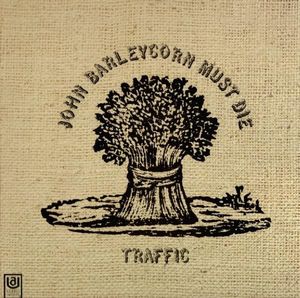
John Barleycorn Must Die - Traffic - album review

One of the bands from the 1960s and 1970s which never quite got the recognition it deserved was Traffic. Perhaps they were a little too eclectic for their own good, their repertoire encompassing psychedelia, folk-rock, soul, progressive-rock, jazz-rock and other styles.

In 1970, they released the album John Barleycorn Must Die, which was, it seems, originally planned to be a Steve Winwood solo project. It remains an intriguing and satisfying work to me, even if critical opinion towards it has been somewhat mixed and even lukewarm.


The album contains only six tracks, but relatively little in the way of instrumental noodling or self-indulgence. There is a pronounced blue-eyed soul and jazzy flavour to the majority of the songs, and also an accent on keyboards, which I find most refreshing. Perhaps unsurprisingly, the multi-talented Winwood pretty much dominates proceedings, in the absence of Dave Mason.

The opening track, "Glad", is a sprightly instrumental, partly in the style of Booker T and the MGs, with some dreamier passages added.  "Freedom Rider" has a similar sonic palette, and Chris Wood's talents on saxophone and flute are also very much to the fore. As elsewhere on this record, the drum and percussion sounds are well captured and very "live" and three-dimensional.

On "Empty Pages", the glorious Hammond organ sound has more of a showcase, and Winwood's expressive voice is projected with more clarity.  "Stranger To Himself" has more raw and passionate vocals, and it is also more guitar-orientated than some of the other pieces here.

The title track could appear on first acquaintance like an unremarkable folk song, but it has a capacity to draw the listener in, through the conviction of the singing and the playing, and the mystique of the lyrics. Again, the textures supplied by instruments such as the flute play a large part in the song's vitality, this organic but diverse and layered flavour very pleasing to the ear.

As the closer, "Every Mother's Son" definitely has its virtues, with a fine Winwood vocal and some quite stirring melodic parts, but I can't help feeling that it becomes a little over-wrought and ponderous in places, particularly after repeated listening.  All praise imaginable is due to the beautiful organ solo section in the middle, though....

The apparent critical ambivalence towards John Barleycorn Must Die may stem from a perception that the album is understated and "unspectacular", even clinical in places. However, it is superbly crafted and produced, and it is an album that demands to be listened to closely and attentively, as its depth and charm are more readily appreciated and savoured under those conditions.


Wednesday, 28 October 2015

Eldorado - Electric Light Orchestra - album review

They may not be too fashionable, but I retain a fondness and respect for the music of the Electric Light Orchestra. My brother got into them long before I fully appreciated their merits. Jeff Lynne's pop craftsmanship and gift for melody were the band's major assets. Refreshingly ELO did not set out to change the world;they simply aimed to make good music.

In declaring my liking for ELO's work, I would stress that my tastes have gravitated more and more to their earlier records, in the main the period ending around 1976/77. This phase of the group's career combines some progressive and experimental elements with impeccable pop/rock influences, most conspicuously The Beatles.

Prominent amongst the early releases is 1974's Eldorado. A concept album, it seemingly explores the dreamlike visions of a person striving to flee his dull existence. It was also their most lush and "polished" album up to that point, from a production and sound standpoint. It is possible to contend that other ELO albums contain stronger individual songs, but few hang together like Eldorado does. 

As befits any self-respecting concept album, this record is bookended by an overture/prologue and an epilogue/reprise/finale. The first proper song is "Can't Get It Out Of My Head". To coin a phrase, this one is more deceptive than it sounds, and which in its ability to implant itself in the psyche more than lives up to its title. It contains a few evocative lines, and was a hit single of some magnitude in the USA.

"Boy Blue" appears to relate a tale of a conquering hero returning to his hometown. There are some mildly interesting lyrics and some pleasant instrumental flourishes, but somehow this song fails to genuinely grab me or animate my imagination.

"Laredo Tornado" is a different matter. There is plenty to hold the interest, including sections which almost verge on the funky (not a word commonly associated with this band!). Jeff Lynne's facility for tunefulness is on display, and effective use is made of electric piano and what sounds like a clavinet. The strings on this track have real personality, presumably because they were performed by the band members rather than the session "orchestra".

The next number, "Poorboy (The Greenwood)" may have been intended as a "cousin" of "Boy Blue". It sounds vaguely similar , but has greater dynamism. The song's "protagonist" evidently sees himself as a Robin Hood type figure. The backing track features the familiar piano-bass-drums set-up which would proliferate on ELO records, although the drums sound sinuous and agile.  The group's drum sound would only become ponderous and excessive a bit later on.

With its blatantly Beatlesque leanings, "Mister Kingdom" is one of the LP's high points. The words directly address the "concept". The chorus is quite stirring, and the orchestration remains just the right side of ostentatious.

"Painted Lady" is somewhat unusual for Electric Light Orchestra, with its almost bluesy or jazzy flavour. Not a very imaginative song for me, and it does feel a little out of place among the more abstract and ethereal excursions which predominate on Eldorado.

A curious piece on more than one level, "Illusions in G Major" clearly owes a lot to Jeff Lynne's rock n roll heritage.  It also reminds me of one or two songs which appeared towards the end of the life of The Move. The lyrics are intriguing, and are possibly the most exotic or surreal on the record.

The title track features a simple but enticing melody in the verses, albeit offset by a dose of bombast in the choruses. I imagine that in studying the lyrics to these songs, many people will allow themselves a knowing smile, having recognized visions and dreams similar to those in their own supernatural wanderings.

So, one or two tracks are functional, but they function as part of the greater whole. An intriguing and entertaining journey, and a brave attempt at doing something different. Not a masterpiece by any means, but it is still one of ELO's most noteworthy achievements, and also serves as a healthy slice of escapism...