I had been meaning to check out the work of Robert A. Heinlein for a while, but was a little unsure where to begin. Well, I took the plunge by checking out The Moon Is A Harsh Mistress, first published in 1966.
Basically, the novel is set in the latter part of the 21st century. The Moon has been turned into a penal colony, to where Earth's convicts and "undesirables" are transported. A group of revolutionaries, with the help of a "self-aware" computer, seek to overthrow the authority of "Terra" in the lunar colony.
The story is narrated by one of the main characters, Mannie, and he employs a curious Lunar dialect, which may take the reader a little while to become accustomed to. However, once this minor issue is overcome, the book will absorb and captivate.
Only a short way into The Moon Is A Harsh Mistress, I found myself rooting for the characters and their aspirations, even if their methods were sometimes questionable. I had emotionally invested in their fate and their destiny. A diverse bunch, and this engendered some friction, and a strange chemistry.
The scientific and technical aspects of the story were for me secondary in importance, although I am not sure that by 2075 computers will have advanced to the degree envisaged here. To be frank, I'm not sure that I would want them to, either. In truth, I usually reverted to "auto-pilot" mode when elaborate telephone systems and the vagaries of "Mike" the computer were being discussed.
I was impressed by the way in which justification for the Lunar revolt was presented, not just in "abstract" matters of freedom and self-determination, but by bringing ecological issues, economic liberalization and free trade into the equation. This demonstrated a real confidence on the part of the writer, and added depth and credibility to the story.
Much of the nitty-gritty of how the revolt was organized is not presented in exhaustive detail, and the reader is invited to use his or her imagination, and to read between the lines. From this perspective, the novel does require concentration and open-mindedness, to grasp the rationale and implications of some of the deceptions which are committed by the "revolutionists", for example. A similar approach may be necessary when comprehending the social structures and customs which are shown to have evolved on Luna.
This book has a reputation as a "libertarian" novel, although I think that conspicuous "preaching" on ideological matters is kept to a minimum. Rather than being obtrusive, such things are generally woven quite seamlessly into the text, and at appropriate points.
The climax to the novel I found truly gripping, largely because, as mentioned above, I had been drawn in by the characters and the subject matter, and the outcome mattered to me. The moral questions posed by the story line are not straightforward;they are awkward but timelessly pertinent. My curiosity and my senses had been animated, a good barometer, I find, for how worthy and substantial a work of fiction is.
The Moon Is A Harsh Mistress is well worth a read, and not just for dedicated science-fiction fans.
Showing posts with label 1966. Show all posts
Saturday, 23 April 2016
Friday, 4 March 2016
Fifth Dimension - The Byrds - album review
I recently listened to Fifth Dimension, the third album by The Byrds, released in 1966. When the Byrds back catalogue was remastered and re-issued back in the 1990s, I remember thinking that this album was very patchy. Would the passage of time have altered my opinion of it?
Whether or not Fifth Dimension is the first proper psychedelic album is neither here nor there. For several reasons, it has a different feel to the two Byrds records which had preceded it. The warmth of the folk ambience has gone, to be replaced by something more brittle and disjointed. There is no lack of ideas per se, but musical inspiration and substantial songcraft are in short supply.
The absence of Gene Clark from the majority of the album is keenly felt. The emotional depth of his songwriting, not to mention the authority and personality contained in his vocals. This, together with the decision not to include Bob Dylan covers, left the band's resources exposed. The creative onus was therefore largely on Jim/Roger McGuinn and David Crosby, Chris Hillman having yet to emerge as a songwriting force. The philosophical raw material was certainly present, but the musical content did not match up to it.
Many reviews of this album describe it as "uneven". I don't fully share this assessment. If anything, it is flat and uninspired rather than uneven. In purely melodic terms, some of the songs sound like they could have been rejected for inclusion on the first two albums (the "title" track, perhaps, and "John Riley").
For all these misgivings, the vocal harmonies and the chiming 12-string Rickenbacker guitar are always a joy to behold, even if these ingredients are less pervasive here. The songs explore a wide range of interesting and often challenging subject matter. Ambitious, if not thematically consistent.
A track such as "Mr Spaceman", though somewhat lightweight, comes as light relief. It reflects McGuinn's fascination in areas such as space, science-fiction and aviation. Stylistically it illustrates the band's growing interest in country music, a direction which would continue to burgeon.
The two most overtly "psychedelic" numbers are "I See You" and "What's Happening". The former in particular presages the kind of material which would characterize "Younger Than Yesterday" the following year. "What's Happening" is quintessential Crosby, and it works well here, as it doesn't draw undue attention to itself.
Arguably the centerpiece of the set is "Eight Miles High". However revolutionary it may have seemed in the mid-60s, today it feels less markedly awe-inspiring. As with other pieces, it feels like in trying desperately hard to be "cool", the Byrds risk sounding uncommitted, anaemic and detached.
"Hey Joe" is energetic, but ultimately must be seen as filler. The same tags apply to the instrumental item "Captain Soul". "John Riley" is very crisply performed and pretty to the ears, and the strings are judiciously used, but it's nothing out of the ordinary.
2-4-2 Fox Trot (The Lear Jet Song) adds some novelty as a closer. I like the guitar riff, too.
To the uninitiated, Fifth Dimension might sound like a compilation of out-takes, curiosities and left-overs. It is an album which is more important "culturally" than its musical and artistic substance truly merits. An experimental pivot between two periods in the development of The Byrds. They are to be praised for expanding their horizons, but the results are mixed. Few would have guessed that the next two albums to be recorded by the band would be their best.
Whether or not Fifth Dimension is the first proper psychedelic album is neither here nor there. For several reasons, it has a different feel to the two Byrds records which had preceded it. The warmth of the folk ambience has gone, to be replaced by something more brittle and disjointed. There is no lack of ideas per se, but musical inspiration and substantial songcraft are in short supply.
The absence of Gene Clark from the majority of the album is keenly felt. The emotional depth of his songwriting, not to mention the authority and personality contained in his vocals. This, together with the decision not to include Bob Dylan covers, left the band's resources exposed. The creative onus was therefore largely on Jim/Roger McGuinn and David Crosby, Chris Hillman having yet to emerge as a songwriting force. The philosophical raw material was certainly present, but the musical content did not match up to it.
Many reviews of this album describe it as "uneven". I don't fully share this assessment. If anything, it is flat and uninspired rather than uneven. In purely melodic terms, some of the songs sound like they could have been rejected for inclusion on the first two albums (the "title" track, perhaps, and "John Riley").
For all these misgivings, the vocal harmonies and the chiming 12-string Rickenbacker guitar are always a joy to behold, even if these ingredients are less pervasive here. The songs explore a wide range of interesting and often challenging subject matter. Ambitious, if not thematically consistent.
A track such as "Mr Spaceman", though somewhat lightweight, comes as light relief. It reflects McGuinn's fascination in areas such as space, science-fiction and aviation. Stylistically it illustrates the band's growing interest in country music, a direction which would continue to burgeon.
The two most overtly "psychedelic" numbers are "I See You" and "What's Happening". The former in particular presages the kind of material which would characterize "Younger Than Yesterday" the following year. "What's Happening" is quintessential Crosby, and it works well here, as it doesn't draw undue attention to itself.
Arguably the centerpiece of the set is "Eight Miles High". However revolutionary it may have seemed in the mid-60s, today it feels less markedly awe-inspiring. As with other pieces, it feels like in trying desperately hard to be "cool", the Byrds risk sounding uncommitted, anaemic and detached.
"Hey Joe" is energetic, but ultimately must be seen as filler. The same tags apply to the instrumental item "Captain Soul". "John Riley" is very crisply performed and pretty to the ears, and the strings are judiciously used, but it's nothing out of the ordinary.
2-4-2 Fox Trot (The Lear Jet Song) adds some novelty as a closer. I like the guitar riff, too.
To the uninitiated, Fifth Dimension might sound like a compilation of out-takes, curiosities and left-overs. It is an album which is more important "culturally" than its musical and artistic substance truly merits. An experimental pivot between two periods in the development of The Byrds. They are to be praised for expanding their horizons, but the results are mixed. Few would have guessed that the next two albums to be recorded by the band would be their best.
Tuesday, 26 May 2015
In Cold Blood - Truman Capote - book review
It seems that one book which divides opinion is Truman Capote's 1966 non-fiction novel, "In Cold Blood", which tells the tale of the 1959 murder of four people in rural Kansas, and the subsequent trial and execution of the culprits.
One of the first things which became noticeable to me when reading "In Cold Blood" was that although the story is set primarily in the late 1950s and the early 1960s, there is also a distinct Steinbeckian/Dustbowl character to it, as if many of the sweeping cultural and economic changes of the post-war period had not yet reached certain parts of America.
There is quite a lengthy build-up to the crime itself, allowing us to gain a flavour of the temperament and background of all concerned. There is real poignancy in the passages portraying life in the town of Holcomb, the people going about their everyday business, oblivious to the horror which was to shortly be visited upon them. As we the readers know what is going to occur, we are given a keen appreciation of all that is about to be lost.
As many have observed, the interplay between the two murderers, Perry and Dick, is gripping and unsettling. The constant ruminations about the raw deal which life had supposedly dealt them, are food for thought, even if they do not diminish the disdain which one feels for them and their deeds. Whatever one might think of them, though, they are not one-dimensional people.
Whenever I am exposed these days to "true crime" literature or television, I am left thinking what else society could have done, pro-actively or otherwise, to prevent such terrible things happening. Maybe what really needs to be done to make resentment, alienation and envy marginally less prevalent is too much to ask for. The genie was out of the bottle long ago.
Another feature of "In Cold Blood" which intrigues me is that certain stereotypes are not adhered to. For example, the uneven attitudes to the death penalty, and the humanity and understanding shown by some residents and law enforcement people towards the prisoners.
The final stages of the novel deal with the execution of the two men, after their legal avenues had been exhausted. It didn't really feel like any particular stance was being adopted about capital punishment, and the story didn't do anything to shake my opposition to the practice. The words and the imagery speak for themselves.
The final scene, when the detective Dewey meets Susan in the cemetery, is a suitably eloquent note on which to close matters.
One of the first things which became noticeable to me when reading "In Cold Blood" was that although the story is set primarily in the late 1950s and the early 1960s, there is also a distinct Steinbeckian/Dustbowl character to it, as if many of the sweeping cultural and economic changes of the post-war period had not yet reached certain parts of America.
There is quite a lengthy build-up to the crime itself, allowing us to gain a flavour of the temperament and background of all concerned. There is real poignancy in the passages portraying life in the town of Holcomb, the people going about their everyday business, oblivious to the horror which was to shortly be visited upon them. As we the readers know what is going to occur, we are given a keen appreciation of all that is about to be lost.
As many have observed, the interplay between the two murderers, Perry and Dick, is gripping and unsettling. The constant ruminations about the raw deal which life had supposedly dealt them, are food for thought, even if they do not diminish the disdain which one feels for them and their deeds. Whatever one might think of them, though, they are not one-dimensional people.
Whenever I am exposed these days to "true crime" literature or television, I am left thinking what else society could have done, pro-actively or otherwise, to prevent such terrible things happening. Maybe what really needs to be done to make resentment, alienation and envy marginally less prevalent is too much to ask for. The genie was out of the bottle long ago.
Another feature of "In Cold Blood" which intrigues me is that certain stereotypes are not adhered to. For example, the uneven attitudes to the death penalty, and the humanity and understanding shown by some residents and law enforcement people towards the prisoners.
The final stages of the novel deal with the execution of the two men, after their legal avenues had been exhausted. It didn't really feel like any particular stance was being adopted about capital punishment, and the story didn't do anything to shake my opposition to the practice. The words and the imagery speak for themselves.
The final scene, when the detective Dewey meets Susan in the cemetery, is a suitably eloquent note on which to close matters.
Labels:
1959,
1966,
books,
in cold blood,
literature,
non-fiction,
truman capote
Thursday, 23 January 2014
Pet Sounds - The Beach Boys - album review
Such an aura surrounds this album that on initial listenings the primary reaction can be one of disappointment or anti-climax. However, this is an album which demands repeated attention before the melodies and messages seep into the psyche. The process took a little while for me. I, like countless millions of others, was raised on the Beach Boys' naive but infectious hits of the earlier years. Undeveloped or immature musical antennae were ill-equipped to discern the musical signposts which pointed the way towards the glories of "Pet Sounds".
As time passes, the thing which occurs more and more to me about "Pet Sounds" is its overall cohesiveness, in musical and spiritual terms. This sets it apart from the Beach Boys' previous output, and that of many other people for that matter. The backing does not sound like it was created using conventional musical instruments, but by some otherworldly implements. This factor, and the conceptual unity of the subject matter, permit the songs to blend together seamlessly and naturally. The only blemish in this happy scenario is "Sloop John B", which comes perilously close to marring the whole effect....
Was this a Brian Wilson solo project in all but name? Well, he had been exerting greater artistic pre-eminence and control for a couple of years prior to these sessions, and it is fair to say that most of the other Beach Boys were almost reduced to cameo roles, Carl Wilson's glorious vocal on "God Only Knows" being one of these. Brian appears to have handled much of the singing on the album himself, and block harmonies are not as abundant as elsewhere in the Beach Boys canon. As had been the trend, top session musicians provided the bulk of the instrumental prowess. In this respect, the approach was quite uncompromising, although the end result would seem to justify the thoroughness and care lavished on the production.
"Pet Sounds" shines like a beacon because of its distinctive character and sound when set against the other trend-setting and groundbreaking rock and pop releases of that period, including those by the Beatles and Bob Dylan. "Pet Sounds" almost existed in isolation, on the surface not influenced by its immediate contemporaries and "rivals". Conversely, it served as a shock or wake-up call to others, notably Paul McCartney.
It is possible to contend that "Pet Sounds" was an alternative way of viewing what was "going on" in the mid-Sixties, or maybe a slightly different way of interpreting or channeling the spirit of the era. Others had hinted at similar preoccupations, but this was presented as a fully-formed creation.
"Pet Sounds" has the same kind of immersiveness and all-encompassing engagement more normally associated with classical music. It appeals to the senses in a manner more subtle and surreptitious than most "rock" music. For all that, it is still replete with hooks and pop sensibility. In a sense, the voices and instruments are indivisible and indistinguishable from each other, all equally important in setting and expressing the emotions . One greater "mood piece", and a concept album before such a notion was fashionable.
The journey commences with something adhering to the concept, but which is also accessible - "Wouldn't It Be Nice". The work is anchored and signposted with such gems as "God Only Knows" and "Caroline, No". For me though the tracks which most acutely exemplify the spirit of the album are the eerie instrumental "Let's Go Away for Awhile" and "Dont Talk (Put Your Head On My Shoulder).
Lest anyone form the idea that this is all sentimental candyfloss , there is also much angst and soul-searching in there ("I Just Wasn't Made For These Times", "I Know There's An Answer"). Brian Wilson famously dubbed "Pet Sounds" a "teenage symphony to God", and the record does depict and explore a range of emotions encountered by young people, but not exclusively by young people;the themes are universal.
Even allowing for its mystique and reputation, I imagine that "Pet Sounds" still confuses people when they first hear it, because it is so distinctive. If it wasn't as socially significant as other records of its time, then as an artistic achievement it still stands up today. In a strange way, it both operates as a monument to its time, and exists outside the strait-jacket of being categorized as "sixties", because of its dreamy and ethereal flavour and its sonic composition. Even the sleeve photograph, which has come in for much ridicule, somehow adds to the effect. By 1966, artists were expected to come up with outlandish or esoteric cover art. On "Pet Sounds", the words and music say all that needs to be said....
As time passes, the thing which occurs more and more to me about "Pet Sounds" is its overall cohesiveness, in musical and spiritual terms. This sets it apart from the Beach Boys' previous output, and that of many other people for that matter. The backing does not sound like it was created using conventional musical instruments, but by some otherworldly implements. This factor, and the conceptual unity of the subject matter, permit the songs to blend together seamlessly and naturally. The only blemish in this happy scenario is "Sloop John B", which comes perilously close to marring the whole effect....
Was this a Brian Wilson solo project in all but name? Well, he had been exerting greater artistic pre-eminence and control for a couple of years prior to these sessions, and it is fair to say that most of the other Beach Boys were almost reduced to cameo roles, Carl Wilson's glorious vocal on "God Only Knows" being one of these. Brian appears to have handled much of the singing on the album himself, and block harmonies are not as abundant as elsewhere in the Beach Boys canon. As had been the trend, top session musicians provided the bulk of the instrumental prowess. In this respect, the approach was quite uncompromising, although the end result would seem to justify the thoroughness and care lavished on the production.
"Pet Sounds" shines like a beacon because of its distinctive character and sound when set against the other trend-setting and groundbreaking rock and pop releases of that period, including those by the Beatles and Bob Dylan. "Pet Sounds" almost existed in isolation, on the surface not influenced by its immediate contemporaries and "rivals". Conversely, it served as a shock or wake-up call to others, notably Paul McCartney.
It is possible to contend that "Pet Sounds" was an alternative way of viewing what was "going on" in the mid-Sixties, or maybe a slightly different way of interpreting or channeling the spirit of the era. Others had hinted at similar preoccupations, but this was presented as a fully-formed creation.
"Pet Sounds" has the same kind of immersiveness and all-encompassing engagement more normally associated with classical music. It appeals to the senses in a manner more subtle and surreptitious than most "rock" music. For all that, it is still replete with hooks and pop sensibility. In a sense, the voices and instruments are indivisible and indistinguishable from each other, all equally important in setting and expressing the emotions . One greater "mood piece", and a concept album before such a notion was fashionable.
The journey commences with something adhering to the concept, but which is also accessible - "Wouldn't It Be Nice". The work is anchored and signposted with such gems as "God Only Knows" and "Caroline, No". For me though the tracks which most acutely exemplify the spirit of the album are the eerie instrumental "Let's Go Away for Awhile" and "Dont Talk (Put Your Head On My Shoulder).
Lest anyone form the idea that this is all sentimental candyfloss , there is also much angst and soul-searching in there ("I Just Wasn't Made For These Times", "I Know There's An Answer"). Brian Wilson famously dubbed "Pet Sounds" a "teenage symphony to God", and the record does depict and explore a range of emotions encountered by young people, but not exclusively by young people;the themes are universal.
Even allowing for its mystique and reputation, I imagine that "Pet Sounds" still confuses people when they first hear it, because it is so distinctive. If it wasn't as socially significant as other records of its time, then as an artistic achievement it still stands up today. In a strange way, it both operates as a monument to its time, and exists outside the strait-jacket of being categorized as "sixties", because of its dreamy and ethereal flavour and its sonic composition. Even the sleeve photograph, which has come in for much ridicule, somehow adds to the effect. By 1966, artists were expected to come up with outlandish or esoteric cover art. On "Pet Sounds", the words and music say all that needs to be said....
Friday, 11 October 2013
'66! - Roger Hutchinson
Just lately, football, and in particular football history, has acted as something of a "comfort blanket" for me. This process has extended to re-reading some football books. One of these was "'66", by Roger Hutchinson, which describes itself as "The inside story of England's World Cup triumph". Reading it, and studying other material, has given much food for thought.
As well as being a detailed and enjoyable chronicle of Alf Ramsey's stewardship of the England team from the time of his appointment to the end of the 1966 jamboree, this also serves as a dispassionate and frank assessment of the merits of that team, and its effects on football at home and in the wider world.
Even at the time, many football connoisseurs, including some in England, expressed unease about the methods employed to achieve the "triumph", even amid the patriotic afterglow of the tournament. This book gives considerable rein to those sentiments, and the feeling is reinforced, rightly or wrongly, of a monochrome and functional team, surrounded by embittered and aggrieved opponents and detractors.
This is not to say that honest toil, organisation and endeavour should be deplored, but the author's contention is that the events of the summer of 1966 represented a defining moment in the ending of football's "Age of Innocence". The signs of corrosion had been there in defensive, cautious and violent tactics employed in various areas of the planet, but the World Cup seemed to place some kind of seal on the process, and looking back, was the 1970 event in Mexico perhaps an anomaly, conditioned by heat, altitude and a freakishly talented Brazilian outfit?
I don't altogether share the pessimism, and for me the football played in the early to mid-70s, particularly by Dutch and German teams, was intoxicating and exhilarating, combining technical excellence, tactical sophistication and physical ardour when needed. What the author, and other observers, seemed to judge correctly was the knock-on effect of Ramsey's approach on British football, its distrust of maverick, non-conformist talent, and the subordination of virtuosity to industry, and to the mundane and prosaic. The quotes attributed to some British footballing luminaries on this topic are especially eye-opening....
There are some fascinating quotes from the members of the England squad, providing an insight into the times, and Ramsey's own personality and methods. Long-forgotten episodes from the 1966 World Cup are recounted, many relating to the team's preparations and the national mood.
Despite the constant references to the contentious elements of his tenure, many of Alf Ramsey's admirable virtues and traits come through, including his man-management skills and his steadfast loyalty to the players. The respect which he commanded from the members of the team is also clearly evident.
As well as being a detailed and enjoyable chronicle of Alf Ramsey's stewardship of the England team from the time of his appointment to the end of the 1966 jamboree, this also serves as a dispassionate and frank assessment of the merits of that team, and its effects on football at home and in the wider world.
Even at the time, many football connoisseurs, including some in England, expressed unease about the methods employed to achieve the "triumph", even amid the patriotic afterglow of the tournament. This book gives considerable rein to those sentiments, and the feeling is reinforced, rightly or wrongly, of a monochrome and functional team, surrounded by embittered and aggrieved opponents and detractors.
This is not to say that honest toil, organisation and endeavour should be deplored, but the author's contention is that the events of the summer of 1966 represented a defining moment in the ending of football's "Age of Innocence". The signs of corrosion had been there in defensive, cautious and violent tactics employed in various areas of the planet, but the World Cup seemed to place some kind of seal on the process, and looking back, was the 1970 event in Mexico perhaps an anomaly, conditioned by heat, altitude and a freakishly talented Brazilian outfit?
I don't altogether share the pessimism, and for me the football played in the early to mid-70s, particularly by Dutch and German teams, was intoxicating and exhilarating, combining technical excellence, tactical sophistication and physical ardour when needed. What the author, and other observers, seemed to judge correctly was the knock-on effect of Ramsey's approach on British football, its distrust of maverick, non-conformist talent, and the subordination of virtuosity to industry, and to the mundane and prosaic. The quotes attributed to some British footballing luminaries on this topic are especially eye-opening....
There are some fascinating quotes from the members of the England squad, providing an insight into the times, and Ramsey's own personality and methods. Long-forgotten episodes from the 1966 World Cup are recounted, many relating to the team's preparations and the national mood.
Despite the constant references to the contentious elements of his tenure, many of Alf Ramsey's admirable virtues and traits come through, including his man-management skills and his steadfast loyalty to the players. The respect which he commanded from the members of the team is also clearly evident.
Labels:
1966,
books,
football,
history,
literature,
reading,
roger hutchinson,
soccer,
world cup
Wednesday, 7 November 2012
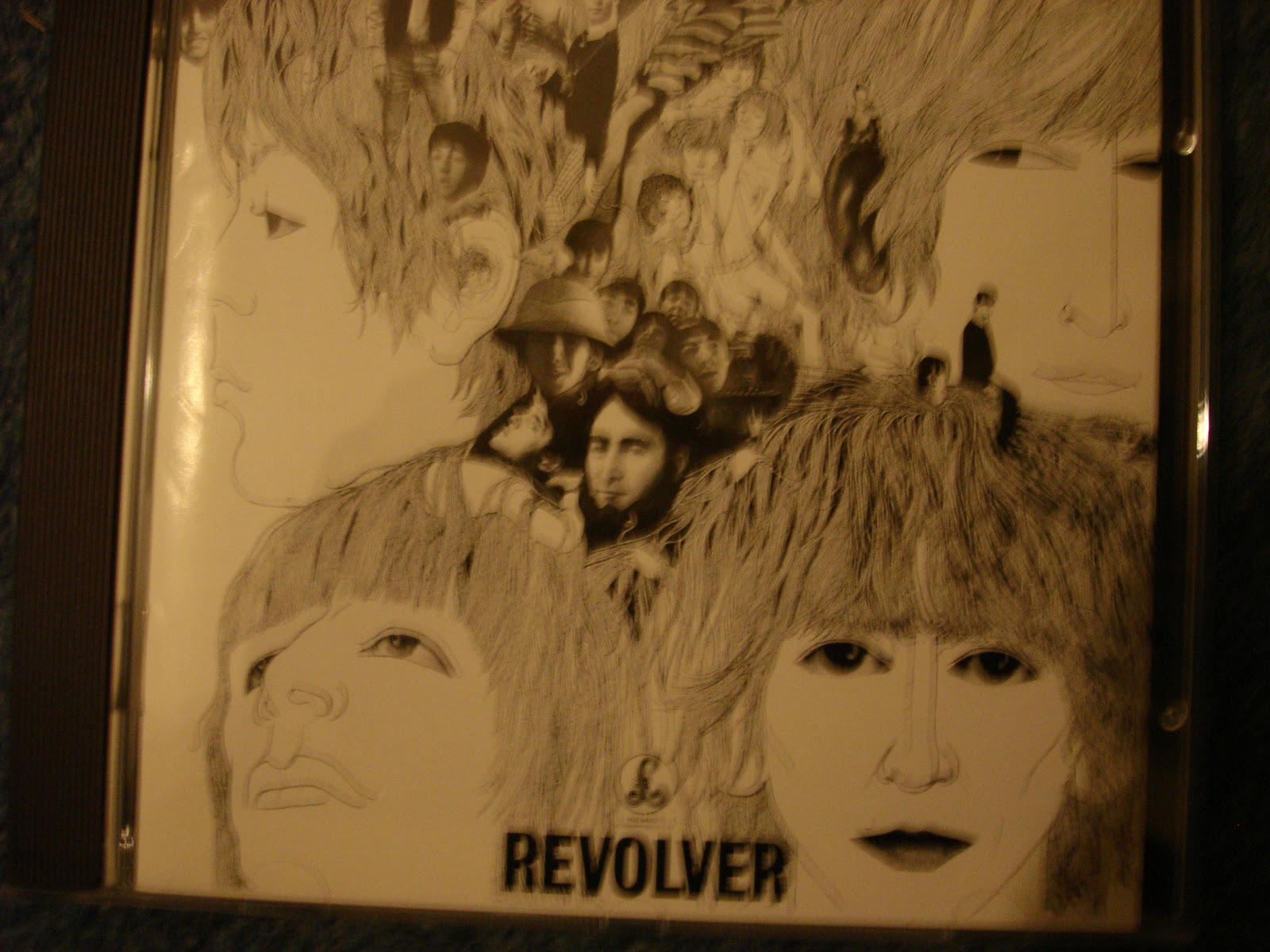
Revolver - The Beatles - album review
Of all the albums recorded by The Beatles, perhaps none more epitomised the Swinging Sixties than Revolver, released in 1966. Embodying some of the sunny optimism of the time, but also exuding a sophistication and a keener affinity with counter-cultural concerns.
This record was made when The Beatles were still a touring band, before their retreat into a more reclusive and studio-bound existence. Although some of the tracks on Revolver are very much studio creations, others very much inhabit guitar-band territory, with added "attitude" and occasionally tinged with a nascent psychedelia. One can discern the influence of 1966-era Beatles guitar-orientated material in the New Wave groups of the late 1970s and early 1980s, and even in later indie bands.
Having said that Revolver exudes the vibrancy of its era, it is also worth noting that the scope of its lyrical concerns was very broad, encompassing more social commentary than before, and containing many references to emergent underground culture. The Beatles were by no means unique in exploring virgin subject matter, but the sheer variety of the topics on Revolver is remarkable. Death, taxes, loneliness, consciousness, war and mind-altering substances - they are all there.
It is often said that the complementary strengths and approaches of Lennon and McCartney were some of the ingredients which made the Beatles special. However on Revolver such simplistic pigeon-holing is not really applicable, as both men are in creative and restless form. It cannot be smugly declared that one songwriter's contributions are edgy and subversive, whilst the other's are more conservative. The fact that both rise to the occasion, and push themselves, helps give the album additional depth and sweep.
The record's closing track, "Tomorrow Never Knows" doesn't so much close the book on one era, as open a door and peer into an exciting but unpredictable future. I would argue that the song has been excessively acclaimed in purely musical terms, but symbolically, and as a statement of intent, its effect was startling, probably more so on their peers and the "in crowd" than on Joe Public.
The continued blossoming of George Harrison added another dimension. His often contradictory concerns were being projected with greater clarity, as exemplified by "Taxman" and "Love You To", and this greatly augmented the group's eclecticism and mystique. This was the stage at which George truly advanced from being a mere guitar player to something much more integral.
Many of the songs on Revolver are pervaded by a peculiar, almost sleepy and indolent, ambience, which sets it apart from the warm crispness of Rubber Soul and the flawless perfectionism of "Sgt Pepper". Production techniques may have played a part, but there could have been other contributory factors.
There were sign-posts for the future, with unconventional instrumentation and studio experimentation, but The Beatles never lost sight of the fundamental importance of good songwriting and craftsmanship, and these sensibilities are on full display on tracks such as "Got To Get You Into My Life", "For No One" and "Here, There and Everywhere".
Listening to the record, I am also reminded of the apparent effortlessness with which this album was turned out. On other Beatles albums, for all their undoubted quality and charm, one can sense how hard they were trying. On Revolver, very little feels "forced" or calculating. It was as if creativity and ideas were flowing naturally from the musicians, with no need for gimmicks or pretension.
Revolver represents a peak of sorts. Other artists would have sensed that they had nothing further to say, but time would amply demonstrate that The Beatles were in many respects only just beginning....
The record's closing track, "Tomorrow Never Knows" doesn't so much close the book on one era, as open a door and peer into an exciting but unpredictable future. I would argue that the song has been excessively acclaimed in purely musical terms, but symbolically, and as a statement of intent, its effect was startling, probably more so on their peers and the "in crowd" than on Joe Public.
The continued blossoming of George Harrison added another dimension. His often contradictory concerns were being projected with greater clarity, as exemplified by "Taxman" and "Love You To", and this greatly augmented the group's eclecticism and mystique. This was the stage at which George truly advanced from being a mere guitar player to something much more integral.
Many of the songs on Revolver are pervaded by a peculiar, almost sleepy and indolent, ambience, which sets it apart from the warm crispness of Rubber Soul and the flawless perfectionism of "Sgt Pepper". Production techniques may have played a part, but there could have been other contributory factors.
There were sign-posts for the future, with unconventional instrumentation and studio experimentation, but The Beatles never lost sight of the fundamental importance of good songwriting and craftsmanship, and these sensibilities are on full display on tracks such as "Got To Get You Into My Life", "For No One" and "Here, There and Everywhere".
Listening to the record, I am also reminded of the apparent effortlessness with which this album was turned out. On other Beatles albums, for all their undoubted quality and charm, one can sense how hard they were trying. On Revolver, very little feels "forced" or calculating. It was as if creativity and ideas were flowing naturally from the musicians, with no need for gimmicks or pretension.
Revolver represents a peak of sorts. Other artists would have sensed that they had nothing further to say, but time would amply demonstrate that The Beatles were in many respects only just beginning....
Monday, 23 January 2012
Persona - Ingmar Bergman
Earlier this evening I watched Persona, a remarkable Ingmar Bergman film from 1966.
The film stars Liv Ullmann as an actress who suffers some form of breakdown, and becomes unable (or unwilling) to speak as a result. A nurse, played by Bibi Andersson, is detailed to look after and care for her.
The pair eventually decamp to a secluded seaside retreat, which is where the most intriguing sequences in the movie unfold. The nurse Alma bares her soul to the actress Elisabet, in some gripping scenes. The dialogue here is quite explicit and frank, considering that it was 1966.
As their time together progressed, it seemed that in some respects Alma absorbed aspects of Elisabet's personality, and that some general merging of personalities took place. What happened is open to several interpretations, but Alma was ill-equipped to cope with assuming facets of the actress's persona, including her demons and insecurities.
One of the cleverest parts of the film occurs where Alma recounts some details of Elisbet's personal and family life to her. First of all, we see an image only of Elisabet's reaction to the revelations, and then the same dialogue is played again, but this time we just see Alma speaking the words. My guess is that this effect was designed to convey the idea of "transference".
A quite disturbing, complex but nonetheless riveting film, with some trademarks of other Bergman movies, such as solitude, astute use of black and white, a secluded location, and images of rocks, beaches and waves.
I was highly impressed with the performance of the beautiful Bibi Andersson, as the nurse Alma, and Liv Ullmann is never less than fascinating to watch.
The film stars Liv Ullmann as an actress who suffers some form of breakdown, and becomes unable (or unwilling) to speak as a result. A nurse, played by Bibi Andersson, is detailed to look after and care for her.
The pair eventually decamp to a secluded seaside retreat, which is where the most intriguing sequences in the movie unfold. The nurse Alma bares her soul to the actress Elisabet, in some gripping scenes. The dialogue here is quite explicit and frank, considering that it was 1966.
As their time together progressed, it seemed that in some respects Alma absorbed aspects of Elisabet's personality, and that some general merging of personalities took place. What happened is open to several interpretations, but Alma was ill-equipped to cope with assuming facets of the actress's persona, including her demons and insecurities.
One of the cleverest parts of the film occurs where Alma recounts some details of Elisbet's personal and family life to her. First of all, we see an image only of Elisabet's reaction to the revelations, and then the same dialogue is played again, but this time we just see Alma speaking the words. My guess is that this effect was designed to convey the idea of "transference".
A quite disturbing, complex but nonetheless riveting film, with some trademarks of other Bergman movies, such as solitude, astute use of black and white, a secluded location, and images of rocks, beaches and waves.
I was highly impressed with the performance of the beautiful Bibi Andersson, as the nurse Alma, and Liv Ullmann is never less than fascinating to watch.
Labels:
1966,
bibi andersson,
cinema,
elisabet vogler,
film,
films,
ingmar bergman,
liv ullmann,
movies,
persona
Subscribe to:
Posts (Atom)