Timeless Flight Revisited is a highly detailed biography, published around 1997/1998, of one of the most influential of all rock groups. Rogan has written other books about The Byrds, both before and after this one. Much of the material in this one is based on interviews conducted by the author with group members.
Looking at the chapters which cover the formative stages of the band, it is striking how amateurish those early days were. Some of the guys had musical experience, but in terms of rock n roll they were virtual beginners. In some respects there was almost a punk ethos about the project at that point.
I feel that the author very occasionally gets slightly carried away in extolling the group's greatness and its position in the grand scheme of things as regards music in the Sixties. And I say that as a major admirer of the Byrds' music myself. However, this is counterbalanced by honest and forthright appraisals of the chronic instability which plagued the band, and how this both helped and hindered creativity. The deficiencies and setbacks are discussed with some directness.
Some of the strongest parts of the book are those which examine the personal and artistic dynamics within the Byrds, and the alliances which formed between individual members and producers, management and so forth. A lot of space is necessarily allocated to documenting how people coped with the mercurial David Crosby! The book makes a valid point in comparing the creative core of the Californian combo with its equivalents in The Beatles (Lennon and McCartney) and The Rolling Stones (Jagger and Richards). The tensions and antagonisms within The Byrds frequently generated magic, but sometimes the outcome was less than healthy. Their structure was much more fluid and amorphous.
Each album is reviewed song-by-song, and the author demonstrates a shrewd musical ear in evaluating the merits, or otherwise, of the group's released (and unreleased) output. Whilst this book rightly celebrates the achievements of The Byrds, there is also a sense of what might have been, both artistically and commercially. The author shows an adroit feel for the real reasons for this deficit, looking at the (first) departure of Gene Clark as a crucial turning point. The suggestion that Gene could somehow have been accommodated in a non-touring, "Brian Wilson" role is very intriguing.
Time is taken within the pages to bring out a full picture of the personalities and motivations of the key players in the drama. I found these areas to be especially illuminating in the cases of Chris Hillman and Roger McGuinn. Hillman is traditionally painted as "the quiet one", but he was perhaps more assertive and outspoken than is sometimes imagined. As the book progressed I began to feel twinges of frustration at how the egos and agendas within the group could not be subjugated to the cause of making The Byrds more commercially successful and enduringly vibrant as a creative entity.
Commendably the author devotes considerable attention to the years of "decline", from 1969 to 1973, with often withering assessments of the era's mis-steps and absence of inspiration. The squandered opportunities, petty jealousies and wrangles are all part of what makes the Byrds' saga so compelling, I think.
There is ample coverage of Byrds-related activity subsequent to the dissolution of the original band, including the numerous side projects and offshoots, and the reunions and get-togethers of various combinations of personnel. There are also excellent obituaries of both Gene Clark and Michael Clarke.
Altogether, this is a highly comprehensive account of the group's turbulent story. A lengthy read, but ultimately rewarding in getting a full portrayal, warts and all, of an important part of rock music history.
Showing posts with label gene clark. Show all posts
Tuesday, 29 January 2019
Friday, 4 March 2016
Fifth Dimension - The Byrds - album review
I recently listened to Fifth Dimension, the third album by The Byrds, released in 1966. When the Byrds back catalogue was remastered and re-issued back in the 1990s, I remember thinking that this album was very patchy. Would the passage of time have altered my opinion of it?
Whether or not Fifth Dimension is the first proper psychedelic album is neither here nor there. For several reasons, it has a different feel to the two Byrds records which had preceded it. The warmth of the folk ambience has gone, to be replaced by something more brittle and disjointed. There is no lack of ideas per se, but musical inspiration and substantial songcraft are in short supply.
The absence of Gene Clark from the majority of the album is keenly felt. The emotional depth of his songwriting, not to mention the authority and personality contained in his vocals. This, together with the decision not to include Bob Dylan covers, left the band's resources exposed. The creative onus was therefore largely on Jim/Roger McGuinn and David Crosby, Chris Hillman having yet to emerge as a songwriting force. The philosophical raw material was certainly present, but the musical content did not match up to it.
Many reviews of this album describe it as "uneven". I don't fully share this assessment. If anything, it is flat and uninspired rather than uneven. In purely melodic terms, some of the songs sound like they could have been rejected for inclusion on the first two albums (the "title" track, perhaps, and "John Riley").
For all these misgivings, the vocal harmonies and the chiming 12-string Rickenbacker guitar are always a joy to behold, even if these ingredients are less pervasive here. The songs explore a wide range of interesting and often challenging subject matter. Ambitious, if not thematically consistent.
A track such as "Mr Spaceman", though somewhat lightweight, comes as light relief. It reflects McGuinn's fascination in areas such as space, science-fiction and aviation. Stylistically it illustrates the band's growing interest in country music, a direction which would continue to burgeon.
The two most overtly "psychedelic" numbers are "I See You" and "What's Happening". The former in particular presages the kind of material which would characterize "Younger Than Yesterday" the following year. "What's Happening" is quintessential Crosby, and it works well here, as it doesn't draw undue attention to itself.
Arguably the centerpiece of the set is "Eight Miles High". However revolutionary it may have seemed in the mid-60s, today it feels less markedly awe-inspiring. As with other pieces, it feels like in trying desperately hard to be "cool", the Byrds risk sounding uncommitted, anaemic and detached.
"Hey Joe" is energetic, but ultimately must be seen as filler. The same tags apply to the instrumental item "Captain Soul". "John Riley" is very crisply performed and pretty to the ears, and the strings are judiciously used, but it's nothing out of the ordinary.
2-4-2 Fox Trot (The Lear Jet Song) adds some novelty as a closer. I like the guitar riff, too.
To the uninitiated, Fifth Dimension might sound like a compilation of out-takes, curiosities and left-overs. It is an album which is more important "culturally" than its musical and artistic substance truly merits. An experimental pivot between two periods in the development of The Byrds. They are to be praised for expanding their horizons, but the results are mixed. Few would have guessed that the next two albums to be recorded by the band would be their best.
Whether or not Fifth Dimension is the first proper psychedelic album is neither here nor there. For several reasons, it has a different feel to the two Byrds records which had preceded it. The warmth of the folk ambience has gone, to be replaced by something more brittle and disjointed. There is no lack of ideas per se, but musical inspiration and substantial songcraft are in short supply.
The absence of Gene Clark from the majority of the album is keenly felt. The emotional depth of his songwriting, not to mention the authority and personality contained in his vocals. This, together with the decision not to include Bob Dylan covers, left the band's resources exposed. The creative onus was therefore largely on Jim/Roger McGuinn and David Crosby, Chris Hillman having yet to emerge as a songwriting force. The philosophical raw material was certainly present, but the musical content did not match up to it.
Many reviews of this album describe it as "uneven". I don't fully share this assessment. If anything, it is flat and uninspired rather than uneven. In purely melodic terms, some of the songs sound like they could have been rejected for inclusion on the first two albums (the "title" track, perhaps, and "John Riley").
For all these misgivings, the vocal harmonies and the chiming 12-string Rickenbacker guitar are always a joy to behold, even if these ingredients are less pervasive here. The songs explore a wide range of interesting and often challenging subject matter. Ambitious, if not thematically consistent.
A track such as "Mr Spaceman", though somewhat lightweight, comes as light relief. It reflects McGuinn's fascination in areas such as space, science-fiction and aviation. Stylistically it illustrates the band's growing interest in country music, a direction which would continue to burgeon.
The two most overtly "psychedelic" numbers are "I See You" and "What's Happening". The former in particular presages the kind of material which would characterize "Younger Than Yesterday" the following year. "What's Happening" is quintessential Crosby, and it works well here, as it doesn't draw undue attention to itself.
Arguably the centerpiece of the set is "Eight Miles High". However revolutionary it may have seemed in the mid-60s, today it feels less markedly awe-inspiring. As with other pieces, it feels like in trying desperately hard to be "cool", the Byrds risk sounding uncommitted, anaemic and detached.
"Hey Joe" is energetic, but ultimately must be seen as filler. The same tags apply to the instrumental item "Captain Soul". "John Riley" is very crisply performed and pretty to the ears, and the strings are judiciously used, but it's nothing out of the ordinary.
2-4-2 Fox Trot (The Lear Jet Song) adds some novelty as a closer. I like the guitar riff, too.
To the uninitiated, Fifth Dimension might sound like a compilation of out-takes, curiosities and left-overs. It is an album which is more important "culturally" than its musical and artistic substance truly merits. An experimental pivot between two periods in the development of The Byrds. They are to be praised for expanding their horizons, but the results are mixed. Few would have guessed that the next two albums to be recorded by the band would be their best.
Monday, 15 September 2014
Life's Soundtrack
Many of us, myself included, trace our existence via the music which we were listening to at various stages of our lives. This could either be a song which happened to be in the charts at a particular time, or tracks which for whatever reason have a certain resonance, reminding us of happy (or sad) times, or evoking our state of mind.
The first time that I can remember truly relating to songs, and seeing in them some semblance of inspiration or "meaning" was in my mid-to-late teens, when many different pressures and emotions conspire to give rise to a need to "belong", and find spiritual outlet, however imagined and superficial.
It makes me cringe now, but the first track which I, and my circle of friends, saw as a personal anthem, was "Livin' On A Prayer" by Bon Jovi. This may have just been escapism or peer pressure, and the blue collar romanticism in the lyrics now makes me nauseous. My social and economic situation bore very little relation to the characters depicted in the song. "I Just Died In Your Arms Tonight" by Cutting Crew fulfilled a similar role, both at the time, and in retrospectively evoking a sense of time and place. This was clearly the naïve optimism of a confused seventeen or eighteen year old mind at work, although in some respects it was healthy that I was latching on to such harmless if shallow subject matter. It was preferable to existing in some vacuum.
From my late teens until my late twenties, my life fell into a torpor, and music served primarily as an agent to fill the void, but acting as a neutralizer, simply cancelling out a negative. I had by this time begun to explore the work of singer-songwriters such as Neil Young and Jackson Browne, but the impact of their lyrics was generally secondary in importance to the melodic invention and subtlety on display. I was looking to the sound to anaesthetize me, not the words or messages to inform me.
Of course, when one's outlook and circumstances alter, music which previously appeared relatively innocuous and distant can suddenly take on a major piquancy and relevance. This began to occur in my case about fifteen years ago. I often think that the more introspective songs of Jackson Browne (Farther On, Sky Blue and Black, Sleep's Dark And Silent Gate, The Pretender, Fountain of Sorrow, These Days) are speaking only to me, and that they could have been written to document the course of my life and my mental state over the past decade-and-a-half. I could say the same about a few of the compositions of Gene Clark. Once the seed is sown, and we are "convinced", it is difficult to dispel such notions, even when evidence to the contrary looms.
Is this just wishful thinking, and intellectual dishonesty, a desperate and misguided attempt to avoid dealing with one's demons (and confronting reality), by taking refuge in somebody else's sentiments and inner thoughts?
I make take a (retrospectively) jaundiced view of the musical preoccupations of my late teens and early adulthood, but in seeking to "intellectualize" and rationalise my latter-day inclinations, I may be subjecting myself once again to delusions, if of a different type this time.
Perhaps the "soundtrack" to our lives should concern itself less with finding "poignancy" and "meaning" in lyrics, and more with the sometimes overlooked and unnoticed capacity of music (i.e. the sounds themselves) to sooth and uplift us spiritually. This path also entails less anguish and pretence than the other approach....
From my late teens until my late twenties, my life fell into a torpor, and music served primarily as an agent to fill the void, but acting as a neutralizer, simply cancelling out a negative. I had by this time begun to explore the work of singer-songwriters such as Neil Young and Jackson Browne, but the impact of their lyrics was generally secondary in importance to the melodic invention and subtlety on display. I was looking to the sound to anaesthetize me, not the words or messages to inform me.
Of course, when one's outlook and circumstances alter, music which previously appeared relatively innocuous and distant can suddenly take on a major piquancy and relevance. This began to occur in my case about fifteen years ago. I often think that the more introspective songs of Jackson Browne (Farther On, Sky Blue and Black, Sleep's Dark And Silent Gate, The Pretender, Fountain of Sorrow, These Days) are speaking only to me, and that they could have been written to document the course of my life and my mental state over the past decade-and-a-half. I could say the same about a few of the compositions of Gene Clark. Once the seed is sown, and we are "convinced", it is difficult to dispel such notions, even when evidence to the contrary looms.
Is this just wishful thinking, and intellectual dishonesty, a desperate and misguided attempt to avoid dealing with one's demons (and confronting reality), by taking refuge in somebody else's sentiments and inner thoughts?
I make take a (retrospectively) jaundiced view of the musical preoccupations of my late teens and early adulthood, but in seeking to "intellectualize" and rationalise my latter-day inclinations, I may be subjecting myself once again to delusions, if of a different type this time.
Perhaps the "soundtrack" to our lives should concern itself less with finding "poignancy" and "meaning" in lyrics, and more with the sometimes overlooked and unnoticed capacity of music (i.e. the sounds themselves) to sooth and uplift us spiritually. This path also entails less anguish and pretence than the other approach....
Saturday, 6 September 2014
Singer-Songwriters
One of the joys and satisfactions of rock music is being able to follow, and identify with, the thought processes of the artist, and chart their growth (or regression), and the fluctuating course of their personal fortunes and attitudes. This is easier when one is dealing with singer-songwriters.
The "singer-songwriter" genre can arguably trace its roots back to Delta Blues, or even further back to the days of wandering minstrels and troubadours, and the early days of rock n roll saw the emergence of such figures as Buddy Holly and Eddie Cochran. However, if we are thinking in terms of the modern "rock" scene then, like so many things, it began with Bob Dylan.
Not only did Dylan make it viable and credible for people to express themselves creatively entirely through their own compositions and ideas, but he also laid down many of the ground rules, by giving validity to the notion of such views and observations being poured out in a challenging and poetic way.
The mental stimulation in absorbing the work of singer-songwriters is to a large extent in the concentration of the thoughts and interests of one person. This is not really possible in the case of groups and bands, even those whose members write tunes prolifically, because the message is often confused and fragmented, reflecting the diverse personalities and outlooks of the people who make up the ensemble, and the compromises made in the creative process. With a single creative engine, the message can still be occasionally confused and contradictory, but leaves the listener safe in the knowledge that this is the psyche of a single individual, with all its idiosyncrasies and foibles.
Although there have been great singer-songwriters in more recent decades, the "genre" enjoyed a golden age in the period from the late 1960s through to the mid-1970s, on both sides of the Atlantic. Many of the foremost practitioners hailed from the folk movement, and folk's capacity for, and tradition of, storytelling and social conscience stood them in good stead in this new environment. Some of these figures achieved both critical acclaim and commercial success (Neil Young, Joni Mitchell, Jackson Browne), while others had to be content with admiration from their peers, long-term influence or royalties from cover versions of their songs (Laura Nyro , Gene Clark, Tom Waits, Nick Drake.).
The zenith of the 70s singer-songwriter scene probably occurred around 1974, when several prominent artists released seminal works. Jackson Browne's "Late For The Sky", "No Other" by Gene Clark and Neil Young's "On The Beach" are just a few which instantly spring to mind. All different in their own ways, but each representing a kind of peak. "No Other" and "On The Beach" are arguably untypical of their architect's general output, and partly for this reason stand out all the more.
In the mid-1970s the lustre of the "confessional" and "introspective" genre faded. Most of what was there to be said had already been said, and the artists naturally began to branch out and explore fresh territory. The social climate was also less conducive to what some regarded as self-indulgent navel-gazing.
The appeal, though, of the singer-songwriter has never really gone away. The 80s saw the likes of Suzanne Vega and Tracy Chapman achieve both artistic credibility and bounteous record sales, and people will always be receptive to the vulnerable and earnest person wielding a guitar, or sitting at a piano, pouring out angst, anger or regret.
Many of my most rewarding musical experiences of recent times have been in discovering the work of the great singer-songwriters of the past;the likes of Fred Neil, David Ackles and Jackson C Frank. The work of such artists remains piquant and stimulating, and is well worth checking out.
Whatever the caprices of musical favour, the singer-songwriter, in whatever form he or she takes, will never disappear.
Monday, 30 July 2012
White Light - Gene Clark - album review
When Gene Clark's solo albums are evaluated, his 1974 magnum opus No Other is regularly cited as some kind of high point, if nothing else because it is regarded as a concept album of sorts, and because it symbolises something crucial about the period during which it was recorded. However, after giving it due attention, I would venture to suggest that his 1971 work White Light deserves to be awarded similar acclaim, if for differing reasons.
White Light does not have any particular sonic or philosophical thread running through it, but song-for-song it is consistently superb, and proved a revelation to me, even within the context of Gene's formidable repertoire. The songs are recorded and captured in glorious clarity and freshness, allowing the vocals and acoustic guitars in particular to stand out. There is none of the outlandishness or semi- superfluous packaging to be found on No Other.
On occasion, I have heard people remark that some of Gene's acoustic numbers are "samey". This is a very debatable point in itself, but they are invariably so compelling, engrossing and beautiful that such notions hardly seem to matter anyway. There is a power and finesse about his voice and the melodies; indeed so much so that it is sometimes quite easy to overlook the lyrics...
Don't get the impression that this album is standard, "meat and potatoes" country-rock or folk troubadour fare. Many of these songs are infused with a certain soulfulness, which is also characteristic of much of Gene Clark's other work. Care is taken with the arrangements, in order to ensure that there is some variety and colour to augment the tunefulness.
One of the notable virtues of White Light is the consistent excellence of the songs. There was genuinely not a weak song on the originally released LP, and this means that the listener's attention is held throughout.
Uniformly strong the album may be, but there are some tracks which do stand out. The opener, "The Virgin" is distinctive in its flavour and ambience.
"For A Spanish Guitar" may be the the most famous song on the album, and is memorable for its tempo and intricate guitar parts.
"One In A Hundred" has a superb melody and touching lyrics, although many will prefer the more "Byrdsian" rendering which was recorded at a later date.
"Because Of You" sounds deceptively simple at first, but it has a real charm and warmth about it, accentuated by the subtle organ part.
"Where My Love Lies Asleep" is another lovely tune, carrying some echoes of the Rolling Stones' "No Expectations", with its pleasing slide guitar flourishes.
Gene Clark made lots of wonderful music both before and after White Light, but there is reason to think that much of the continuing affection, admiration and esteem in which Gene and his music are held stems from this great, and under-rated, record.
White Light does not have any particular sonic or philosophical thread running through it, but song-for-song it is consistently superb, and proved a revelation to me, even within the context of Gene's formidable repertoire. The songs are recorded and captured in glorious clarity and freshness, allowing the vocals and acoustic guitars in particular to stand out. There is none of the outlandishness or semi- superfluous packaging to be found on No Other.
On occasion, I have heard people remark that some of Gene's acoustic numbers are "samey". This is a very debatable point in itself, but they are invariably so compelling, engrossing and beautiful that such notions hardly seem to matter anyway. There is a power and finesse about his voice and the melodies; indeed so much so that it is sometimes quite easy to overlook the lyrics...
Don't get the impression that this album is standard, "meat and potatoes" country-rock or folk troubadour fare. Many of these songs are infused with a certain soulfulness, which is also characteristic of much of Gene Clark's other work. Care is taken with the arrangements, in order to ensure that there is some variety and colour to augment the tunefulness.
One of the notable virtues of White Light is the consistent excellence of the songs. There was genuinely not a weak song on the originally released LP, and this means that the listener's attention is held throughout.
Uniformly strong the album may be, but there are some tracks which do stand out. The opener, "The Virgin" is distinctive in its flavour and ambience.
"For A Spanish Guitar" may be the the most famous song on the album, and is memorable for its tempo and intricate guitar parts.
"One In A Hundred" has a superb melody and touching lyrics, although many will prefer the more "Byrdsian" rendering which was recorded at a later date.
"Because Of You" sounds deceptively simple at first, but it has a real charm and warmth about it, accentuated by the subtle organ part.
"Where My Love Lies Asleep" is another lovely tune, carrying some echoes of the Rolling Stones' "No Expectations", with its pleasing slide guitar flourishes.
Gene Clark made lots of wonderful music both before and after White Light, but there is reason to think that much of the continuing affection, admiration and esteem in which Gene and his music are held stems from this great, and under-rated, record.
Wednesday, 18 April 2012
No Other - Gene Clark - album review
I have always been somewhat wary when approaching albums with a "cult" or mythical reputation, as the substance seldom matches the lavish praise heaped upon them. The longer one is exposed to the fulsome reviews and general hyperbole, the greater the eventual sense of disappointment and anti-climax will be.
In the case of Gene Clark's 1974 release No Other, I acquired it not long after becoming aware of it, and so no process of "softening up" was involved. I found that it did largely justify its reputation, and is a noteworthy piece of work for a number of reasons.
The album stands out from the rest of Clark's oeuvre, even considering his quixotic career. The stems from the juxtaposition of Gene's patented songwriting and performing prowess with some quintessentially "Seventies" production values and soundscapes. Although the production might appear lavish and glossy, it also manages to retain some organic and gritty qualities. Thankfully, the quality and power of the compositions is hardly obscured at all.
Whilst it is very true that No Other is "of its time", it does have a real grandeur and majesty about it, and a certain mythology surrounds it, partly fuelled by the lurid tales emerging from the recording sessions. The LP became emblematic of the bloated hedonism of its era, although it seems that many of the stories surrounding its making were exaggerated or fabricated. The same properties which make No Other unique and captivating are the same ones which have also made it misunderstood, divisive and slightly polarising. Derided by many around the time of its release, it has since been largely rehabilitated.
The instrumentation is unusual when compared to Clark's other work, with more opulent and layered backing tracks on the majority of the tracks. This prompts the charge that many of the songs are "samey", and almost indistinguishable from each other. It is almost a concept album in that respect.
Having said that the songs border on the homogeneous, the closer "Lady Of The North" is arguably the tour-de-force of the set. From a delicate, largely acoustic, opening, this builds into something of an epic - ethereal, compelling, evocative and hypnotic.
The opener, "Life's Greatest Fool", sets the tone, with some atypical (for Clark) harmonies and even lyrics. We have already touched on the uniformity of the backing tracks, but some nuance is injected by the variety of musicians employed; a veritable who's who of Los Angeles sessionmen of the time.
"Silver Raven" exemplifies the atmospheric, vaguely unsettling flavour of much of the album, with oblique lyrical content. Here, as on some of the other numbers, Gene's voice sounds less expressive than normal, but also more varied; not a contradiction.
The title track exudes many of the trends of the early to mid 1970s, with its use of electric piano and synthesizers, and the treatment applied to the singer's voice. These things were very much in vogue, and the sound also contains echoes of the likes of Steely Dan and Little Feat, two critically acclaimed acts of the time.
"Strength of Strings" has a very steamy acoustic guitar intro, again very much a 70s trait. The arrangement here is dense and excessive but dramatic, driven largely by piano. This song also contains possibly Clark's most effective vocal on the album, more emphatic and distinctive than the others. The lyric is vaguely mystical, and there is some pleasing guitar work throughout.
The next item "From A Silver Phial", is more country-tinged than the other material, and features a more archetypal Clark melody and lyric, whilst still incorporating some of the hallmarks of this particular album.
Also, helping to steer the album towards more familiar Gene Clark-esque territory is "Some Misunderstanding". This time the vocal is allowed sufficient room to breathe, and the flourishes are less obstrusive than elsewhere. All this makes the song one of the more understated, but also one of the more impressive songs on No Other, artist and producer achieving a kind of happy compromise, even if inadvertently. The guitar and piano parts complement the song rather than verging on the cloying.
"The True One" is less country-rock than authentic country, with its use of pedal steel. In this esoteric setting, the song sounds quite banal, but it does also serve as light relief, being undemanding in comparison to the statements surrounding it. Well crafted and innocuous.
No Other is an album which defies easy description. An uneasy listen at times, but it was probably not intended to be cosy and comfortable. It was hightly ambitious, and the flights of fancy do not always come off or succeed, but this is one its virtues. Approach with an open mind, and you will be rewarded and even enchanted....
In the case of Gene Clark's 1974 release No Other, I acquired it not long after becoming aware of it, and so no process of "softening up" was involved. I found that it did largely justify its reputation, and is a noteworthy piece of work for a number of reasons.
The album stands out from the rest of Clark's oeuvre, even considering his quixotic career. The stems from the juxtaposition of Gene's patented songwriting and performing prowess with some quintessentially "Seventies" production values and soundscapes. Although the production might appear lavish and glossy, it also manages to retain some organic and gritty qualities. Thankfully, the quality and power of the compositions is hardly obscured at all.
Whilst it is very true that No Other is "of its time", it does have a real grandeur and majesty about it, and a certain mythology surrounds it, partly fuelled by the lurid tales emerging from the recording sessions. The LP became emblematic of the bloated hedonism of its era, although it seems that many of the stories surrounding its making were exaggerated or fabricated. The same properties which make No Other unique and captivating are the same ones which have also made it misunderstood, divisive and slightly polarising. Derided by many around the time of its release, it has since been largely rehabilitated.
The instrumentation is unusual when compared to Clark's other work, with more opulent and layered backing tracks on the majority of the tracks. This prompts the charge that many of the songs are "samey", and almost indistinguishable from each other. It is almost a concept album in that respect.
Having said that the songs border on the homogeneous, the closer "Lady Of The North" is arguably the tour-de-force of the set. From a delicate, largely acoustic, opening, this builds into something of an epic - ethereal, compelling, evocative and hypnotic.
The opener, "Life's Greatest Fool", sets the tone, with some atypical (for Clark) harmonies and even lyrics. We have already touched on the uniformity of the backing tracks, but some nuance is injected by the variety of musicians employed; a veritable who's who of Los Angeles sessionmen of the time.
"Silver Raven" exemplifies the atmospheric, vaguely unsettling flavour of much of the album, with oblique lyrical content. Here, as on some of the other numbers, Gene's voice sounds less expressive than normal, but also more varied; not a contradiction.
The title track exudes many of the trends of the early to mid 1970s, with its use of electric piano and synthesizers, and the treatment applied to the singer's voice. These things were very much in vogue, and the sound also contains echoes of the likes of Steely Dan and Little Feat, two critically acclaimed acts of the time.
"Strength of Strings" has a very steamy acoustic guitar intro, again very much a 70s trait. The arrangement here is dense and excessive but dramatic, driven largely by piano. This song also contains possibly Clark's most effective vocal on the album, more emphatic and distinctive than the others. The lyric is vaguely mystical, and there is some pleasing guitar work throughout.
The next item "From A Silver Phial", is more country-tinged than the other material, and features a more archetypal Clark melody and lyric, whilst still incorporating some of the hallmarks of this particular album.
Also, helping to steer the album towards more familiar Gene Clark-esque territory is "Some Misunderstanding". This time the vocal is allowed sufficient room to breathe, and the flourishes are less obstrusive than elsewhere. All this makes the song one of the more understated, but also one of the more impressive songs on No Other, artist and producer achieving a kind of happy compromise, even if inadvertently. The guitar and piano parts complement the song rather than verging on the cloying.
"The True One" is less country-rock than authentic country, with its use of pedal steel. In this esoteric setting, the song sounds quite banal, but it does also serve as light relief, being undemanding in comparison to the statements surrounding it. Well crafted and innocuous.
No Other is an album which defies easy description. An uneasy listen at times, but it was probably not intended to be cosy and comfortable. It was hightly ambitious, and the flights of fancy do not always come off or succeed, but this is one its virtues. Approach with an open mind, and you will be rewarded and even enchanted....
Friday, 9 March 2012
Sweetheart Of The Rodeo - The Byrds - album review
Continuing my non-chronlogical look at the albums of the Byrds, we now move on to the one which perhaps had the most lasting influence of all, Sweetheart of The Rodeo.
I won't become embroiled in the tiresome debate about whether this was the first "country-rock" album. Works by Bob Dylan, Gene Clark and others, released around the same time, could also qualify for that accolade. What is indisputable is that Sweetheart Of The Rodeo represented some kind of landmark.
Listening forty-odd years on, it is striking how comparatively little "rock" there is here for an LP dubbed "country-rock". Compared to some of the insipid fare released by other artists under the latter banner in the 1970s, this sounds almost like "purist" country music. The session musicians employed by the band certainly add that touch of authenticity.
This is the only Byrds album to feature country-rock pioneer Gram Parsons, and many of his contributions were erased from the original release for contractual reasons. That said, Gram's distinctive vocals are evident on at least three of the tracks. On the remainder of the cuts, Chris Hillman and Roger McGuinn cope manfully. Of course, David Crosby had by now departed the fold, but it is difficult to imagine his vocal harmonies suiting the country format!
The song list is a shrewd mixture of country-esque styles, including bluegrass, honky-tonk and country-soul, with a couple of Dylan numbers tastefully given the country-rock treatment. This allows the strengths of the group members, particularly Hillman and Parsons, to be given free rein. Underpinning all this is the backdrop provided by the sturdy session-men. The pedal steel sound throughout is particularly soothing, even opulent.
Sensibly, the two Dylan songs are employed as "bookends" at either end of the album, anchoring the more estoteric (for mainstream ears) material in between. The standout for me is "One Hundred Years From Now", a stirring melody backed by sumptuous pedal steel, and restrained but effective harmonies by McGuinn and Hillman. "Hickory Wind" I often think is lauded more for what it represents than its aesthetic strenghts, and because it is Gram Parsons' "signature" tune.
The sound on the album is quite pleasing, and this has been faithfully retained by more recent remastering efforts. Crisp instrumentation, ample separation and space for the various contributors to be given full expression. The nuances of the vocal harmonies are also nicely captured.
Sweetheart Of The Rodeo has held up well, compared to other "country rock" of its time, because The Byrds approached the project with the correct approach, that of wanting to record a country album, rather than a rock album with country tinges. Much of what was spawned by "Sweetheart" sounds very diluted in comparison.
Of course, Hillman and Parsons were to have a further role in the marriage of country and rock, but that is another story....
I won't become embroiled in the tiresome debate about whether this was the first "country-rock" album. Works by Bob Dylan, Gene Clark and others, released around the same time, could also qualify for that accolade. What is indisputable is that Sweetheart Of The Rodeo represented some kind of landmark.
Listening forty-odd years on, it is striking how comparatively little "rock" there is here for an LP dubbed "country-rock". Compared to some of the insipid fare released by other artists under the latter banner in the 1970s, this sounds almost like "purist" country music. The session musicians employed by the band certainly add that touch of authenticity.
This is the only Byrds album to feature country-rock pioneer Gram Parsons, and many of his contributions were erased from the original release for contractual reasons. That said, Gram's distinctive vocals are evident on at least three of the tracks. On the remainder of the cuts, Chris Hillman and Roger McGuinn cope manfully. Of course, David Crosby had by now departed the fold, but it is difficult to imagine his vocal harmonies suiting the country format!
The song list is a shrewd mixture of country-esque styles, including bluegrass, honky-tonk and country-soul, with a couple of Dylan numbers tastefully given the country-rock treatment. This allows the strengths of the group members, particularly Hillman and Parsons, to be given free rein. Underpinning all this is the backdrop provided by the sturdy session-men. The pedal steel sound throughout is particularly soothing, even opulent.
Sensibly, the two Dylan songs are employed as "bookends" at either end of the album, anchoring the more estoteric (for mainstream ears) material in between. The standout for me is "One Hundred Years From Now", a stirring melody backed by sumptuous pedal steel, and restrained but effective harmonies by McGuinn and Hillman. "Hickory Wind" I often think is lauded more for what it represents than its aesthetic strenghts, and because it is Gram Parsons' "signature" tune.
The sound on the album is quite pleasing, and this has been faithfully retained by more recent remastering efforts. Crisp instrumentation, ample separation and space for the various contributors to be given full expression. The nuances of the vocal harmonies are also nicely captured.
Sweetheart Of The Rodeo has held up well, compared to other "country rock" of its time, because The Byrds approached the project with the correct approach, that of wanting to record a country album, rather than a rock album with country tinges. Much of what was spawned by "Sweetheart" sounds very diluted in comparison.
Of course, Hillman and Parsons were to have a further role in the marriage of country and rock, but that is another story....
Tuesday, 28 February 2012
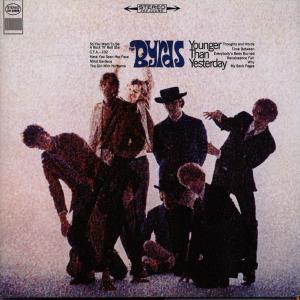
Younger Than Yesterday - The Byrds - album review
It is a trait of the music world that often bands only attain genuine critical acclaim when their records become less commercially successful. Sometimes this is genuinely down to the greater profundity of the music, but one is often left wondering what was "wrong" with the earlier work. Perhaps shifting millions of units makes something inherently suspect in the eyes of some.....
The Byrds are an example of this phenomenon. After their initial burst of success in 1965/66, their music became experimental, and therefore less appealing to the masses. These days, when serious critical study of their catalogue is conducted, the period of 1967/68 is lent most credibility.
Younger Than Yesterday was very much a transitional album. Gene Clark was no longer involved with the group, and his departure had the effect of liberating and motivating the other songwriters in the Byrds.
Certainly on this album David Crosby made some of the most concise and expressive musical statements of his whole career, the spine-tingling "Everybody's Been Burned" being the highlight.
The most surprising side-effect of the re-alignment within the Byrds was the emergence of Chris Hillman as a songwriter of real stamp, and his vocal and instrumental contributions also became more prominent. "Have You Seen Her Face" is one of the hidden gems in the Byrds entire canon, with its engrossing melody and dense guitar sound.
Younger than Yesterday is less compact and cohesive than its successor, The Notorious Byrd Brothers, or even its predecessor, Fifth Dimension, and this can leave it sounding quite dissonant in comparison. However, song-for-song it is stronger than either of those albums, and has some moments of sheer beauty and genius (in addition to the songs already mentioned, "Renaissance Fair" comes to mind).
Unlike their earlier records, this one feels like a modern rock album, with the involvement of guests and session musicians providing variety and texture. This all represented a shift away from the staid "beat group" format. Foremost among these guests was Clarence White, whose distinctive "twangy" guitar parts would become a feature of later Byrds efforts.
I know that there has been come criticism of the decision to include a cover of Bob Dylan's "My Back Pages" on this LP. Amongst the innovative and adventurous material, it sounds like a backward step. I would not disagree, but the Byrds make a fine fist of the song, and it acquires an even more wistful tone in this setting.
In keeping with the Zeitgeist, and their own musical detours, there is continuing evidence of the influence of Indian music and jazz. On the psychedelia front, only "Mind Gardens" misses the bullseye, appearing somewhat self-indulgent and pretentious. Admittedly, this was not uncommon in the music world circa 1967!
The closer on the original album, "Why", sounds more futuristic even than some of the other numbers, and tracks like this help to explain why the Byrds became so seminal a touchstone for many acts of future decades.
If you are searching for the ultimate psychedelic rock album, albeit one which retains a core of catchy and memorable songs, then Younger Than Yesterday may just be it.
The Byrds are an example of this phenomenon. After their initial burst of success in 1965/66, their music became experimental, and therefore less appealing to the masses. These days, when serious critical study of their catalogue is conducted, the period of 1967/68 is lent most credibility.
Younger Than Yesterday was very much a transitional album. Gene Clark was no longer involved with the group, and his departure had the effect of liberating and motivating the other songwriters in the Byrds.
Certainly on this album David Crosby made some of the most concise and expressive musical statements of his whole career, the spine-tingling "Everybody's Been Burned" being the highlight.
The most surprising side-effect of the re-alignment within the Byrds was the emergence of Chris Hillman as a songwriter of real stamp, and his vocal and instrumental contributions also became more prominent. "Have You Seen Her Face" is one of the hidden gems in the Byrds entire canon, with its engrossing melody and dense guitar sound.
Younger than Yesterday is less compact and cohesive than its successor, The Notorious Byrd Brothers, or even its predecessor, Fifth Dimension, and this can leave it sounding quite dissonant in comparison. However, song-for-song it is stronger than either of those albums, and has some moments of sheer beauty and genius (in addition to the songs already mentioned, "Renaissance Fair" comes to mind).
Unlike their earlier records, this one feels like a modern rock album, with the involvement of guests and session musicians providing variety and texture. This all represented a shift away from the staid "beat group" format. Foremost among these guests was Clarence White, whose distinctive "twangy" guitar parts would become a feature of later Byrds efforts.
I know that there has been come criticism of the decision to include a cover of Bob Dylan's "My Back Pages" on this LP. Amongst the innovative and adventurous material, it sounds like a backward step. I would not disagree, but the Byrds make a fine fist of the song, and it acquires an even more wistful tone in this setting.
In keeping with the Zeitgeist, and their own musical detours, there is continuing evidence of the influence of Indian music and jazz. On the psychedelia front, only "Mind Gardens" misses the bullseye, appearing somewhat self-indulgent and pretentious. Admittedly, this was not uncommon in the music world circa 1967!
The closer on the original album, "Why", sounds more futuristic even than some of the other numbers, and tracks like this help to explain why the Byrds became so seminal a touchstone for many acts of future decades.
If you are searching for the ultimate psychedelic rock album, albeit one which retains a core of catchy and memorable songs, then Younger Than Yesterday may just be it.
Thursday, 29 December 2011
Nick Drake
I spent some time with my older brother over Christmas, and the discussion got around to how our respective musical tastes began to diverge as our teenaged years progressed, and we drifted into adulthood. I chuckled when I reflected how I would deride my brother's preferences, but also admitted that I had eventually grown to like and respect much of the music to which he had listened, albeit over two decades later!
One of the artists falling into the above category was Nick Drake. I distinctly recall my brother coming home, clutching those vinyl albums. I did not pay any great attention to the music, and rather arrogantly dismissed it as part of an introspective phase on my brother's part, or an attempt to appear "hip" with his friends. There is a temptation at that age to question the motives of siblings, rejecting any notion that something may actually interest them for purely intrinsic or aesthetic reasons.
Well, two decades passed, and I did finally "find" Nick Drake, via a more circuitous route than my brother had taken. In my twenties and thirties I listened to lots of folk-rock and country-rock, and this led me on to singer-songwriters (Jackson Browne, Neil Young, Gene Clark), and then on to the British exponents of that genre, prominent among them being Drake.
On revisiting the three original studio albums, one thing which struck me is the "pastoral" feel, and also the ease with which one can be carried along by the deceptively complex melodies, and having to re-trace one's steps in order to fully take in the lyrics. The foremost emotion which came to me, though, was "why haven't I been listening to this stuff for the past twenty-odd years?"
The album which appeals to me most overall is Five Leaves Left, with its relatively sparse but subtle arrangements, and varied lyrical themes. Acoustic guitar forms the bedrock of most of the songs here, but other instrumentation is tastefully added to provide texture and depth. The nuances and charm of the songs and melodies are gradually revealed with repeated listening. There is also an almost otherworldly, ethereal feel to some of the tracks, particularly "River Man","Day Is Done" and "Thoughts of Mary Jane".
Lyrically, Five Leaves Left comes across as a mixture of the observational and the introspective, and the listener feels like he or she is being transported to a particular place and time, and also a distinct stage in the songwriter's life. While some of the compositions on this album may initially come across as quite bleak, closer scrutiny uncovers some joy, wonder, awe and optimism.
The Drake album which I suspect divides opinion most clearly, and is also the most troublesome to analyse, is 1970's Bryter Layter. More experimental and inpenetrable than the debut, with a discernible jazz-like feel in places, the songs alternate between the dreamy and the melancholy. Oddly, there are a couple of instrumental tracks. I know that the arrangements on this album can have a polarizing effect, but I find it fascinating to hear these lyrics shrouded in such an unusual, even incongruous, sonic mist.
Pink Moon, the final studio album, is possibly the least melodically diverse of the three, and features none of the augmentation by strings and woodwind instruments. This absence of such embellishments can make the album sound bleak, but also intimate. Drake's distinctive guitar work is projected more keenly, and the sense of intimacy is enhanced by the gritty sound of it, as well as the vocals. Pink Moon has a much more seamless and spontaneous vibe to it than the other material, reflecting the manner and circumstances in which it was recorded. None of the songs particularly stand out - the whole is greater than the sum of its parts.
So, there we have it, a small but impressive and varied body of work. Stylistically, Five Leaves Left stands betwixt the other two LPs, but I sense that there was no calculated career path. The individual albums simply reflect the time and place being inhabited by Nick Drake when they were written and recorded. This is often the case with "singer songwriters".
For those who admire sensitive and literate music, Nick Drake's work is a must. I just hope that other people don't, like me, take twenty years or more to fully embrace it!
One of the artists falling into the above category was Nick Drake. I distinctly recall my brother coming home, clutching those vinyl albums. I did not pay any great attention to the music, and rather arrogantly dismissed it as part of an introspective phase on my brother's part, or an attempt to appear "hip" with his friends. There is a temptation at that age to question the motives of siblings, rejecting any notion that something may actually interest them for purely intrinsic or aesthetic reasons.
Well, two decades passed, and I did finally "find" Nick Drake, via a more circuitous route than my brother had taken. In my twenties and thirties I listened to lots of folk-rock and country-rock, and this led me on to singer-songwriters (Jackson Browne, Neil Young, Gene Clark), and then on to the British exponents of that genre, prominent among them being Drake.
On revisiting the three original studio albums, one thing which struck me is the "pastoral" feel, and also the ease with which one can be carried along by the deceptively complex melodies, and having to re-trace one's steps in order to fully take in the lyrics. The foremost emotion which came to me, though, was "why haven't I been listening to this stuff for the past twenty-odd years?"
The album which appeals to me most overall is Five Leaves Left, with its relatively sparse but subtle arrangements, and varied lyrical themes. Acoustic guitar forms the bedrock of most of the songs here, but other instrumentation is tastefully added to provide texture and depth. The nuances and charm of the songs and melodies are gradually revealed with repeated listening. There is also an almost otherworldly, ethereal feel to some of the tracks, particularly "River Man","Day Is Done" and "Thoughts of Mary Jane".
Lyrically, Five Leaves Left comes across as a mixture of the observational and the introspective, and the listener feels like he or she is being transported to a particular place and time, and also a distinct stage in the songwriter's life. While some of the compositions on this album may initially come across as quite bleak, closer scrutiny uncovers some joy, wonder, awe and optimism.
The Drake album which I suspect divides opinion most clearly, and is also the most troublesome to analyse, is 1970's Bryter Layter. More experimental and inpenetrable than the debut, with a discernible jazz-like feel in places, the songs alternate between the dreamy and the melancholy. Oddly, there are a couple of instrumental tracks. I know that the arrangements on this album can have a polarizing effect, but I find it fascinating to hear these lyrics shrouded in such an unusual, even incongruous, sonic mist.
Pink Moon, the final studio album, is possibly the least melodically diverse of the three, and features none of the augmentation by strings and woodwind instruments. This absence of such embellishments can make the album sound bleak, but also intimate. Drake's distinctive guitar work is projected more keenly, and the sense of intimacy is enhanced by the gritty sound of it, as well as the vocals. Pink Moon has a much more seamless and spontaneous vibe to it than the other material, reflecting the manner and circumstances in which it was recorded. None of the songs particularly stand out - the whole is greater than the sum of its parts.
So, there we have it, a small but impressive and varied body of work. Stylistically, Five Leaves Left stands betwixt the other two LPs, but I sense that there was no calculated career path. The individual albums simply reflect the time and place being inhabited by Nick Drake when they were written and recorded. This is often the case with "singer songwriters".
For those who admire sensitive and literate music, Nick Drake's work is a must. I just hope that other people don't, like me, take twenty years or more to fully embrace it!
Wednesday, 31 August 2011
Big Star
Around 1994/95, I began to purchase the "serious" music magazines, and I continually read about an American group called Big Star, who it seemed had released a couple of seminal albums in the 1970s, and who were being cited as an influence by artists on both sides of the Atlantic. They, so the articles and reviews informed me, had also inspired many American "alternative" and underground bands of the 1980s.
Well, as my musical palette was beginning to expand during that time, I checked out Big Star's music, after finding that their first two albums, "#1 Record" and "Radio City", were available together on one CD. Having listened, my initial impressions were "pleasant enough, a few catchy songs, nice harmonies", but nothing more than that. Big Star were filed away in my mind as a good group, but they were half-forgotten as my musical attentions were drawn elsewhere.
It was only very recently that Big Star re-appeared on my radar, and almost by accident, as I heard one of their best-known tracks on an internet radio station. This prompted me to go back and re-evaluate those first two albums.
Well, maybe my musical instincts and antennae have become keener and more discerning in the intervening period, but I was struck by how much I had initially under-rated Big Star. I now appreciate how important they were, and why they are recalled with such fondness by so many people.
The music is more diverse and hard-edged than I had remembered it, with the emphasis on Power Pop, rather than just pretty harmonies. The remastered versions which I have been listening to evidently accentuated some of the nuances.
Whilst Big Star were themselves hugely influential, it is worth examining from which artists and musical styles they derived their own inspiration. The conventional wisdom has been that their music was in many ways similar to The Byrds and some of the pioneering US power-pop combos. However, I detect major signs of The Who in their songs, melodically as well as in the vocal harmonies and "clanging" guitar sound. A healthy dash of Stonesy swagger is also evident at times. In the slower acoustic numbers there are distinct echoes of Gene Clark and Neil Young.
The lyrics straddle the line between youthful innocence and self-consciousness, but thankfully never becoming fully immersed in either. Innocent and simple at times, but equally intelligent and thoughtful.
Big Star's songs tend to be compact and concise three or four minute affairs, more often than not effortlessly tuneful. The word "songcraft" could almost have been invented to describe their work. A few of their melodies owe a lot to the girl-group/Brill Building pop of the early 1960s.
One of the things which I have noticed in my revisit of Big Star is how technically intricate some of the guitar playing is. Similar in sound to The Byrds and The Who, but tending to be more complex and elaborate. Some pleasing acoustic picking is also on display.
Those first two albums contain few genuinely weak songs, but the stand-out tracks are probably "In The Street", "Thirteen", "O My Soul" and "September Gurls". In particular, "In The Street", with its punchy melody, angelic harmonies and hypnotic guitar lines, is a minor classic of its type.
So, given that so many observers wax lyrical about Big Star, and their early offerings, why did they not achieve more commercial popularity and recognition in the early to mid 1970s? Plain bad luck may partially explain it. However, my own theory, for what it's worth, is that they were "a band out of time", and simply did not fit in to any of the convenient pigeon-holes of the prevailing musical genres of the era.
Big Star could not be accurately described as glam rock, prog rock, or mainstream album rock. If anything, their sound has more in common with some of the American punk artists who came along not long afterwards. They unluckily fell into the gap of having a retro sound, but also being ahead of their time in some respects (their music presaged the New Wave music which emerged in the aftermath of punk).
For anyone who appreciates true pop craftsmanship, and the pure joy of guitars and vocal harmonies, "#1 Record" and "Radio City" are essential listening. They are very difficult to dislike.
Well, as my musical palette was beginning to expand during that time, I checked out Big Star's music, after finding that their first two albums, "#1 Record" and "Radio City", were available together on one CD. Having listened, my initial impressions were "pleasant enough, a few catchy songs, nice harmonies", but nothing more than that. Big Star were filed away in my mind as a good group, but they were half-forgotten as my musical attentions were drawn elsewhere.
It was only very recently that Big Star re-appeared on my radar, and almost by accident, as I heard one of their best-known tracks on an internet radio station. This prompted me to go back and re-evaluate those first two albums.
Well, maybe my musical instincts and antennae have become keener and more discerning in the intervening period, but I was struck by how much I had initially under-rated Big Star. I now appreciate how important they were, and why they are recalled with such fondness by so many people.
The music is more diverse and hard-edged than I had remembered it, with the emphasis on Power Pop, rather than just pretty harmonies. The remastered versions which I have been listening to evidently accentuated some of the nuances.
Whilst Big Star were themselves hugely influential, it is worth examining from which artists and musical styles they derived their own inspiration. The conventional wisdom has been that their music was in many ways similar to The Byrds and some of the pioneering US power-pop combos. However, I detect major signs of The Who in their songs, melodically as well as in the vocal harmonies and "clanging" guitar sound. A healthy dash of Stonesy swagger is also evident at times. In the slower acoustic numbers there are distinct echoes of Gene Clark and Neil Young.
The lyrics straddle the line between youthful innocence and self-consciousness, but thankfully never becoming fully immersed in either. Innocent and simple at times, but equally intelligent and thoughtful.
Big Star's songs tend to be compact and concise three or four minute affairs, more often than not effortlessly tuneful. The word "songcraft" could almost have been invented to describe their work. A few of their melodies owe a lot to the girl-group/Brill Building pop of the early 1960s.
One of the things which I have noticed in my revisit of Big Star is how technically intricate some of the guitar playing is. Similar in sound to The Byrds and The Who, but tending to be more complex and elaborate. Some pleasing acoustic picking is also on display.
Those first two albums contain few genuinely weak songs, but the stand-out tracks are probably "In The Street", "Thirteen", "O My Soul" and "September Gurls". In particular, "In The Street", with its punchy melody, angelic harmonies and hypnotic guitar lines, is a minor classic of its type.
So, given that so many observers wax lyrical about Big Star, and their early offerings, why did they not achieve more commercial popularity and recognition in the early to mid 1970s? Plain bad luck may partially explain it. However, my own theory, for what it's worth, is that they were "a band out of time", and simply did not fit in to any of the convenient pigeon-holes of the prevailing musical genres of the era.
Big Star could not be accurately described as glam rock, prog rock, or mainstream album rock. If anything, their sound has more in common with some of the American punk artists who came along not long afterwards. They unluckily fell into the gap of having a retro sound, but also being ahead of their time in some respects (their music presaged the New Wave music which emerged in the aftermath of punk).
For anyone who appreciates true pop craftsmanship, and the pure joy of guitars and vocal harmonies, "#1 Record" and "Radio City" are essential listening. They are very difficult to dislike.
Subscribe to:
Posts (Atom)