Just recently, I was fortunate enough to watch what is I suppose regarded as one of the classic episodes of Doctor Who, namely Genesis of The Daleks, from 1975.
I must confess that Doctor Who has not really exercised my consciousness since the early 1980s, and for me, like many people of my generation, Tom Baker was the Doctor par excellence.
The storyline of Genesis of The Daleks was impressive, complex and fluctuating, and its vagaries and subtleties would probably have escaped me at the tender age I was when I first watched Doctor Who! Viewing this episode now, though, I can appreciate how well the story was constructed, with the suspense being steadily built, and occasionally decreased. The writers and producers definitely understood how to hold and maintain the attention of the viewers.
Even allowing for my generational bias, I still think that Tom Baker was a mightily impressive Doctor. As an actor, he projected some gravitas, whilst imbuing the character with a "Pied Piper" type of persona which has always been important. Again, some of these nuances were not absorbed when I was an impressionable child, and the sense of wonder over-rode most other considerations. But one of the strengths of Doctor Who in those days was that it worked on several levels, providing escapism for the young, and containing more weighty fare for the grown-ups.
Another strand which emerged during my recent viewing, but which I had not noticed much during my formative years, was the tendency for moral themes and dilemmas to be explored in the programme, usually revolving around the good/evil, or right/wrong paradigm. Whilst watching the show as a child in the Seventies, I had very little sense of being "preached" to, but admittedly would not have recognised the tell-tale signs at that age anyway. Perhaps I am too cynical and judgemental these days, detecting agendas and reading things into essentially innocent dialogue.
The settings for Genesis of The Daleks are bleak, dark, and ominous and give off a sense of foreboding. That is how I remember most of the episodes of that era. The sun rarely shone! The locations were often enclosed, claustrophobic and dimly lit. The aesthetic was less gaudy and ostentatious than the versions of Doctor Who which both preceded and followed it. Sober colours, designs and costumes were the order of the day, and that was something which appealed to me then, and still does now....
One thing which has not altered in the past three and a half decades is the capacity of Davros and the Daleks to disturb and instill fear. Indeed, they seem more chilling now because the innocence of childhood tends to mask the true gravity and meaning of some of their words and deeds.
The special effects in Doctor Who have been much mocked down the years, and Genesis of The Daleks was something of a curate's egg in this regard. The Davros creation, in terms of make-up and voice, was exceptional for its time, and was even more convincing than I had remembered it. However, I wonder whether this effort exhausted much of the budget, as the other effects were less spectacular and authentic. All part of the charm of the programme, I guess!
The fight or "struggle" scenes in Doctor Who at that time never seemed over-burdened with realism. Indeed, the exaggerated grimaces of the characters remain one of the clearest memories of my childhood...
In general, the quality of acting was of a good standard, even if the dialogue could occasionally appear stodgy, prolonged and repititive.
Doctor Who may have lacked the budget of many of its American counterpart programmes, but it had a certain power, coloured by British ingenuity and humour. The unusual, not to say unique, basic premise of the programme also helps explain its appeal.
Following this, I might even be persuaded to start watching the "modern" Doctor Who....
Tuesday, 22 November 2011

Saturday, 19 November 2011
Burnley 1 Leeds United 2
After watching this Npower Champonship match on television, I feel some pangs of sympathy for Burnley and their supporters.
I thought that Leeds were very ordinary for the majority of the game at Turf Moor, but admittedly took those two chances when they were presented.
My reading of it was that Leeds started quite purposefully, but soon Burnley began to look the more organised and cohesive team. Leeds kept trying, but struggled to carve out meaningful goalscoring opportunities.
One of the undoubted plusses from my point of view was the assured performance of our new goalkeeper Alex McCarthy, although I thought he might have done marginally better for the Burnley goal. A couple of his saves later proved to be absolutely crucial. Regrettably, the defence in front of him looked much less reliable and solid.
Up until Leeds' late purple patch, Burnley had probably looked more threatening, and more likely to score in the second period. What was heartening was that once Robert Snodgrass scored, Leeds kept pressing in order to capitalise.
What conclusions should we draw from this result? Well, hopefully Simon Grayson and his players will realise that they were slightly fortunate, and that they will not be able to play like this and win on a regular basis.
In a funny way, this could be a turning point, the nature of the performance and result giving a boost to morale and even confidence. Nobody should be under any illusions, however, that there is much work still to be done.
On a lighter note, I thought that when he scored his second goal, Snodgrass might have slightly mis-hit the ball. If he had made a more perfect contact, the ball might not have ended up in the net! On such fine margins are things decided....
I thought that Leeds were very ordinary for the majority of the game at Turf Moor, but admittedly took those two chances when they were presented.
My reading of it was that Leeds started quite purposefully, but soon Burnley began to look the more organised and cohesive team. Leeds kept trying, but struggled to carve out meaningful goalscoring opportunities.
One of the undoubted plusses from my point of view was the assured performance of our new goalkeeper Alex McCarthy, although I thought he might have done marginally better for the Burnley goal. A couple of his saves later proved to be absolutely crucial. Regrettably, the defence in front of him looked much less reliable and solid.
Up until Leeds' late purple patch, Burnley had probably looked more threatening, and more likely to score in the second period. What was heartening was that once Robert Snodgrass scored, Leeds kept pressing in order to capitalise.
What conclusions should we draw from this result? Well, hopefully Simon Grayson and his players will realise that they were slightly fortunate, and that they will not be able to play like this and win on a regular basis.
In a funny way, this could be a turning point, the nature of the performance and result giving a boost to morale and even confidence. Nobody should be under any illusions, however, that there is much work still to be done.
On a lighter note, I thought that when he scored his second goal, Snodgrass might have slightly mis-hit the ball. If he had made a more perfect contact, the ball might not have ended up in the net! On such fine margins are things decided....
The Great Escape
I recently viewed The Great Escape yet again. Rather than just write a dry "review" for this blog, I decided to examine a few of the neglected aspects of the film, as well as address a few myths, and generally make a few random observations.
One of the interesting subtexts in The Great Escape is the rapport which develops between individual British and American captives, in spite of the glaring clash of cultures. The major instances of this are the tie-ups involving Hilts (Steve McQueen) and Ives, and then Hendley (James Garner) and Blythe.
The Hendley-Blythe collaboration was fascinating for several reasons. They seemed an unlikely duo, the streetwise, taciturn American and the rather eccentric Englishman, but the affection was genuine. Not really a case of opposites attracting, but more the recognition of essentially human qualities. Hendley sensed the vulnerability of Blythe, whose eyesight was deteriorating.
By agreeing to act as Blythe's escort during and after the escape, Hendley almost certainly saw his own chances of eventual freedom diminish. This brings us on to a perenially contentious subject, namely the role of the American characters in the movie. The screenwriters did push the prominence of the Americans in their adaptation of the story, but this does not tell us the whole story.
A frequent charge is that the Americans were portrayed as the most heroic and smart of the Allied POWs. There is some foundation to this, but equally I would assert that they were far from one-dimensional characters. Hendley in particular shows much compassion, humanity and shrewdness in his dealings with others. This is an interesting counterpoint to his role as "the scrounger", during which he sometimes had to resort to less wholesome methods. However, on balance we can allow that on this occasion the ends justified the means!
It is tempting to draw the conclusion that Steve McQueen was the "action hero", and that the British and Commonwealth officers were the brains of the operation. That is an over-simplification. At times he showed genuine clarity of thought, while the British appeared to become mired in detail and bureaucracy.
How do we interpret the scene during which the US officers hold a ceremony to celebrate the Fourth of July? One could choose to see it as a subtle dig at British imperialism, but I prefer to view the sequence as signifying the ability of the prisoners to acknowledge the past, but at the same time to recognise that they were now united in facing a common foe.
In assessing the contribution of the McQueen and Garner characters, it should also be recalled that the only escapees who were ultimately successful were non-American, and Hilts and Hendley, although surviving, were returned to captivity in the camp.
It is also probably true to say that the Americans expressed the most misgivings and cynicism about the whole enterprise, whereas the others appeared to be in thrall to Bartlett in particular. Towards the close of the film, the dissent in the ranks makes itself felt more, as the human cost begins to sink in, and much of the bravado and idealism dissolves.
When assessing The Great Escape, Bartlett (Big X) comes across as one of the less appealing characters, and one who I suspect divides opinion. The more I watch the film, the more I see him as vain and manipulative, even narcissistic. He was capable of persuading his men to do things which they might normally deem to be inadvisable. At the same time, I can appreciate that he was the catalyst and the motivator, and the one who made things happen.
Group Captain Ramsey (James Donald) initially sought to advise caution, and to act as a voice of reason and moderation, and to curb some of Big X's excesses. However, even his authority seemed to be over-ridden by the forceful personality of Bartlett. A more ideal formula may have been the zeal and vigour of the escape group leadership, tempered by cooler heads and the more detached approach of the likes of Ramsey.
It also seems to me that the MacDonald character (played by Gordon Jackson) is one of the weak links, although nominally seen as important. He displays sychophancy towards Bartlett at times, but Bartlett seems to have less than total confidence in him. Was excessive loyalty shown to some of the operatives, when their roles could have been more effectively performed by men from outside the "clique"?
One of the characters who shows some individuality and ploughs his own furrow is Sedgwick, the Australian. Mocked by his fellow prisoners for insisting on taking a suitcase with him on the escape, and constantly harrassed over deadlines, he displayed greater savvy and assurance than the others once it was every man for himself. As something of a loner and individualist myself, I could emphathise with Sedgwick's approach!
A part of the film which increasingly grates with me is the characterisation of the Gestapo men in the movie. They feel unduly "cartoonish", as if they were intended to be caricatures, derived straight from War Comics Central Casting. This, however, is quite a minor criticism in the overall scheme of things.
Over the years, much has been made about the supposed "rapport" between the Luftwaffe men staffing the camp and the Allied POWs. There may have been some level of understanding and common ground as "flyers", but it may have been over-emphasised. There was certainly a battle of wills, and if anything the Germans may have shown too much trust and leniency at the outset, and under-estimated the determination and resolve of the prisoners. The commandant and guards found it difficult to deal with the insubordination, defiance and sarcasm which they encountered. Ironically, in seeking to distance themselves from, and ignore the advice of, the Gestapo and the SS, the camp authorities partly contributed to their own downfall. They allowed Bartlett to integrate with the others, rather than housing him separately.
One of the strengths of The Great Escape is its depth, certainly in comparison to most other mainstream war films. No doubt before long I will be writing a follow-up to this article, with more observations!
One of the interesting subtexts in The Great Escape is the rapport which develops between individual British and American captives, in spite of the glaring clash of cultures. The major instances of this are the tie-ups involving Hilts (Steve McQueen) and Ives, and then Hendley (James Garner) and Blythe.
The Hendley-Blythe collaboration was fascinating for several reasons. They seemed an unlikely duo, the streetwise, taciturn American and the rather eccentric Englishman, but the affection was genuine. Not really a case of opposites attracting, but more the recognition of essentially human qualities. Hendley sensed the vulnerability of Blythe, whose eyesight was deteriorating.
By agreeing to act as Blythe's escort during and after the escape, Hendley almost certainly saw his own chances of eventual freedom diminish. This brings us on to a perenially contentious subject, namely the role of the American characters in the movie. The screenwriters did push the prominence of the Americans in their adaptation of the story, but this does not tell us the whole story.
A frequent charge is that the Americans were portrayed as the most heroic and smart of the Allied POWs. There is some foundation to this, but equally I would assert that they were far from one-dimensional characters. Hendley in particular shows much compassion, humanity and shrewdness in his dealings with others. This is an interesting counterpoint to his role as "the scrounger", during which he sometimes had to resort to less wholesome methods. However, on balance we can allow that on this occasion the ends justified the means!
It is tempting to draw the conclusion that Steve McQueen was the "action hero", and that the British and Commonwealth officers were the brains of the operation. That is an over-simplification. At times he showed genuine clarity of thought, while the British appeared to become mired in detail and bureaucracy.
How do we interpret the scene during which the US officers hold a ceremony to celebrate the Fourth of July? One could choose to see it as a subtle dig at British imperialism, but I prefer to view the sequence as signifying the ability of the prisoners to acknowledge the past, but at the same time to recognise that they were now united in facing a common foe.
In assessing the contribution of the McQueen and Garner characters, it should also be recalled that the only escapees who were ultimately successful were non-American, and Hilts and Hendley, although surviving, were returned to captivity in the camp.
It is also probably true to say that the Americans expressed the most misgivings and cynicism about the whole enterprise, whereas the others appeared to be in thrall to Bartlett in particular. Towards the close of the film, the dissent in the ranks makes itself felt more, as the human cost begins to sink in, and much of the bravado and idealism dissolves.
When assessing The Great Escape, Bartlett (Big X) comes across as one of the less appealing characters, and one who I suspect divides opinion. The more I watch the film, the more I see him as vain and manipulative, even narcissistic. He was capable of persuading his men to do things which they might normally deem to be inadvisable. At the same time, I can appreciate that he was the catalyst and the motivator, and the one who made things happen.
Group Captain Ramsey (James Donald) initially sought to advise caution, and to act as a voice of reason and moderation, and to curb some of Big X's excesses. However, even his authority seemed to be over-ridden by the forceful personality of Bartlett. A more ideal formula may have been the zeal and vigour of the escape group leadership, tempered by cooler heads and the more detached approach of the likes of Ramsey.
It also seems to me that the MacDonald character (played by Gordon Jackson) is one of the weak links, although nominally seen as important. He displays sychophancy towards Bartlett at times, but Bartlett seems to have less than total confidence in him. Was excessive loyalty shown to some of the operatives, when their roles could have been more effectively performed by men from outside the "clique"?
One of the characters who shows some individuality and ploughs his own furrow is Sedgwick, the Australian. Mocked by his fellow prisoners for insisting on taking a suitcase with him on the escape, and constantly harrassed over deadlines, he displayed greater savvy and assurance than the others once it was every man for himself. As something of a loner and individualist myself, I could emphathise with Sedgwick's approach!
A part of the film which increasingly grates with me is the characterisation of the Gestapo men in the movie. They feel unduly "cartoonish", as if they were intended to be caricatures, derived straight from War Comics Central Casting. This, however, is quite a minor criticism in the overall scheme of things.
Over the years, much has been made about the supposed "rapport" between the Luftwaffe men staffing the camp and the Allied POWs. There may have been some level of understanding and common ground as "flyers", but it may have been over-emphasised. There was certainly a battle of wills, and if anything the Germans may have shown too much trust and leniency at the outset, and under-estimated the determination and resolve of the prisoners. The commandant and guards found it difficult to deal with the insubordination, defiance and sarcasm which they encountered. Ironically, in seeking to distance themselves from, and ignore the advice of, the Gestapo and the SS, the camp authorities partly contributed to their own downfall. They allowed Bartlett to integrate with the others, rather than housing him separately.
One of the strengths of The Great Escape is its depth, certainly in comparison to most other mainstream war films. No doubt before long I will be writing a follow-up to this article, with more observations!
Tuesday, 15 November 2011
The Band
It is rare for a group to make definitive musical statements with its first two albums, let alone produce two works which have such a profound effect on the musical landscape. However, this was achieved by The Band, the Canadian-American combo which until then had been best known as Bob Dylan's some-time backing band.
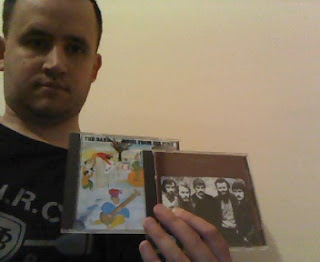
Music From Big Pink and The Band, released in 1968 and 1969 respectively, were instrumental (if you'll pardon the pun) in rock music's shift in a more rootsy direction, and away from the extravagance of the psychedelic and heavy music which had begun to dominate. Much of the rock aristrocracy, including Eric Clapton and George Harrison, was inspired by The Band, not only because of their sound, but because of the sense of community which their music seemed to encapsulate.
I was initially resistant to The Band, probably because they were praised by rock critics whose taste and judgement I did not always trust. However, interest in other exponents of "roots" rock eventually led me to purchase those first two albums, and I became a fan for life.
One of the first things which is immediately noticeable when listening to Music from Big Pink is an exuberance and impishness, which suggests that the musicians were having great fun recording these songs!
In an era when individual virtuosity and showmanship were becoming ever more important, The Band were at pains to ensure where possible that efforts were subsumed into concise and organic song structures, while still allowing space for the individual contributions to breathe. This was possible because of the even distribution of talent within the group. The soulful vocals of Richard Manuel and Levon Helm, and the keyboard wizardry of Garth Hudson were central to the group's appeal, but were never permitted to dominate or marginalise other elements.
Another remarkable thing about The Band is how they combined and mixed various musical influences into their own unique style. Many of their songs contained elements of blues,R&B,country, and folk, but few of the tracks in their catalogue can be pigeon-holed as typifying any particular genre.
Of the two, I probably marginally prefer Music From Big Pink because of its greater spontaneity, but I know that many fans treat the two LPs as in effect one double-album. The "brown album" exudes more polish. Robbie Robertson, in particular, appears to have gone through a remarkably fertile period of songwriting productivity.
When examining two albums of such sustained and consistent quality, it is difficult, and even churlish, to pick out highlights. However, Manuel's vocal on "Tears of Rage" never fails to send a shiver down the spine, and the tuneful opening bars of "Across The Great Divide" exemplify everything that was great about The Band. The versions of the "Basement Tapes" songs on the first album are pretty much definitive.
And the lyrical content of these songs also differed from those of the majority of The Band's contemporaries, delving as they did into historical themes, and featuring some offbeat humour. It was as if they were instinctively rebelling against some of the more outlandish pretensions then prevalent on the rock scene.
The rustic and rootsy flavour of the material was also enhanced by the distinctive, and sometimes intentionally ragged, vocal interplay between Helm, Manuel and Rick Danko. When other artists were aiming for more and more pristine multi-tracked harmonies, The Band allowed the diverse talents of their singers to shine through. In addition, they were not scared of employing unusual instruments for a rock setting, and the members themselves sometimes switched between instruments. The Band were a "band" in the truest sense of the word....
Perhaps inevitably, The Band were not quite able to maintain the stunning standard of their first two albums on subsequent works. Although their craftsmanship and talent remained intact, reproducing the magic of 1968/69 proved elusive.
The Band's place in rock history was assured by their work at the close of the 1960s. This was not just because of the quality and charm of the music, but because they caused a generation of musicians to take stock, and consider whether things could be done differently.
Music From Big Pink and The Band have stood the test of time, and sound as fresh and as ebullient as they must have done over four decades ago.
Listen to the keyboard-drenched introduction to "We Can Talk", and you'll see what I mean....

Music From Big Pink and The Band, released in 1968 and 1969 respectively, were instrumental (if you'll pardon the pun) in rock music's shift in a more rootsy direction, and away from the extravagance of the psychedelic and heavy music which had begun to dominate. Much of the rock aristrocracy, including Eric Clapton and George Harrison, was inspired by The Band, not only because of their sound, but because of the sense of community which their music seemed to encapsulate.
I was initially resistant to The Band, probably because they were praised by rock critics whose taste and judgement I did not always trust. However, interest in other exponents of "roots" rock eventually led me to purchase those first two albums, and I became a fan for life.
One of the first things which is immediately noticeable when listening to Music from Big Pink is an exuberance and impishness, which suggests that the musicians were having great fun recording these songs!
In an era when individual virtuosity and showmanship were becoming ever more important, The Band were at pains to ensure where possible that efforts were subsumed into concise and organic song structures, while still allowing space for the individual contributions to breathe. This was possible because of the even distribution of talent within the group. The soulful vocals of Richard Manuel and Levon Helm, and the keyboard wizardry of Garth Hudson were central to the group's appeal, but were never permitted to dominate or marginalise other elements.
Another remarkable thing about The Band is how they combined and mixed various musical influences into their own unique style. Many of their songs contained elements of blues,R&B,country, and folk, but few of the tracks in their catalogue can be pigeon-holed as typifying any particular genre.
Of the two, I probably marginally prefer Music From Big Pink because of its greater spontaneity, but I know that many fans treat the two LPs as in effect one double-album. The "brown album" exudes more polish. Robbie Robertson, in particular, appears to have gone through a remarkably fertile period of songwriting productivity.
When examining two albums of such sustained and consistent quality, it is difficult, and even churlish, to pick out highlights. However, Manuel's vocal on "Tears of Rage" never fails to send a shiver down the spine, and the tuneful opening bars of "Across The Great Divide" exemplify everything that was great about The Band. The versions of the "Basement Tapes" songs on the first album are pretty much definitive.
And the lyrical content of these songs also differed from those of the majority of The Band's contemporaries, delving as they did into historical themes, and featuring some offbeat humour. It was as if they were instinctively rebelling against some of the more outlandish pretensions then prevalent on the rock scene.
The rustic and rootsy flavour of the material was also enhanced by the distinctive, and sometimes intentionally ragged, vocal interplay between Helm, Manuel and Rick Danko. When other artists were aiming for more and more pristine multi-tracked harmonies, The Band allowed the diverse talents of their singers to shine through. In addition, they were not scared of employing unusual instruments for a rock setting, and the members themselves sometimes switched between instruments. The Band were a "band" in the truest sense of the word....
Perhaps inevitably, The Band were not quite able to maintain the stunning standard of their first two albums on subsequent works. Although their craftsmanship and talent remained intact, reproducing the magic of 1968/69 proved elusive.
The Band's place in rock history was assured by their work at the close of the 1960s. This was not just because of the quality and charm of the music, but because they caused a generation of musicians to take stock, and consider whether things could be done differently.
Music From Big Pink and The Band have stood the test of time, and sound as fresh and as ebullient as they must have done over four decades ago.
Listen to the keyboard-drenched introduction to "We Can Talk", and you'll see what I mean....
Sunday, 13 November 2011
Abu Dhabi Grand Prix 2011.
A most peculiar thing happened to me today. Around mid-afternoon, I was watching TV, and a racing driver by the name of Lewis Hamilton appeared on my screen, and he was smiling, and even laughing....
It is probably too early to say definitively that the "old" Lewis is back, but his joy and relief following this victory were palpable. He didn't have to do much in the way of wheel-to-wheel racing to achieve today's win, and his cause was assisted by Sebastian Vettel's early departure, but his drive had some genuine authority about it.
Historically, McLaren always keep pushing until the very end of a Formula 1 season, regardless of whether the championship is still at stake. Hamilton and Jenson Button are reaping the dividends of this ethos. Jenson was affected by KERS maladies today, which makes his podium position all the more creditable.
For once, Red Bull seemed fallible, and in addition to Vettel's problems, Mark Webber's own car seemed slightly out of sorts, but he showed his customary tenacity to try to achieve the best possible result.
As for Ferrari, well Felipe Massa drove a solid race up until his late spin. Although this did not make much difference to the final outcome, it will hardly endear him to the team. Alonso showed real application in his valiant pursuit of Hamilton, and second place was almost certainly the best the car was capable of on the day.
One way or another, Williams had a pretty eventful race. Pastor Maldonado incurred the wrath of the stewards on a couple of occasions, and he needs to be careful that he does not acquire a reputation for being an awkward customer.
The performance, at least in the early part of the race, of Rubens Barrichello, will have raised a few eyebrows, and will no doubt prompt much debate. Granted, he was on the back row of the grid, and this indignity may have fired him up, but his drive may also be analysed in the context of recent speculation concerning the Williams team's likely 2012 line-up....
The Abu Dhabi track seems to inspire mixed reactions, but it is hard to deny that it is visually stunning, and personally I quite like its layout. It seems likely to be a fixture on the calendar, in the medium term at least.
And so on to Interlagos, for the 2011 season finale. It is fitting that the campaign ends at a traditional F1 circuit, with a great atmosphere. Will McLaren continue their late season surge? Of course, second place in the drivers' table is still very much up for grabs, so it should be a lively contest!
It is probably too early to say definitively that the "old" Lewis is back, but his joy and relief following this victory were palpable. He didn't have to do much in the way of wheel-to-wheel racing to achieve today's win, and his cause was assisted by Sebastian Vettel's early departure, but his drive had some genuine authority about it.
Historically, McLaren always keep pushing until the very end of a Formula 1 season, regardless of whether the championship is still at stake. Hamilton and Jenson Button are reaping the dividends of this ethos. Jenson was affected by KERS maladies today, which makes his podium position all the more creditable.
For once, Red Bull seemed fallible, and in addition to Vettel's problems, Mark Webber's own car seemed slightly out of sorts, but he showed his customary tenacity to try to achieve the best possible result.
As for Ferrari, well Felipe Massa drove a solid race up until his late spin. Although this did not make much difference to the final outcome, it will hardly endear him to the team. Alonso showed real application in his valiant pursuit of Hamilton, and second place was almost certainly the best the car was capable of on the day.
One way or another, Williams had a pretty eventful race. Pastor Maldonado incurred the wrath of the stewards on a couple of occasions, and he needs to be careful that he does not acquire a reputation for being an awkward customer.
The performance, at least in the early part of the race, of Rubens Barrichello, will have raised a few eyebrows, and will no doubt prompt much debate. Granted, he was on the back row of the grid, and this indignity may have fired him up, but his drive may also be analysed in the context of recent speculation concerning the Williams team's likely 2012 line-up....
The Abu Dhabi track seems to inspire mixed reactions, but it is hard to deny that it is visually stunning, and personally I quite like its layout. It seems likely to be a fixture on the calendar, in the medium term at least.
And so on to Interlagos, for the 2011 season finale. It is fitting that the campaign ends at a traditional F1 circuit, with a great atmosphere. Will McLaren continue their late season surge? Of course, second place in the drivers' table is still very much up for grabs, so it should be a lively contest!
Friday, 11 November 2011
Steve Prefontaine
Every so often, in every walk of life, a person comes along who stands apart from the rest, not necessarily by virtue of their ability, but because of their approach, their attitude and their affect on those around them. Such a person was Steve Prefontaine, the American distance runner of the 1970s.
When I first began following track and field closely, in the 1980s, I remember hearing the name Steve Prefontaine, and seeing him mentioned in books, but at the time did not fully grasp his importance and influence, particularly to people in the US. I was aware that he had narrowly missed out on a medal in the 1972 Olympics, but little beyond that.
My interest in Prefontaine was truly awakened a couple of years ago, when I saw the excellent movie, Without Limits, which is a biopic about the man himself. Whether the film is a fully accurate portrayal I will leave to those with more detailed knowledge to judge.
The most memorable feature of Without Limits is arguably the performance of Donald Sutherland as Bill Bowerman, Prefontaine's coach. However, aspects of the runner's personality and spirit are also examined, including how these traits impacted on others.
One of the striking things about Prefontaine seems to have been his idealism, and this was particularly evident in his front-running style. The manner of victory appeared to matter as much as victory itself, and "Pre", as he was known, may have seen running as much as an exploration of his own boundaries as a competition against other athletes.
This philosophy, and his scepticism towards authority and officialdom, are the things which fascinated me about Prefontaine. Sometimes we need to look beyond arbitrary goals, and embark on our journey of discovery, finding things out for ourselves. This often brings us into conflict with those who cling to convention. This all strikes a chord with me, following recent events in my own life.
Coaches and others may have attempted to persuade the man from Oregon to follow a more pragmatic course, but they were only partially successful. This non-comformist and rebellious streak, and his early death, appear to be the principal reasons for the Prefontaine legend.
Prefontaine's ethos was perfectly illustrated in the 1972 Olympic 5,000 metres final, when he transformed an initially pedestrian race into a no holds barred run for home, extending and testing a field of the utmost quality. Even though he lost the race, he made the race a genuine contest, and did not simply "run with the crowd".
We can only speculate on what he could have achieved in Montreal '76, had he lived. As it happens, the 5000 metres final in those Olympics was an epic affair, but we can reasonably assume that it would have been a different kind of race had the American been present.
Steve Prefontaine may not have won any Olympic medals, but what he stood for, and left behind, are arguably much more precious....
When I first began following track and field closely, in the 1980s, I remember hearing the name Steve Prefontaine, and seeing him mentioned in books, but at the time did not fully grasp his importance and influence, particularly to people in the US. I was aware that he had narrowly missed out on a medal in the 1972 Olympics, but little beyond that.
My interest in Prefontaine was truly awakened a couple of years ago, when I saw the excellent movie, Without Limits, which is a biopic about the man himself. Whether the film is a fully accurate portrayal I will leave to those with more detailed knowledge to judge.
The most memorable feature of Without Limits is arguably the performance of Donald Sutherland as Bill Bowerman, Prefontaine's coach. However, aspects of the runner's personality and spirit are also examined, including how these traits impacted on others.
One of the striking things about Prefontaine seems to have been his idealism, and this was particularly evident in his front-running style. The manner of victory appeared to matter as much as victory itself, and "Pre", as he was known, may have seen running as much as an exploration of his own boundaries as a competition against other athletes.
This philosophy, and his scepticism towards authority and officialdom, are the things which fascinated me about Prefontaine. Sometimes we need to look beyond arbitrary goals, and embark on our journey of discovery, finding things out for ourselves. This often brings us into conflict with those who cling to convention. This all strikes a chord with me, following recent events in my own life.
Coaches and others may have attempted to persuade the man from Oregon to follow a more pragmatic course, but they were only partially successful. This non-comformist and rebellious streak, and his early death, appear to be the principal reasons for the Prefontaine legend.
Prefontaine's ethos was perfectly illustrated in the 1972 Olympic 5,000 metres final, when he transformed an initially pedestrian race into a no holds barred run for home, extending and testing a field of the utmost quality. Even though he lost the race, he made the race a genuine contest, and did not simply "run with the crowd".
We can only speculate on what he could have achieved in Montreal '76, had he lived. As it happens, the 5000 metres final in those Olympics was an epic affair, but we can reasonably assume that it would have been a different kind of race had the American been present.
Steve Prefontaine may not have won any Olympic medals, but what he stood for, and left behind, are arguably much more precious....
Thursday, 10 November 2011
Silver Dream Racer
Just lately my interest in motorcycle sport of all kinds has been rekindled, and in seeking out material I stumbled across Silver Dream Racer, the 1980 film starring David Essex.
The movie tells the story of an impecunious racer (Essex), who suddenly inherits a gleaming prototype bike from his late brother, and races it in the British Grand Prix.
Approaching the film with an open mind, I was not expecting a masterpiece. To be frank, it was not as interesting as I was expecting. The plot was predictable, and outlandish and over-the-top characters (including one played by Beau Bridges) could not compensate for this. In addition, the script and dialogue represented a classic case of "trying too hard".
In fairness, some of the racing sequences are reasonably convincing and authentic, with the glaring exception of the close-ups of the actors in helmets, super-imposed against a racing background. These shots looked like they could have been filmed in the 1950s...
On the plus side, the theme song is quite nice....
The movie tells the story of an impecunious racer (Essex), who suddenly inherits a gleaming prototype bike from his late brother, and races it in the British Grand Prix.
Approaching the film with an open mind, I was not expecting a masterpiece. To be frank, it was not as interesting as I was expecting. The plot was predictable, and outlandish and over-the-top characters (including one played by Beau Bridges) could not compensate for this. In addition, the script and dialogue represented a classic case of "trying too hard".
In fairness, some of the racing sequences are reasonably convincing and authentic, with the glaring exception of the close-ups of the actors in helmets, super-imposed against a racing background. These shots looked like they could have been filmed in the 1950s...
On the plus side, the theme song is quite nice....
Subscribe to:
Posts (Atom)