Showing posts with label rock music. Show all posts

Friday, 1 August 2014

The Flute

It took a while to properly register with me, but it seems to me that of all the instruments employed in any form of music, classical or otherwise, the flute is amongst the most undervalued and underappreciated, in its melodic and rhythmic dexterity, not to mention its ethereal beauty.
 
Flute music was a prominent feature of the output of baroque-period composers like Johann Sebastian Bach and Georg Friedrich Handel, but the flute seemed to be marginalised during the Romantic period, being drowned out by the masses of strings and horns and the general air of grandiosity. However, the instrument appeared to suit the mood and requirements of the post-Romantic and Impressionist music which began to emerge in France during the latter part of the nineteenth century, including that by Debussy and Ravel. It continued to be favoured by composers into the twentieth century, such as Francis Poulenc. His Sonata for Flute and Piano (1956) is one of the most enchanting and arresting pieces of music one could wish to hear.
 
The exponents of progressive and experimental rock certainly understood the effectiveness and sonic quality of the flute. The most famous use of the flute in prog was almost certainly to be found in the antics of Jethro Tull's Ian Anderson. However, flute was prominent on early Genesis records, most notably "Firth Of Fifth" and other numbers on their 1973 release "Selling England By The Pound". Other prog-rock acts to make memorable use of the flute were Focus (Thijs van Leer), King Crimson, Camel, and probably numerous others which I have not mentioned here!  Even in an era of increasingly sophisticated synthesizers, electronic gizmos and studio effects, there was still something about the humble flute which stood out and gave songs a distinctive character, charm and texture.
 
Flute has also been a staple of television theme tunes and incidental music, producers and composers finding it an ideal device with which to create atmosphere and seduce and entice the ears and senses of the viewer/listener.
 
There are some great flautists out there today.  Two who spring instantly to mind are Juliette Hurel and Emmanuel Pahud. Listening to them will give hours of unalloyed pleasure.
 
So let's hear it for the flute!


Friday, 27 June 2014

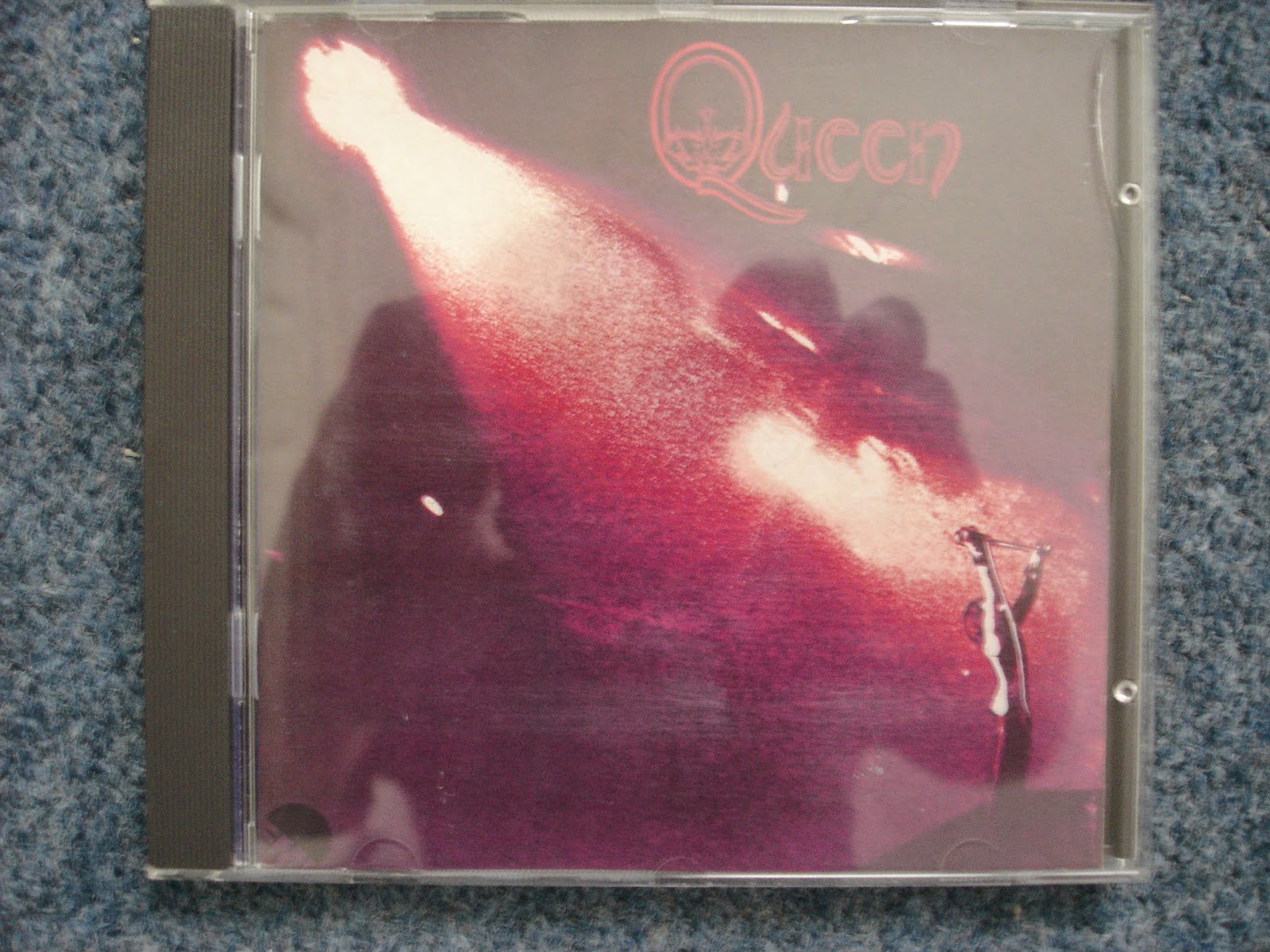
Queen - the debut album - review

Judgement of debut albums is fraught with distortions and wishful thinking, particularly those by artists who subsequently go on to achieve great things. There is a tendency to retrospectively attribute to them merit and qualities which they do not really possess.

I often think of Queen's debut album in these terms. A few pundits have hailed it as a minor classic, but their arguments rarely hold up to scrutiny. Yes, there is some promise there, but it is hardly the masterpiece which some maintain that it is. There is very much a sense of a work in progress, of a sound and style taking shape and not yet crystallized, and of a group still fumbling for a firm direction.

A distinct sound would not truly emerge until the third or fourth record, and this was in part due to the circumstances under which the guys were forced to record their music.  It was put together in fits and starts, with the four musicians apparently grateful just to be in the studio at all, but the situation was scarcely ideal if one was seeking to develop something genuinely coherent and well-crafted.

The spasmodic and rushed nature of the sessions is perhaps reflected in the relative lack of polish in some of the tracks, certainly when compared with their later work. The sound sometimes feels "half-baked", scrappy rather than genuinely raw. Only fleetingly does the trademark Queen sound, or indeed the hallmark of star quality, shine through brightly. "Keep Yourself Alive" remains impressively vigorous and fresh, but one or two other songs sound perfunctory and uninspired, and "Son And Daughter" and "Jesus" have not aged too well...

I have heard it suggested in the past that one of the deficiencies of this album is a failure to adequately project the talent and personality of Freddie Mercury. I am not sure that this criticism is fully justified. Upon closer inspection, his vocal range is quite well captured. The problem for me is the slightly nebulous and tentative feel of the album overall.

At this early stage, we can discern the beginnings of the complexity of "Bohemian Rhapsody", mostly in the structure and lyrical content of "My Fairy King" and "Liar". Brian May's ethereal and reflective songs, an often overlooked and important facet of Queen's 1970s albums, are strongly represented by "Doing All Right" and "The Night Comes Down".  These numbers help to provide texture and balance, and are probably the most pleasing to the ear for this listener in the 21st century.

It is also clear that the various members were still very much learning the art of songwriting, a process which began to bear real fruit on "Sheer Heart Attack".  The occasional rambling instrumental section betrays a lack of focus, and they would eventually learn how to achieve a more tasteful balance between grandeur and tightness, reducing the tendency towards self-indulgence whilst still allowing the band's talent and inventiveness to flourish and display itself.

It is often said that Queen were aiming for a "layered" sound, but they do not achieve that here, probably due to a combination of the circumstances under which the record was made and their own lack of experience and confidence. This may explain why on their second album, they went to extremes in terms of multi-tracking and overdubbing! The follow-up does have an identity, a sweep and a sense of drama which "Queen" lacks, even if the band in early 1974 was again still not the finished article.

This album does have a certain period charm, and of course historical curiosity and significance. It would be dishonest and foolish, however, to pretend that Queen's first record was of the same quality as the debut efforts by the likes of Led Zeppelin, Van Halen and Boston, and I say this as a Queen fan of 35 years standing!. It is not a bad album, but they did not arrive fully developed like some of their contemporaries.


Tuesday, 10 June 2014

Dire Straits

Just the other day, I stumbled across the music of Dire Straits again, and it occurred to me that they have been a bit forgotten amongst the public and music pundits.  I must admit that I myself had got away from listening to their stuff in recent years, but decided to take the time to revisit their studio work.
 
It is easy to forget how "cool" Dire Straits were, in relative terms, up until the mid-1980s. This status appeared to be diminished when they were perceived to have moved away from their earlier sound, perhaps in aiming to engage with a wider audience.
 
They achieved genuine global superstardom with the success of "Brothers in Arms". This album became notable, or perhaps notorious, as the one which untold millions bought in the mid-to-late 1980s in order to initiate themselves into the new-fangled technological wonderland of the compact disc. I vividly recall lunchtime visits to the home of a school friend, in order that we could gather round and listen with awe to the introduction to "Your Latest Trick", in pristine digital quality. The album came to be identified, rather harshly I thought, with safe conformity and the corporate face of rock music.
 
This was all a far cry from the gritty and earthy charms of their first couple of albums. The eponymous debut effort betrays an ethos somewhat "pub rock" in nature, with an impeccable list of other influences (JJ Cale, Clapton, Dylan, Ry Cooder etc). The broodingly atmospheric sound and lyrics draw the listener in, often reflecting the seamier side of life. The expressively brittle guitar of Mark Knopfler is prominent, of course, but is used sparingly and tastefully. Of course, "Sultans of Swing" is the best-known track here, but "Wild West End" is also a little gem.
 
With the sophomore release, "Communique", the sound becomes marginally richer and more varied, though the subject matter remains pretty much the same. The song "Lady Writer", perhaps even more than "Sultans of Swing", exemplifies the appeal and essence of the early Dire Straits sound, although the guitar is captured with greater clarity and bite, and the level of melodic subtlety and gloss are magnified. Of the other numbers, "Portobello Belle" stands out, in some ways pointing the way ahead for the band.
 
1980's "Making Movies" has a more "cinematic" flavour. Indeed, the title itself may have been an acknowledgement of this. There is an increased self-confidence about the band, and this displays itself clearly on the opening track, "Tunnel Of Love", arguably the group's finest achievement. The augmentation of the sound with more keyboards is another sign of this blossoming, and of a desire to branch out and diversify. I have heard it suggested that songs such as this, and also "Skateaway" and "Hand In Hand" for example, owe something to Bruce Springsteen's tunes, and this is hard to dispute, although "Tunnel Of Love" and others are also a logical and natural development of the themes and trends shown on the earlier records. On this third album, the impression which I am left with is more blue-collar romanticism than the almost seedy realism of the first two LPs.

One thing which you have to admit is that Dire Straits did not stand still, and each album has a distinct individual feel to it, and "Love Over Gold" sees an emphasis on longer, more experimental songs. These tracks seem to have worked excellently in the concert setting, though they must have further alienated those who had been reared on the immediacy and gutsiness of the early albums. The band was using the augmented instrumentation to paint pictures and create an atmosphere, the most notable examples being "Telegraph Road" and "Private Investigations". This is probably the "forgotten" Dire Straits album as far as the general public is concerned, as it did not feature much in the way of snappy, catchy hit singles.

I'm not sure whether "Brothers In Arms" signified a reaction to the "excesses" of "Love Over Gold", but the songs are more concise, and one or two of the numbers are more frivolous lyrically. The record is beautifully crafted and produced, and the compositions are generally strong and entertaining, but they have neither the genuine earthiness of the first two albums, or the sweep and emotional pull of the next two. Having said that, it is hard not to like the sophistication and melancholy of "Your Latest Trick", the jaunty "Walk Of Life" or the eerie title track.  It is noticeable how the guitar sound has changed - was this something to do with the types of guitars being used by Mark Knopfler?

To me, the final studio album "On Every Street", which emerged after the band had effectively broken up and taken a sabbatical,  sounds a little tired. Not that the band was going through the motions, but perhaps they themselves must have sensed that the game was up, and that it was time to move on definitively. To their credit, they have not indulged in any big "cash-in" reunions.  The nature of Mark Knopfler's side projects even during the lifetime of Dire Straits perhaps indicated where his musical heart truly lay....
 
Some might contend that Dire Straits at some point "sold out".  I don't subscribe to this notion. Their music never became fundamentally more shallow than it had been before, it just kept evolving and shifting naturally, retaining a certain integrity throughout, and their work was generally credible and sincere.


Friday, 30 May 2014

Little Feat - the first album - review

It is common to assert that Little Feat's best work centred around the period 1972-74, but their 1971 debut album was a substantial record, featuring, albeit in embryonic or prototype form, some of the hallmarks which would dominate their future endeavours.
On the surface, Little Feat seems a conventional effort, not as experimental, esoteric or eclectic as the group's subsequent recordings, but closer scrutiny reveals a distinct character, if enclosed within a relatively uniform veneer. The background of the musicians (some of whom had inhabited the Zappa/Beefheart arena) blends with the blues rock/country rock backbone to create something endearingly idiosyncratic, refreshing and entertaining.
The sound on this record is more streamlined and ascetic than the later Little Feat releases, and this is partly determined by the line-up of the band at the time, which was a comparatively straightforward four-piece (guitar,piano,bass,drums). The exotica of the later more "funky" style is largely absent here, and this less ambitious foundation is anchored by the proficient piano work of Bill Payne and a solid rhythm section. Lowell George's slide guitar is to the fore on several tracks. The group's acknowledged virtuosity is thereby more concentrated and less diffuse.
It is fair to say that some of the compositions on this album edge more towards the "conservative", in musical terms, but this should not mislead us as to its level of melodic invention, and the quality of the lyrics. Several of the more "mellow" numbers, such as "Brides of Jesus", "Takin' My Time" and "I've Been The One", can almost seem to drift by unnoticed, and real attention is required to appreciate their charms and depths. In that sense, this is a record to really listen to, rather than simply permit its vibes to seep into one's sub-conscious.

The lyrical content and general atmosphere are very varied, from the light-hearted ("Crack In Your Door", "Crazy Captain Gunboat Willie") to the vaguely surreal ("Strawberry Flats", "Hamburger Midnight") , to the poignant ("Truck Stop Girl") to the ethereal.

I'm not sure whether it was intentional, but the running order places two very meaty and energetic rockers up front. This may have been a way of emphasising that for all the diversity of styles and genres, Little Feat remained in essence a bluesy, rootsy rock n roll band. "Snakes With Everything", with its marvellous intro, is an ideal opener, and I can imagine that the members of the Black Crowes may have come across it at some point in their youth!

If there is any one feature of Little Feat which lingers in the psyche it is Bill Payne's superb piano playing, a foretaste of the artistry which would form a large part of the bedrock of the band's appeal and unique pull. His contributions here are almost exclusively on acoustic piano, in contrast to the more varied diet of keyboards (organ, electric piano, synths etc) which featured on the later albums. There is an agility and sprightliness about these parts, and it is a tribute to Payne's abilities that they almost overshadow the presence and guitar/vocal prowess of Lowell George.

If not as infectious, libidinous and irresistibly rhythmic as Little Feat's later releases, their debut LP betrays many of the characteristics which made them so special, and which continue to make them so cherished and fondly remembered. If people do nothing else, they should try at some point in their lives to check out "Crack In Your Door" - hilarious lyrics, beautiful guitar and piano work, and an overall effect which will make one both smile and marvel. An overlooked gem on an album which can justifiably fit the same description....

Thursday, 23 January 2014

Pet Sounds - The Beach Boys - album review

Such an aura surrounds this album that on initial listenings the primary reaction can be one of disappointment or anti-climax. However, this is an album which demands repeated attention before the melodies and messages seep into the psyche. The process took a little while for me. I, like countless millions of others, was raised on the Beach Boys' naive but infectious hits of the earlier years. Undeveloped or immature musical antennae were ill-equipped to discern the musical signposts which pointed the way towards the glories of "Pet Sounds".


As time passes, the thing which occurs more and more to me about "Pet Sounds" is its overall cohesiveness, in musical and spiritual terms. This sets it apart from the Beach Boys' previous output, and that of many other people for that matter. The backing does not sound like it was created using conventional musical instruments, but by some otherworldly implements. This factor, and the conceptual unity of the subject matter, permit the songs to blend together seamlessly and naturally. The only blemish in this happy scenario is "Sloop John B", which comes perilously close to marring the whole effect....

Was this a Brian Wilson solo project in all but name? Well, he had been exerting greater artistic pre-eminence and control for a couple of years prior to these sessions, and it is fair to say that most of the other Beach Boys were almost reduced to cameo roles, Carl Wilson's glorious vocal on "God Only Knows" being one of these. Brian appears to have handled much of the singing on the album himself, and block harmonies are not as abundant as elsewhere in the Beach Boys canon. As had been the trend, top session musicians provided the bulk of the instrumental prowess.  In this respect, the approach was quite uncompromising, although the end result would seem to justify the thoroughness and care lavished on the production.

"Pet Sounds" shines like a beacon because of its distinctive character and sound when set against the other trend-setting and groundbreaking rock and pop releases of that period, including those by the Beatles and Bob Dylan. "Pet Sounds" almost existed in isolation, on the surface not influenced by its immediate contemporaries and "rivals". Conversely, it served as a shock or wake-up call to others, notably Paul McCartney.

It is possible to contend that "Pet Sounds" was an alternative way of viewing what was "going on" in the mid-Sixties, or maybe a slightly different way of interpreting or channeling the spirit of the era. Others had hinted at similar preoccupations, but this was presented as a fully-formed creation.

"Pet Sounds" has the same kind of immersiveness and all-encompassing engagement more normally associated with classical music. It appeals to the senses in a manner more subtle and surreptitious than most "rock" music. For all that, it is still replete with hooks and pop sensibility. In a sense, the voices and instruments are indivisible and indistinguishable from each other, all equally important in setting and expressing the emotions . One greater "mood piece", and a concept album before such a notion was fashionable.

The journey commences with something adhering to the concept, but which is also accessible - "Wouldn't It Be Nice".  The work is anchored and signposted with such gems as "God Only Knows" and "Caroline, No". For me though the tracks which most acutely exemplify the spirit of the album are the eerie instrumental "Let's Go Away for Awhile" and "Dont Talk (Put Your Head On My Shoulder).

Lest anyone form the idea that this is all sentimental candyfloss , there is also much angst and soul-searching in there ("I Just Wasn't Made For These Times", "I Know There's An Answer").  Brian Wilson famously dubbed "Pet Sounds" a "teenage symphony to God", and the record does depict and explore a range of emotions encountered by young people, but not exclusively by young people;the themes are universal.

Even allowing for its mystique and reputation, I imagine that "Pet Sounds" still confuses people when they first hear it, because it is so distinctive. If it wasn't as socially significant as other records of its time, then as an artistic achievement it still stands up today.  In a strange way, it both operates as a monument to its time, and exists outside the strait-jacket of being categorized as "sixties", because of its dreamy and ethereal flavour and its sonic composition. Even the sleeve photograph, which has come in for much ridicule, somehow adds to the effect. By 1966, artists were expected to come up with outlandish or esoteric cover art. On "Pet Sounds", the words and music say all that needs to be said....


Tuesday, 21 January 2014

Some Girls - The Rolling Stones - album review

Much misty-eyed mythology surrounds the recordings which the Rolling Stones made during the period 1968-72, and indeed those prior to that, and it is commonly asserted that much of the band's existence since then has been spent living off past glories, and that their albums have often been made on auto-pilot. However, the 1978 record "Some Girls" emphatically gives the lie to this view, and stands comparison in its own way with anything in the Stones' catalogue.

There were numerous reasons for this sudden re-invigoration.  Personal problems, creative inertia and a changing musical landscape appeared to be conspiring against the Stones as the Seventies moved towards their conclusion. People were asking whether the Stones were still relevant,and if they had run out of steam artistically.  This tight and zestful set was an resounding response to such misgivings.


Being perceived as having their backs to the wall, the defiance shines through on "Some Girls", as if they were simultaneously putting a metaphorical two fingers up to the world, and revelling in the refuge and escape offered by music. It has often been said that this was the point where Mick Jagger began to stake a claim to de facto leadership of the band, but the sentiments were collective.

The focus, energy and strength of purpose could not present a starker contrast with the relative lethargy and nebulousness of the previous three studio albums. Yes, the emergence of punk and disco did contribute to the album's mood and content, but not to the extent that the Stones simply wrote and recorded "punk and disco songs". They absorbed the ethos and vitality of those two genres, and the consequences revealed themselves naturally within a broadly familiar framework. This is still very much a "Rolling Stones album".

One of the most startling features of "Some Girls" is the dearth of instrumental padding and decoration. Many of the songs are performed at a hefty rate of knots, reflecting perhaps a mixture of anger, frustration and even liberation from the directionless and torpor of the years which went before. The modern Stones sound is taking shape, seen in the guitar interplay and the nature of the riffs.

The resolve possessed by the band is amply displayed on the album's opener, "Miss You". Much has been made of its "disco" leanings, but I would also argue that it is part of the broader trend of rock bands in the Seventies to embrace more rhythmic and funky patterns (Little Feat, Steely Dan). The sleazy electric piano and guitars, and punchy rhythm section, allied with a sneering Jagger vocal, give it its potency

The breathless immediacy which pervades most of "Some Girls" really kicks in on the second number, "When The Whip Comes Down". Freshness in abundance.

The pace is maintained with the cover "Just My Imagination (Running Away with Me)". This is not a straight cover version, and the Stones' rendering shows a strong power pop/new wave sensibility.  It has a spontaneity to it, as if it was being performed at a sound check a few hours prior to a gig. This is not a criticism, and a lack of the over-reach and artifice often associated with cover versions is a joy to behold.

Moving on to the title track, and leaving aside the controversial lyrics, this son typifies the approach and mood on the album. Very bluesy and raw, accentuated by the harmonica and the ragged vocal harmonies. The Stones' "bad boy" image and notoriety was kept flickering by songs like this. The melody is simple and straightforward, but powerfully delivered.

"Lies" is stripped down, frenetic, almost minimalist.  "Meat and potatoes" one could say, but a statement of intent, and far from dull or pretentious. "Respectable" is similar in character, but is marginally more tuneful, and lyrically more decipherable, if not containing much in the way of emotional or psychological depth!

Of all the Stones' excursions into the domain of country music, "Far Away Eyes" is one of the most authentic and sincere, but equally one of the least entertaining or memorable. Some relief is introduced by "Before They Make Me Run", forming the usual Keith-on-lead-vocals slot, with what appear to be semi-autobiographical lyrics.

"Beast of Burden" is one of the most durable of Rolling Stones songs. High quality pop/rock which has stood the test of time. This one contains more intricate guitar work, and a more considered and complex melody. The album closes with "Shattered", another quick and sparse rocker, exhibiting a vaguely 50s flavour, and redolent of some of the New Wave sounds which would appear in the years ahead. A slightly odd choice to conclude the album?

So there we have it, "Some Girls" by the Rolling Stones. No-nonsense rock n roll, packing a considerable punch, and exuding the restless vigour of the those times. After this, the Stones enjoyed a new lease of life, and it was both a symptom and a cause of their continuing strength. Above all, it is an enjoyable and important collection of songs.


Monday, 20 January 2014

Dixie Chicken - Little Feat - album review

Many bands or solo artists reach a sweet spot, never to be repeated, at some point in their career.  Often this is not part of some pre-ordained masterplan, but rather a consequence of cumulative influences and experiences.  One of my favourite groups, Little Feat, arrived at this landmark in 1973 with their superb album "Dixie Chicken". They made great music before then, and made some fine records afterwards, but this remains their most coherent and affecting album.

"Dixie Chicken" marked a departure for Little Feat, both in terms of personnel and musical direction. New emphasis was placed on rhythm, with the recruitment of a new bass player, and the addition of a new percussionist and second guitarist. The first two albums had been primarily blues and country inflected, but the new record saw a partial immersion in more funky New Orleans R&B styles. The generally grittier tones of the eponymous debut and "Sailin' Shoes" were joined, if not totally supplanted, by the smoother, more sensuous charms of "Dixie Chicken".


Having observed this stylistic shift, it must be stressed that the idiosyncratic and quirky approach which made them such an endearing and compelling act still remained, that quality which causes so many people to become lifelong fans as soon as they hear Little Feat once. If anything this phenomenon was accentuated by the increased "funkiness" on display.

Some critics have complained that Little Feat's work became less focused and more self-indulgent from the mid-70s onwards, and it is fair to say that they were walking a thin line on "Dixie Chicken", where the tightness of the playing, the fresh angle and the residual rootsiness of earlier records, formed a very agreeable cocktail.  Did the later records become patchy?  In comparison, possibly yes, although by that time it may be argued that they were more renowned as a stellar concert attraction. There were great recordings post-1973, but they were fewer and less frequent.

Lowell George's penchant for writing amusing and entertaining lyrics was never better exemplified than on "Dixie Chicken", most clearly in evidence on the "Fat Man In The Bathtub" and the title song. The earthy rhythm guitar work of Paul Barrere added a new dimension to the sound, ideally complementing George's familiar chops. The augmented line-up also doubtless aided Feat's rise and rise as a live act, by filling out the sound, and aiding and encouraging improvisation onstage.

The overall sound on this album is very languid and seductive, and even ethereal in places ("Kiss It Off", "Juliette"), with some "swampiness" introduced, often by a combination of keyboards and percussion. The variety and diversity facilitated by the revised line-up of players, and several guests, creates a glossy veneer at times, but the music is never bland or clinical. The trend for such slickness in recording was pronounced in much West Coast rock of the time, but these guys did not lose their soul, at least on this record. They managed to conjure up an appetizing stew by allying their existing strengths to new influences and directions. And fear not, acoustic guitars do not totally disappear!

The centrepiece of the album for many people is the majestic "On Your Way Down", written by Allen Toussaint. Dripping with style, panache and even menace, this is a song with some social commentary, which was unusual for a Little Feat recording. The understated but propulsive rhythm blends with the intertwining guitars, and Bill Payne's atmospheric piano and organ work to create a compelling whole.

When I first heard "Dixie Chicken", it didn't immediately bowl me over. I was at the time very much immersed in my "West Coast" rock phase, and at the time the band's first two albums were more in keeping with my requirements in that respect . It did not take long, however, for my resistance to melt away, and by general consensus this is viewed as their best studio creation. The overall ambience is engrossing but also mildly disconcerting, perhaps subconsciously illustrating the social climate of those times.

Little Feat's music was often irresistible, with a tendency to get under the skin of the listener, in a benevolent way.  They recorded no finer or more rounded example of this than "Dixie Chicken".


Friday, 17 January 2014

Hold Out - Jackson Browne - album review

Continuing my exploration of the albums of Jackson Browne, we come now to the great man's 1980 release, Hold Out, the only album of his to top the American Billboard charts.

Coming after the "experimental" and idiosyncratic Running On Empty, this record is a more conventional and slick mainstream singer-songwriter rock album, and in some respects it picks up where 1976's The Pretender left off, serving as the far side of the hinge of Browne's career.

When I first listened to Hold Out, my reaction was that it sounded a touch soulless, like much "album rock" of that time. However, I soon realized that my assessment was flawed. It had only seemed relatively soulless, because I had heard it back-to-back with Jackson's classic "organic" sounding music from the 1970s. Closer inspection revealed hidden depths, and it remains to me one of his unfairly overlooked works, although it contains only seven songs!


Although Hold Out is deceptively meritorious in a purely musical sense, there is a case for arguing that lyrically some water-treading is in evidence. If anything, the subject matter is, by and large, less weighty and profound than on his previous LPs. Any social commentary is very mild, and is confined to "Disco Apocalypse" and "Boulevard". That said, the "personal" lyrics on a couple of the compositions are very moving and affecting.

Instrumentally, the accent is very much on keyboards, with little in the way of acoustic guitar work to be had. Thankfully, the subtle and soothing tones of David Lindley's lap steel feature prominently on several numbers. Also, acoustic piano survives, and the layers of keyboards give genuine texture to a few of the tracks, with the assistance Hammond organ. Any synthesizer work is very unobtrusive, and is employed primarily to accentuate melody and atmosphere.

The opening track on the album is "Disco Apocalypse", a dark and atmospheric song suffused with the aforementioned keyboards, in this case organ and electric piano.  The title track follows, with an expressive Browne vocal, and a bland if endearing melody, and the first appearance here of the Lindley alchemy on lap steel.

The production on this album has a glossy feel, which is not unusual for the early eighties, but I would contend that this does not suffocate the emotion, nuance and melody of the set. The separation between instruments is pronounced, and this is exemplified by "That Girl Could Sing".

"Boulevard" is the nearest thing on the album to a catchy, up-tempo commercial song, with an energetic "new wave" blue-collar flavour, the sort of track which would become a staple of American mainstream rock in the years which followed. It is often forgotten how much Jackson Browne pioneered this particular "sub-genre", at least in sonic terms.

Without doubt the most emotionally charged song is "Of Missing Persons", written largely in tribute to Jackson's friend, the late Lowell George of Little Feat.  The song is dominated by the vocal, seized with sincerity and sadness, and the poetic Lindley lap steel work.

"Let's Call It A Loan" then offers some light relief, preparing for the epic closer, "Hold On Hold Out", which almost has a suite-like quality, and the most grandiose arrangement on the whole album. The full range of keyboards is deployed, and the slide guitar again comes to the fore.

Hold Out often gets lost, as it falls between Browne's critically acclaimed early work and his more socially conscious albums of the 1980s.  However, it is worthy of respect, being an entertaining and superbly crafted record.


Monday, 2 December 2013

A Musical Odyssey

Music has played an important part in my life since childhood, and I am constantly surprised at the way in which my tastes and interests have evolved.  I have come a long way since purchasing my first 7 inch single at the age of nine!  In that time music has served numerous functions; as a frivolous means of relaxation, as an outlet for youthful rebellion and assertion of identity, and as a palliative in times of trouble.  Like many people, I tend to trace pivotal points in my life by way of the music which I was listening to at the time.

I did come from a vaguely musical family, as my mother had played the piano and worked in a music shop. My parents’ record collection was, shall we say, eclectic, comprising things as diverse as Julie Andrews, Franz Schubert and the Mamas and the Papas.  I half absorbed some of the images and sounds reaching my senses from the radio and television, but very little of it made a major impression.  At that stage, music was just one of the many good things in life.

Things began to change in the closing months of 1979, when my attention was drawn to a single just released by Queen, entitled “Crazy Little Thing Called Love”.  What drew me to this record, and to this group, more than others which I had heard, is difficult to pinpoint in retrospect.  It may just have been a case of “right place, right time”, meaning that I was receptive to something which seemed, to my youthful ears at least, to possess both substance and mystique.  Thus commenced my love affair with music….

My teenage years, like those of many people, were ones of uncertainty and change, in my case partly conditioned by the after-effects of family upheaval.  There was the obligatory casting around for direction, dabbling in sub-cultures, often succumbing to peer pressure, but as adulthood presented itself some things began to crystallize.

Other people have observed that my tastes and inclinations in music tend towards what might be termed “craftsmanship” and “the organic”, and I think there is some merit in this assertion.  Much of the music which I have gravitated towards during the past two decades could loosely be said to have these qualities.  I have occasionally pondered whether humans possess some kind of innate genetic disposition towards certain styles, intricacies or genres, and to what degree one’s tastes are influenced by social interaction, environment and accumulated personality traits.  A debate for another time, methinks!

In my own case, preferences have tended to develop in several ways.  After teenage experimentation and restlessness had begun to subside, my tastes were really quite narrow.   Such a restricted outlook eventually breeds curiosity, and in my case I began to wonder what other delights were out there.  So my listening habits began to broaden from the safe, “populist”, some might even say lowest-common-denominator, towards things which, although nominally connected and within the same genre, were also more rewarding and esoteric.  When I stepped out of my comfort zone around twenty years ago, a whole new kaleidoscopic world began to emerge.

Once I had crossed the frontier,  awe and wonder bred further inquisitiveness.  I would liken this process to a “family tree” , with each new discovery inspiring me to explore the numerous sub-branches.  For example, an initial affinity for the shiny, anodyne country-rock of the Eagles has led via a tortuous route from Californian rock to folk-rock, singer-songwriters and British folk music, and the search continues.

Other strands of my musical “development” have emanated from other sources.  There is a natural resistance to embrace those things cherished by one’s siblings or antagonists. Once this crumbled for me, a new vista of musical delights opened up, and I was happy to admit to those antagonists and siblings that “you were right”. 

Happy chance can also enrich our landscape.  A cursory glance at a thread on an internet forum a couple of years ago reawakened an interest in classical music, which had lain dormant since my school days.
One of the wonderful things about music is that the possibilities are almost endless.  Just when we think that our “portfolio” has become  static and stable, we stumble across a new artist, “scene” or style which sends us off in another stimulating area of research.  This is of course greatly facilitated by the myriad tools available to us via the internet.


Although music is very important to me, I increasingly try to remind myself not to take it too seriously.   It enhances life, and can also reflect life, and for some people music represents a statement of allegiance or lifestyle choice. When all is said and done, however, it remains an art and an entertainment. By being too “precious” or insular about it, people are actually depriving themselves of a great deal of enjoyment and fulfillment.

Saturday, 23 November 2013

Deep Purple

In recent months, I have been listening to some of the music of Deep Purple, primarily that which the group recorded during what is generally acknowledged to be their peak period, 1970-73.  It occurred to me that Purple are still somewhat under-estimated in the grand scheme of things, and it is tricky to pinpoint the precise reason for this.

Over the years, the musical “establishment”  seems to have crystallized its view of which artists demand inclusion in some kind of pantheon.  For various reasons, many of the influential writers have had blind spots about artists who by any objective reasoning deserve greater respect.  It strikes me that Deep Purple is one of the groups which suffers unfairly in these deliberations.

I have detected a particularly ambivalent attitude towards Purple here in England, the country where the band was formed.  It is often said of my countrymen that we sometimes fail to appreciate the value of what we have on our doorstep, and this could be just another example of this phenomenon.  Even the mighty Led Zeppelin have fallen prey to this shortcoming, in my opinion.

There may be a residual stigma resulting from Purple’s perceived role in the development of “heavy metal” (debatable in itself), and also a sense that they epitomized the excesses of Seventies rock.

In addition, they were never consciously or identifiably part of any “scene” or “movement”, emerging from disparate origins and sources, and tended to plough their own furrow in the music world.  Also, the fragmented and sometimes acrimonious nature of the band’s history may leave people disorientated.

Although Deep Purple seem to have enjoyed the support of certain journalists who were known to be sympathetic to the practitioners of hard rock and progressive rock, to others they were much less palatable.

Perhaps Purple’s “crime” in the eyes of some pundits was to possess technical proficiency, and to be base their live shows on a display of their improvisational prowess.  Or maybe the group’s lyrics were not as “socially conscious” as the self-appointed arbiters of taste would have preferred?

Oddly enough, many of the factors which led to resistance are the ones which I find so endearing.  A cursory listen to their blistering live album “Made In Japan” should convince anyone without tin ears of their qualities.  It is easy to see why the Mark II incarnation of the band regarded this record as its crowning glory.  Dynamism, energy and inventiveness in abundance.


Admittedly, things post-1973 were a trifle patchy.  If only the Mark III version of Purple had been able to maintain the standard of the title track of the “Burn” album, in my humble estimation one of the high points of the entire Purple saga…

Blonde On Blonde - Bob Dylan - album review

It is often said that the series of albums recorded and released by Bob Dylan in the period 1965-66 represents one of the most fertile bursts of creativity of any artist, ushering in the "rock" era by making mainstream popular music socially relevant and worthy of critical and erudite analysis. I too subscribe to these theories, but in recent times the worthiness of Blonde On Blonde to belong in the same company as its two predecessors has become questionable to me. I sense a propensity to bracket the record with those which went immediately before it, simply because it was Bob Dylan, and that it must be similarly wonderful because to say otherwise would spoil the narrative...

The two albums which came before, Bringing It All Back Home and Highway 61 Revisited, were effervescent efforts, brimming with creativity, bearing all the hallmarks of a man with lots to say, and who was eager to express himself. There was a breathlessness, spontaneity and urgency about the songs, which must have seemed at the time to form an inexhaustible reserve.


It is curious that Dylan himself has been quoted as saying that Blonde On Blonde constituted the "sound" which he had been aiming for all along.  There is certainly a "progression" of sorts in the character and ambience of the three albums, from the vitality, energy and bite of Bringing It All Back Home to the jaded cloudiness and ennui of Blonde On Blonde. The fact that the great man's career took a dramatic detour immediately afterwards may or may not be instructive....

There is a deceptive listlessness to many of the songs, particularly the longer "epics" such as "Visions of Johanna" and "Sad Eyed Lady of the Lowlands". On the other side of the coin, I have come to regard many of the tracks as bordering on "comedy songs" ("Rainy Day Women #12 & 35, "Just Like A Woman", "Leopard Skin Pill-Box Hat"). This may indicate that my hipster antennae are insufficiently developed. Their exuberance does at least balance out and alleviate some of the gloominess which otherwise pervades the work.

When saying that on close inspection the songs are not as instantly and spectacularly memorable as those on the two earlier records, it is also true to say that Blonde On Blonde hangs together very well as a mood piece, the kind of album to immerse oneself in on a rainy Sunday afternoon. The lack of immediate accessibility demands a patience which not everyone possesses!

The lyrics are less cryptic and oblique than on earlier records, but in their own way just as enigmatic and impenetrable, if less conventionally evocative.  Equally, the soundscapes are more murky and nebulous. These factors do contribute to the album's relative absence of overt sparkle and immediacy, but they also imbue it with its distinctive quality.

Although it is commonly asserted that the "turning point" in Dylan's career occurred shortly after this album was released, it might be more accurate to state that Blonde On Blonde itself signals a new beginning. Despite all all my caveats, provisos and reservations, it is still a rewarding and ultimately enjoyable listen, and essential to an understanding of the Dylan mystique....

My blog posts about other Bob Dylan albums:

Blood On The Tracks

Highway 61 Revisited

Bringing It All Back Home


Wednesday, 2 October 2013

Rush

It sometimes troubles and mystifies me why certain music artists did not appear clearly on my radar until I approached middle-age.  One of these is the Canadian rock group Rush. When I was first becoming seriously immersed in music in the early 1980s, Rush was one of the biggest bands on the planet, by virtue of the sales of their albums "Permanent Waves" and "Moving Pictures".  Looking back, everything about them should have appealed to my musical instincts, but they largely passed me by.  I was aware of their existence, but little beyond that. Only in recent months have I begun to recognize what a talented and under-rated band they are.

What is the secret of their success and appeal, beyond identifying that they are exponents of well-crafted, melodic and intelligent rock music?  Well, they overlap several "constituencies", sharing some of the characteristics of "progressive rock".  In addition, their capacity for writing catchy melodies with universal lyrics has helped to secure some mainstream acceptance. The "power trio" format gives their music an energy and agility, permitting the music to breathe, and the individual members to express themselves.  The muscular and vibrant rhythm section is at times reminiscent of the Yes sound of the early 1970s.  Of course, Neil Peart's lyrics add another dimension. All of these factors somehow coalesce to give Rush a distinct identity and flavour, almost a separate genre by themselves.

The early material shows the band evolving, with a more homogeneous style owing much to Led Zeppelin. The debut album clearly lacks the stamp of Neil Peart, both rhythmically and lyrically. It would be easy to dismiss that first record as "meat and potatoes" hard rock, but this charge is negated by the clearly stylish and superior musicianship.  "Before and After" does offer some pointers to the future, sonically at least, and "Working Man" too shows hints of being a prototype for later endeavours.

On "Fly By Night",  a glance at the song titles alone is evidence of an advance, with the signature Rush sound gradually emerging; that uncluttered, almost crystalline thing which is less futuristic than timeless. The drumming of Neil Peart adds dynamism, and the rhythm section as a whole is more propulsive and prominent. On this second album, there is a more varied palette, and more finesse and subtlety is clearly evident. There is more scope for improvisation and virtuosity, but within a recognizable framework.

Quickly, the recordings show a band blossoming and gaining in confidence and musical ambition.  Longer tracks co-existed on the albums with more concise musical statements, and even the "epics" avoided many of the pitfalls of other "progressive" acts, the energy and spontaneity doing much to ward off any charges of self-indulgence.  The mid-to-late 70s witnessed probably Rush's most fertile period artistically, with grandiose lyrical themes fusing appealingly with that distinctive instrumental fabric.

As already highlighted, the early 1980s was probably the group's commercial zenith, and this period saw the recording of perhaps their best known composition, "The Spirit of Radio".  Purists may derjide this as a "sell-out" and a compromise, but for me it is a consummate rock single, breaking the rules without really drawing attention to itself in that sense. The song has instant appeal, in its evocative subject matter, but this tends to obscure the fact the song has depth, melodically speaking. Packing several genres into just under five minutes - hard rock, prog rock, new wave, power pop, reggae etc. It sounds as exciting now as it did over three decades ago.

I also feel that the members of Rush have not been given due recognition for their individual instrumental prowess. In a three-piece group, there is no place to hide, and each musician has to hold his own and play a central role in the action, bearing an equal share of the burden.  This was very much exemplified by Rush. Alex Lifeson in particular is under-estimated by the critics.

It is heartening to see the respect and affection with which Rush are still viewed by people around the world, even if the musical "establishment" seems slow to accord the same accolades and deference. A band whose talent and integrity are an example others could follow.


Thursday, 5 September 2013

Freddie Mercury

Today would have been the 67th birthday of Freddie Mercury.

Freddie was one of the first rock performers to really catch my attention, and Queen's 1979 single "Crazy Little Thing Called Love" was the first record I ever purchased.  Even before then, it was difficult to ignore his charisma and presence when he appeared on television. I was fortunate enough to see the band's performance in Leeds in 1982, when Freddie and the boys were in their absolute pomp as a concert act.

He had a relatively short, but remarkable life.  If anything, the legend continues to grow, although the mystique and aura were already there prior to 24 November 1991.

There was nothing "manufactured" about Freddie.  His artistic and stage persona grew from a number of disparate sources and influences, maybe also conditioned and affected by his upbringing and background. He was also largely "self-taught", and these factors ensured that he offered something genuinely original and compelling. I think he was once quoted as saying that his main influences were Liza Minelli and Jimi Hendrix....

Another of the captivating things about him was the contrast between the grandiose and extrovert performer who could have 80,000 people in the palm of his hand, and the more private, reticent offstage figure.  He subscribed to few of the established conventions of rock stardom, preferring to do things his own way.  Like the other members of Queen in the 70s and 80s, Freddie refrained from joining the self-styled "rock aristocracy", and I always felt that in those days they were outsiders.

Although undoubtedly oozing star quality and power, the celebration of these qualities should not be allowed to obscure Freddie's versatility and range as a vocalist. From delicate ballads to high-tempo rockers, to more pop-orientated material, he could handle it all.  I think that his voice was at its most flexible and potent in the early 1980s.  Just watch any clips from the concerts of that period, such as those in Montreal and Milton Keynes.

An indication of Freddie's vocal prowess can be seen in many of the attempts by people to cover Queen songs, or of the choice of material for Queen-related projects in the post-Freddie era.

The wider public has only grown to fully appreciate Freddie Mercury's uniqueness in the past two decades, but it is touching to see how much he is still loved and remembered. He is sadly missed...


Friday, 11 January 2013

It's Only Rock N Roll - The Rolling Stones - album review

Following on from my blog post regarding the Rolling Stones' 1973 album Goats Head Soup, it seemed logical to then take a look at the record which followed immediately afterwards, namely 1974's It's Only Rock 'n' Roll. 

Some of the elements merely hinted at on Goats Head Soup are developed, projected and exploited further.This record feels a touch more ebullient and gaudy than its predecessor, and less nebulous and reflective. The production is not as murky and hesitant.

The opening track, "If You Can't Rock Me", sets the tone, with its purposefulness and intensity, and the overall freshness which it exudes. It also sounds curiously "modern", as if it had been recorded in an ensuing decade, whilst still exhibiting that certain 1970s flavour and vibe.

"Ain't Too Proud To Beg" strikes me as a rather pointless and incongruous cover version, even if it is an affectionate nod to Motown etc. Those with uncharitable inclinations may insinuate that its presence on this LP is indicative of a general dearth of quality original tunes. Despite these reservations, this rendition does have some conviction about it, and the Stones always sound reasonably comfortable when performing songs in this genre.


The title track, to some observers inextricably linked with its accompanying promotional video, is playful, frivolous even, but hugely infectious. Again, it displays a bite and vitality and lacks the aimlessness of some of the Stones' "rockers" of this particular vintage.

I suppose that "Till The Next Goodbye" qualifies as a "ballad", of the type which the band appeared capable of churning out almost at will. A middling melody is flattered or redeemed by acoustic guitars, harmonies and some above-average lyrics. The song gains in power and effect as it progresses.

The next number, "Time Waits For No One" carries distinctly Seventies traits, with its guitar treatments and flourishes, and a mildly unsettling eeriness. This track lingers a little too long, and becomes almost wearisome.   Musically it strongly reminds me of Stephen Stills' Manassas.

"Luxury" lends further weight to suspicions that the weaker songs were concentrated in the middle of the running order, although in mitigation it does contain glimpses of Mick Taylor's prowess and finesse, and some pleasing vocal harmonies.

"Dance Little Sister" is another prosaic if meaty rocker, largely devoid of inspiration.  The words formulaic and pedestrian also come to mind!

The quality begins to climb again when we reach "If You Really Want to Be My Friend".  An appealing and deceptively rich melody is augmented by some deft instrumental touches.  This one holds the attention well, and Mick Jagger's vocal is delivered with some pugnacity and intent.

The penultimate item, "Short and Curlies", betrays shades of Exile on Main Street, with Jagger and Keith Richards doing their joint vocal thing to considerable effect, and some diverting chord changes. Impossible to dislike....

Matters are concluded with "Fingerprint File", which is very much a rhythmic "feel" track, shining a torch on some of the excursions to be pursued by the Stones later on.  A bit of improvisation here too. The tune is just about substantial and coherent enough to prevent this descending into a meandering jam.

On reflection, it is fair to say that It's Only Rock 'n' Roll contains as much, if not more filler, than Goats Head Soup, but the better material carries genuine enthusiasm, spirit and drive, which lift it.  Even if it is artistically patchy and uneven, it is more "in your face", and feels like an "event", primarily because of the decadent sheen of the Stones circa 1973/74.  A fascinating and intriguing document and souvenir of an era....

Monday, 20 August 2012

A Night At the Opera - Queen - album review

When people discuss the greatest album of Queen's distinguished recording career, A Night At The Opera more often than not is at the top of the list.  Whilst I agree that it is a fine piece work, I would also venture to suggest that it is not without its flaws, however minor.  As time has moved on, the more certain characteristics of the album have occurred to me. 

The album was recorded at a time when Queen had just achieved their first major international success, via the single "Killer Queen", and the album Sheer Heart Attack.  They entered the recording studio in the summer of 1975 flushed with this success, and perhaps conscious that they were under pressure to improve upon their efforts from the previous year......


Some of the avenues consciously, or subsconsciously, pursued by the band in order to achieve "perfection" end up creating the facets of the album which most grate, if only slightly, to the ears in 2012. The overdubs, whilst nominally adding depth and gravitas to some of the tracks, also lend it a  kind of "patchwork" effect in places, a trend perhaps exacerbated by the use of various different studios to record the album? This all makes A Night At The Opera sound very mildly contrived, calculated and ponderous, at variance with the freshness and spontaneity of Sheer Heart Attack. A case of trying too hard? These issues do not ruin the album, but it could have been even greater if they hadn't been present....

So, those are some of the criticisms of A Night At The Opera. What about the album's many undoubted strengths?  Well, one of the things which makes it distinctive is the trouble clearly taken to experiment with "unusual" instruments and techniques in order to achieve the desired soundscape or feel. Koto, ukelele, double bass, harp and electric piano are all employed at various points. Whilst this makes "Opera" seem more disparate and fragmented than some other Queen records, it does signify a laudable willingness to push boundaries and defy convention.

Some of the songs on A Night At The Opera have aged better than others.  To me, "Love of My Life", more and more sounds like the highlight of the entire album, "Bohemian Rhapsody" aside. Simple, heartfelt, sincere and free of artifice.  One of Freddie Mercury's finest songs, one of his most exquisite vocal performances, and containing some glorious piano playing from the great man.

"Death On Two Legs" was an inspired choice to begin the running order. One of Queen's most incisive and powerful tracks, with lyrics possessed of some vitriol.  The middle of the album is bookmarked by "The Prophet's Song", a ambitious track which finds favour with Queen fans, but which I suspect divides opinion amongst "neutrals".  Much multi-tracking of guitars and vocals here, with the recording technology of the day doubtless being stretched to its outer limits.  Pushing the envelope, I think it's referred to as these days...

The genre exercises on the album meet with variable success.  Looking dispassionately these days, "Lazing on A Sunday Afternoon" and "Seaside Rendezvous" sound a bit too similar, leading to a charge of "filler", even if both do exude a kind of lightweight, frothy charm.  "Good Company", on the other hand, still feels like a gem, a genuine showcase for the many talents of Brian May, and displaying bounteous ingenuity.

The "rockier" numbers, "I'm In Love With My Car" and "Sweet Lady" might seem incongruous in this company, but they have stood the test of time, the former in particular, with its numerous hooks, guitar histrionics and lyrics which are quintessentially Roger Taylor!  The power chords on "Sweet Lady" still have the power to move and satisfy.

In the past, "39" was possibly under-estimated by all and sundry.  However, it now emerges as one of the album's strongest suits, another one of Brian May's esoteric and thoughtful compositions.  For this particular writer, much of the residual appeal of the song rests in its Hermann Hesse-inspired lyrics.  I think that "Siddhartha" may be the novel in question.

"You're My Best Friend" remains one of the Queen songs most often played on the radio, and although a great pop song, it feels mildly out of place on this album, but does inject some valuable levity and spontaneity.

You may have noticed that this review contains relatively little mention of the epic "Bohemian Rhapsody".  Well, I do like to be different, and in any event everything which there is to be said about the song has already been committed to paper (or screen)!

Having commenced with some misgivings, I think that they have been more than balanced out by praise and extolling of virtues. 

For the record, I still prefer Sheer Heart Attack, just!


Thursday, 9 August 2012

Highway 61 Revisited - Bob Dylan - album review

There are many debates, and much conjecture, about when the modern "rock" era truly began, but there is an argument for citing Bob Dylan's 1965 album Highway 61 Revisited as one of the key staging posts.

It is often taken for granted, or taken as a given, that Highway 61 Revisited is Dylan's greatest achievement, and in historical and critical terms it probably is. It contains some of his most famous songs, and has an ambition and grandeur absent from much of his other work.

Personally, I have always found Bringing It All Back Home, released earlier in 1965, to be a more organic, rounded and likeable record, and in some respects it can be argued that it was more ground-breaking and important than the album which succeeded it.

For all its many strengths and virtues, I have somehow never fully warmed to Highway 61 Revisited. I respect and appreciate its sweep and its audacity, but I don't always find it a comfortable listen.  It feels a little over-earnest in places, and I sense that it exudes a certain smugness.  Admittedly, when the songs are this dramatic and startling, such smugness can be excused!

Dramatic and startling the songs may be, but to me they lack the fluidity and verve of those on Bringing It All Back Home.  It is possible that Dylan was aiming for something different on "Highway 61".  The tracks don't feel as tied together seamlessly, and I would describe this more as a collection of disparate, if mighty, songs than a integrated, cohesive album.


This album may not have some of the homely charm of those which preceded and followed it, but there is no disputing its overall majesty, and it does definitely possess that "wow" factor.

The opening track, "Like A Rolling Stone", is one of the landmarks of 60s rock, although it is probably no more famous than one or two of his folk "protest" songs of earlier years.  It is still astonishing to think that this song almost reached the top of the Billboard singles charts.  Driven by rhythm guitar (possibly played by Dylan himself?) and the organ of Al Kooper, it develops an irresistible momentum, as the wordplay and vocal delivery become more emphatic and daring. Each new verse adds a new dimension, and additional interest.

Just recently I heard "Tombstone Blues" described as "punk music", and I can see why.  Frantic and almost minimalist, with lyrics seemingly speaking of general disaffection and despair. After the exhilarating opening, the level drops with two less inspired tracks, "It Takes A Lot To Laugh, It Takes A Train To Cry", and "From a Buick 6".

"Ballad Of A Thin Man" is something else entirely. One of the most dramatic and intense songs on the album, different in tempo and atmosphere to the others.  Was this a message to Brian Jones of the Rolling Stones?

"Queen Jane Approximately" is an appealing if ultimately minor song, with a pleasing melody, and it is followed by the title track. These two numbers prepare the ground for a momentous conclusion to the work.

Containing some of the most entertaining lyrics on the album, "Just Like Tom Thumb's Blues" has a distinctive backing track, and a real impishness about it, which is difficult to dislike.  I have some theories about some of the words, which need not detain us here!

On to the closing number, "Desolation Row".  It can seem lyrically almost like stereotypical Dylan, with the invoking of historical characters and so forth.  However, if one really listens to it, its power really emerges.  Some might argue that it actually says little which is different from several of Bob's other compostions, but its concentrated intensity wins out. The intricate guitar backing also sets it apart.

In the end, the various minor misgivings about Highway 61 Revisited do not detract from its quality and its importance.  A superb album.


Friday, 13 July 2012

Stephen Stills and Manassas

Some years ago, I embarked on a journey through the California rock movement of the 60s and 70s, encompassing country-rock, the singer-songwriter movement, and the tangentially connected "scenes".

One day in my favourite record store, I discovered the 1972 debut album by Stephen Stills' group Manassas. To my shame, I had not previously even been aware of the existence of the record or the band. I distinctly recall standing in the shop, gazing at the cover of the CD, with the names of the group members in white lettering, and thinking that this was almost too good to be true.  I had no internet access back then, and so without undertaking any additional research, purchased the album, feeling reasonably certain that it would accord with my tastes.

As soon as I played the album, I "got it".  A bunch of accomplished and skilled musicians, performing songs embracing a number of styles - blues,country,folk,Latin,R&B and straight rock, these genres often being amalgamated.  The record instantly appeared diverse,funky and broad in its scope, almost an embarrassment of riches, the music equivalent of a delicious plum pudding!  Having not heard of the Manassas project before, it was akin to discovering a box of hidden treasure.

Another thing which occurred to me right away was the lack of artifice or self-indulgence on the album, in spite of the calibre of the musicians featured on it.  Manassas is almost entirely founded on concise songs.  Tentative parallels may perhaps be drawn with another double-album issued in 1972, Exile on Main Street by the Rolling Stones.  Both exuded rootsiness, and the joy of a group of guys making music almost for the hell of it.  Of course, Stephen Stills had some links with the Stones around this time, and Bill Wyman makes a guest appearance on Manassas.

Mercifully, in digital formats (those which I have heard, anyway), the music retains its essentially organic and earthy ambience, the emotion and grit not being sucked out by over-zealous remasterings. The sounds are permitted to breathe....


In addition to the presence of Stills himself, other elements go towards making this such a fine album. The pedal steel of Al Perkins injects vital nuance, soul and novelty throughout.  The variety of guitar sounds adds depth, with Perkins complementing Stills' own prowess. Joe Lala's percussion adds a certain funkiness and rhythmic vigour to many of the songs.

The role of Chris Hillman is also crucial, his harmonies being an important, but underplayed, element. To describe him as Stills' right hand man here may be inaccurate, but his input and presence add a subtly different dimension to things; a welcome counterweight to the other participants.

On an album which is so uniformly enjoyable, it is a tough task to select highlights, but I'm going to do it anyway!  "So Begins The Task" has an enigmatic, ethereal and haunting quality about it, with a tasteful backing track overlaid by some affecting and inventive pedal steel. The vocal harmonies in the chorus are perhaps the most impressive on the album.

"It Doesn't Matter" features some languid vocals.  This track is almost "Byrdsian", but with a seductive and hedonistic "Seventies" feel, mostly by virtue of the glitzy guitar parts.  Another deceptively strong melody.  On Manassas, many of the songs are subsumed into the whole, seemingly not wishing to draw attention to themselves. 

A powerful, driving core is at the heart of "Right Now", with quite a breathless riff holding things together.  The track is propelled along by the efforts of the whole musical combo.

The penultimate number, "The Treasure", contains what could be loosely termed a "guitar jam", but it is a strong song in its own right, with some pleasing changes and hooks.  When the guitars do kick in, some variety and invention at least partially answer any charges of excess. 

One of the delights of Manassas is its ability to offer up hidden gems, and for the beauty and charm of some of the songs to reveal themselves gradually. Even many years after first hearing it, I am still constantly discovering hitherto neglected corners and depths.  Is it probably true to say that none of the individual songs are outright masterpieces, but this is to miss the point.  This is an album, in the truest sense, with a real vitality about it. 

The running order is arranged astutely, divided into four sides (as per the original vinyl LP), each one nominally covering a musical style, or the subject matter.  This itself is not immediately conspicuous, but the scheduling works well in practice.  There is some "light and shade", and this all helps to keep the listener intrigued.

The Manassas combination released a second album, "Down The Road", in 1973, and although this possessed its stylish, entertaining and appealing moments, it could not fully recreate the magic and zest of its predecessor. 

A contentious point, I know, but the Manassas album might just be the most fully realised, coherent work which Stephen Stills ever committed to record.



Saturday, 2 June 2012

Machine Head - Deep Purple - album review

I prefer to avoid the endless and tiresome debates about what constitutes "heavy metal", "heavy rock", and "hard rock", as these pigeon-holes invariably demean the talent and imagination of the artists involved.

What is difficult to dispute, however, is that some individual albums, pointed the way forward, set trends, or simply served as a definitive example of their creators' oeuvre.  One of these is Deep Purple's 1972 release, Machine Head.


Machine Head may or may not have contained as many heady peaks and seminal moments as earlier Purple LPs, but it is their most cohesive and fully-realised statement.  Several factors contributed to this, including the circumstances under which it was recorded.  The consistent quality and variety of the material were also instrumental.

My one misgiving about the album is its sound, which is what could be best described as an acquired taste. To me, the rhythm section, and in particular Ian Paice's drums, is not captured with as much crispness and clarity as on other Deep Purple recordings.  This may have been partly because of the experimentation being undertaken with keyboard and guitar sounds, partly because of the conditions of the recording sessions, and partly intentional.  At times the sound has quite a stifling, claustrophobic feel to it, for my ears at least, but the quality of the songs and the musicianship ultimately prevail.

The album commences with one of the group's signature tunes, "Highway Star".  This was a shrewd choice as the opener, because it amply showcases the talents of Blackmore, Lord and Gillan, and contains some irresistible hooks. A memorable song, despite its enigmatic lyrical content.

After the thrills of "Highway Star", we come back to earth with the "meat and potatoes" heavy rock of "Maybe I'm A Leo", which is partially redeemed by some pleasant vocal harmonies, and effective guitar and keyboard solos.

One of the high points of the whole album, and Purple's catalogue, follows - "Pictures of Home". A relentless rhythm and riff drive the track, which features some of Blackmore's most memorable guitar parts. There is even a Roger Glover bass solo towards the end of proceedings!

"Never Before" was unsuccessful when released as a single, but is something of a hidden gem here. Many twists and turns occur, from the funky introduction, to the quintessentially Purplesque verses, and the more introspective middle section, which is followed by a guitar solo. An enjoyable and well-crafted rock song.

What can be said about "Smoke On the Water" that has not already been said a million times before?  Has familiarity dulled the impact and punch of that legendary riff?  The pedestrian verses in particular do not really live up to the aura created by that riff, and the harmonies in the chorus come as a relief. Strangely, I now find the guitar solo to be the most memorable feature of this song.

The largely instrumental "Lazy" has a more freewheeling, spontaneous spirit about it, with bluesy and jazzy elements in there. This all made it ideally suited for the concert setting, but this studio rendition is a creditable and gritty effort. It could have sounded self-indulgent, but its jaunty vibe, and the clever arrangement, ensure that this is not the case. Harmonica is also featured; unusual for Deep Purple!

The closing track on the original album, "Space Truckin'", possesses the same swagger as "Highway Star", and also bears similarities instrumentally, by virtue of its organ-intensiveness.  The lyrics may represent a departure for Deep Purple, but there is little doubting the overall effect.

The 25th anniversary edition contains the ethereal and reflective "When A Blind Man Cries", which stands out from the flamboyance of the other songs. This song is also a reminder of Ian Gillan's often forgotten vocal versatility. In some respects (the organ and guitar) the number is reminiscent of Pink Floyd.

So there we have it, Machine Head.  Deep Purple's previous work, and some of that which followed, was very influential on the rock music of the ensuing decades, especially in the USA, but Machine Head in many ways defined them, and an era of rock music.


Wednesday, 4 April 2012

Bringing It All Back Home - Bob Dylan - album review

Of Bob Dylan's much revered "trilogy" of classic mid-1960s albums, it is Bringing It All Back Home which I find myself returning to most of all. The first of the threesome to be released, it is still my favourite, for several reasons.

First, it exudes an aura of restrained cool and quality, with an immediacy and confidence which is rare indeed. Secondly, it represents a perfect mixture of styles and themes, creating a richness of texture absent from the other two of the aforementioned trilogy. Thirdly, it contains more genuinely memorable and substantial songs than the other two.

It is all here - the beginnings of folk-rock, the lingering elements of protest, oblique lyrics, inspiring imagery. The profound, the amusing, the angry, the inspiring and the touching all within these eleven compositions. The fact that the album encompasses so many directions, from the "hipster" appeal of "Subterranean Homesick Blues" to the languid charm of "She Belongs To Me", to the revelation of "Mr Tambourine Man", is part of its impact, in addition to the quality of the execution.

There are still clear remnants of Dylan's "folk-protest" past on songs such as "Gates of Eden" and "It's Alright Ma (I'm Only Bleeding)", and if anything these tracks assume a greater resonance, power and venom, surrounded as they are here by numbers with very different subject matter and agendas. I am sometimes tempted to regard "It's All Over Now Baby Blue" as a kind of hinge in Dylan's career, closing the door on one era, and peering into another.  I may be incorrect in this assessment!


The sound on Bringing It All Back Home has an uncluttered, clear quality which gives it part of its accessibility. The more dense, murky feel of later albums is thankfully not evident here. Dylan's vocals are projected quite forcefully on many songs.  This was also the stage at which the "bluesy" songs still sounded original and distinctive, and not samey and stodgy.

It is some measure of the standard set by Bringing It All Back Home that it could be argued that Dylan tried too hard in struggling to surpass it.  I feel that Highway 61 Revisited, excellent though it is, sounds over-earnest and contrived in comparison. Was Bob hamstrung by the artistic brilliance and spontaneity of his first album of 1965?  Did the pressures, personal and professional, which caught up with him not long afterwards partially stem from this?

In addition to its other properties, I also find Bringing It All Back Home the most enjoyable of Dylan's classic albums.  It is an accomplishment indeed to be able to combine the cerebral with a pure entertainment value with this facility. The albums which followed never quite managed to achieve the same balance to this extent.

Listen to this album.  You will be entertained, amused, challenged and inspired.....