Timeless Flight Revisited is a highly detailed biography, published around 1997/1998, of one of the most influential of all rock groups. Rogan has written other books about The Byrds, both before and after this one. Much of the material in this one is based on interviews conducted by the author with group members.
Looking at the chapters which cover the formative stages of the band, it is striking how amateurish those early days were. Some of the guys had musical experience, but in terms of rock n roll they were virtual beginners. In some respects there was almost a punk ethos about the project at that point.
I feel that the author very occasionally gets slightly carried away in extolling the group's greatness and its position in the grand scheme of things as regards music in the Sixties. And I say that as a major admirer of the Byrds' music myself. However, this is counterbalanced by honest and forthright appraisals of the chronic instability which plagued the band, and how this both helped and hindered creativity. The deficiencies and setbacks are discussed with some directness.
Some of the strongest parts of the book are those which examine the personal and artistic dynamics within the Byrds, and the alliances which formed between individual members and producers, management and so forth. A lot of space is necessarily allocated to documenting how people coped with the mercurial David Crosby! The book makes a valid point in comparing the creative core of the Californian combo with its equivalents in The Beatles (Lennon and McCartney) and The Rolling Stones (Jagger and Richards). The tensions and antagonisms within The Byrds frequently generated magic, but sometimes the outcome was less than healthy. Their structure was much more fluid and amorphous.
Each album is reviewed song-by-song, and the author demonstrates a shrewd musical ear in evaluating the merits, or otherwise, of the group's released (and unreleased) output. Whilst this book rightly celebrates the achievements of The Byrds, there is also a sense of what might have been, both artistically and commercially. The author shows an adroit feel for the real reasons for this deficit, looking at the (first) departure of Gene Clark as a crucial turning point. The suggestion that Gene could somehow have been accommodated in a non-touring, "Brian Wilson" role is very intriguing.
Time is taken within the pages to bring out a full picture of the personalities and motivations of the key players in the drama. I found these areas to be especially illuminating in the cases of Chris Hillman and Roger McGuinn. Hillman is traditionally painted as "the quiet one", but he was perhaps more assertive and outspoken than is sometimes imagined. As the book progressed I began to feel twinges of frustration at how the egos and agendas within the group could not be subjugated to the cause of making The Byrds more commercially successful and enduringly vibrant as a creative entity.
Commendably the author devotes considerable attention to the years of "decline", from 1969 to 1973, with often withering assessments of the era's mis-steps and absence of inspiration. The squandered opportunities, petty jealousies and wrangles are all part of what makes the Byrds' saga so compelling, I think.
There is ample coverage of Byrds-related activity subsequent to the dissolution of the original band, including the numerous side projects and offshoots, and the reunions and get-togethers of various combinations of personnel. There are also excellent obituaries of both Gene Clark and Michael Clarke.
Altogether, this is a highly comprehensive account of the group's turbulent story. A lengthy read, but ultimately rewarding in getting a full portrayal, warts and all, of an important part of rock music history.
Showing posts with label david crosby. Show all posts
Tuesday, 29 January 2019
Monday, 16 May 2016
Deja Vu - Crosby, Stills, Nash and Young
Many years ago, when I was first getting into the whole folk-rock/singer-songwriter genre, Crosby Stills and Nash (and Crosby, Stills, Nash and Young) were an obvious port of call. However, before too long, as my radar logically encompassed yet more artists and bands, the CSN sound suddenly appeared somewhat anemic and lacking in grit by comparison.
I have always felt that CSN/CSNY were at their strongest when the trademark vocal harmonies were based around either a basic acoustic folk foundation or a more "aggressive" rock backing. The "third way", prevalent on the debut album from 1969, doubtless buttressed the group's "counterculture" credentials, but it has not necessarily aged that well.
Deja vu leaves me with a good feeling. It is a satisfying work which although eclectic, packs a coherent punch. The impact of Neil Young might actually have been less than is sometimes imagined, but there is genuine substance to the end result. I would go so far as to say that Deja vu is a bonafide rock album, whereas the previous Crosby, Stills and Nash record was "folk-rock".
There is a harder edge to the performances, and also to some of the subject matter being explored. The material is pleasantly balanced in tone and content, and has more of a "group" flavour to it.
So what about "the Young effect"? He doesn't appear on all of the tracks, but his guitar work enriches proceedings, and "Country Girl" has real mystique. On reflection, it may be that the mere hiring of Neil, and his presence, prompted a new dynamism, by causing the others to raise their game and find new impetus and inspiration. "Helpless" is widely admired as a song, but frankly I have always felt it to be rather hollow. Well performed, yes, but by Young's standards, unexceptional.
I had a tendency to view Graham Nash as a "junior partner", but the more I learn the more I realize what a vital role he played in making this combo function. His spirit and enthusiasm were crucial, and his instrumental contribution was greater than is often thought. His two songs "Teach Your Children" and "Our House", with their simple melodic sensibilities, perfectly complement the more outlandish offerings elsewhere on Deja vu.
David Crosby's part was equally important;mercurial and quixotic, and occasionally sublime. The title track is admittedly an acquired taste. "Almost Cut My Hair" has attracted some hostility and ridicule, it would seem, but I fail to see why. It contains some sizzling guitar playing by Stills and Young, and an expressive vocal, and it manages to be both coherent and edgy.
On Deja vu, each song has a strong and distinct identity. The sound is rich, warm and uncluttered, inviting the listener to embrace it. Considering the cultural context in which this record was made, there is comparatively little in the way of preaching and moralizing.
"Carry On" is a strong opening number. I know that some people will see it as "CSNY by numbers", but it has a freshness and an unwavering incisiveness which permeate much of this LP. The cover of Joni Mitchell's "Woodstock" exudes commitment and intent, and is further aided by Still's bluesy vocal delivery and a nice, breezy production. "4+20" is the one nod on the album to traditional, stripped down singer-songwriter folk, and it is a good showcase for Stills' talents.
Deja vu is a fine document of an era, and also a jolly good rock album.
Friday, 4 March 2016
Fifth Dimension - The Byrds - album review
I recently listened to Fifth Dimension, the third album by The Byrds, released in 1966. When the Byrds back catalogue was remastered and re-issued back in the 1990s, I remember thinking that this album was very patchy. Would the passage of time have altered my opinion of it?
Whether or not Fifth Dimension is the first proper psychedelic album is neither here nor there. For several reasons, it has a different feel to the two Byrds records which had preceded it. The warmth of the folk ambience has gone, to be replaced by something more brittle and disjointed. There is no lack of ideas per se, but musical inspiration and substantial songcraft are in short supply.
The absence of Gene Clark from the majority of the album is keenly felt. The emotional depth of his songwriting, not to mention the authority and personality contained in his vocals. This, together with the decision not to include Bob Dylan covers, left the band's resources exposed. The creative onus was therefore largely on Jim/Roger McGuinn and David Crosby, Chris Hillman having yet to emerge as a songwriting force. The philosophical raw material was certainly present, but the musical content did not match up to it.
Many reviews of this album describe it as "uneven". I don't fully share this assessment. If anything, it is flat and uninspired rather than uneven. In purely melodic terms, some of the songs sound like they could have been rejected for inclusion on the first two albums (the "title" track, perhaps, and "John Riley").
For all these misgivings, the vocal harmonies and the chiming 12-string Rickenbacker guitar are always a joy to behold, even if these ingredients are less pervasive here. The songs explore a wide range of interesting and often challenging subject matter. Ambitious, if not thematically consistent.
A track such as "Mr Spaceman", though somewhat lightweight, comes as light relief. It reflects McGuinn's fascination in areas such as space, science-fiction and aviation. Stylistically it illustrates the band's growing interest in country music, a direction which would continue to burgeon.
The two most overtly "psychedelic" numbers are "I See You" and "What's Happening". The former in particular presages the kind of material which would characterize "Younger Than Yesterday" the following year. "What's Happening" is quintessential Crosby, and it works well here, as it doesn't draw undue attention to itself.
Arguably the centerpiece of the set is "Eight Miles High". However revolutionary it may have seemed in the mid-60s, today it feels less markedly awe-inspiring. As with other pieces, it feels like in trying desperately hard to be "cool", the Byrds risk sounding uncommitted, anaemic and detached.
"Hey Joe" is energetic, but ultimately must be seen as filler. The same tags apply to the instrumental item "Captain Soul". "John Riley" is very crisply performed and pretty to the ears, and the strings are judiciously used, but it's nothing out of the ordinary.
2-4-2 Fox Trot (The Lear Jet Song) adds some novelty as a closer. I like the guitar riff, too.
To the uninitiated, Fifth Dimension might sound like a compilation of out-takes, curiosities and left-overs. It is an album which is more important "culturally" than its musical and artistic substance truly merits. An experimental pivot between two periods in the development of The Byrds. They are to be praised for expanding their horizons, but the results are mixed. Few would have guessed that the next two albums to be recorded by the band would be their best.
Friday, 9 March 2012
Sweetheart Of The Rodeo - The Byrds - album review
Continuing my non-chronlogical look at the albums of the Byrds, we now move on to the one which perhaps had the most lasting influence of all, Sweetheart of The Rodeo.
I won't become embroiled in the tiresome debate about whether this was the first "country-rock" album. Works by Bob Dylan, Gene Clark and others, released around the same time, could also qualify for that accolade. What is indisputable is that Sweetheart Of The Rodeo represented some kind of landmark.
Listening forty-odd years on, it is striking how comparatively little "rock" there is here for an LP dubbed "country-rock". Compared to some of the insipid fare released by other artists under the latter banner in the 1970s, this sounds almost like "purist" country music. The session musicians employed by the band certainly add that touch of authenticity.
This is the only Byrds album to feature country-rock pioneer Gram Parsons, and many of his contributions were erased from the original release for contractual reasons. That said, Gram's distinctive vocals are evident on at least three of the tracks. On the remainder of the cuts, Chris Hillman and Roger McGuinn cope manfully. Of course, David Crosby had by now departed the fold, but it is difficult to imagine his vocal harmonies suiting the country format!
The song list is a shrewd mixture of country-esque styles, including bluegrass, honky-tonk and country-soul, with a couple of Dylan numbers tastefully given the country-rock treatment. This allows the strengths of the group members, particularly Hillman and Parsons, to be given free rein. Underpinning all this is the backdrop provided by the sturdy session-men. The pedal steel sound throughout is particularly soothing, even opulent.
Sensibly, the two Dylan songs are employed as "bookends" at either end of the album, anchoring the more estoteric (for mainstream ears) material in between. The standout for me is "One Hundred Years From Now", a stirring melody backed by sumptuous pedal steel, and restrained but effective harmonies by McGuinn and Hillman. "Hickory Wind" I often think is lauded more for what it represents than its aesthetic strenghts, and because it is Gram Parsons' "signature" tune.
The sound on the album is quite pleasing, and this has been faithfully retained by more recent remastering efforts. Crisp instrumentation, ample separation and space for the various contributors to be given full expression. The nuances of the vocal harmonies are also nicely captured.
Sweetheart Of The Rodeo has held up well, compared to other "country rock" of its time, because The Byrds approached the project with the correct approach, that of wanting to record a country album, rather than a rock album with country tinges. Much of what was spawned by "Sweetheart" sounds very diluted in comparison.
Of course, Hillman and Parsons were to have a further role in the marriage of country and rock, but that is another story....
Tuesday, 28 February 2012
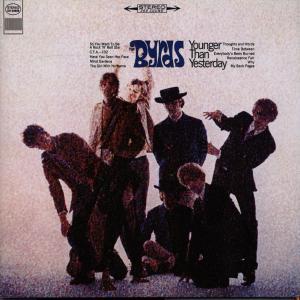
Younger Than Yesterday - The Byrds - album review
It is a trait of the music world that often bands only attain genuine critical acclaim when their records become less commercially successful. Sometimes this is genuinely down to the greater profundity of the music, but one is often left wondering what was "wrong" with the earlier work. Perhaps shifting millions of units makes something inherently suspect in the eyes of some.....
The Byrds are an example of this phenomenon. After their initial burst of success in 1965/66, their music became experimental, and therefore less appealing to the masses. These days, when serious critical study of their catalogue is conducted, the period of 1967/68 is lent most credibility.
Younger Than Yesterday was very much a transitional album. Gene Clark was no longer involved with the group, and his departure had the effect of liberating and motivating the other songwriters in the Byrds.
Certainly on this album David Crosby made some of the most concise and expressive musical statements of his whole career, the spine-tingling "Everybody's Been Burned" being the highlight.
The most surprising side-effect of the re-alignment within the Byrds was the emergence of Chris Hillman as a songwriter of real stamp, and his vocal and instrumental contributions also became more prominent. "Have You Seen Her Face" is one of the hidden gems in the Byrds entire canon, with its engrossing melody and dense guitar sound.
Younger than Yesterday is less compact and cohesive than its successor, The Notorious Byrd Brothers, or even its predecessor, Fifth Dimension, and this can leave it sounding quite dissonant in comparison. However, song-for-song it is stronger than either of those albums, and has some moments of sheer beauty and genius (in addition to the songs already mentioned, "Renaissance Fair" comes to mind).
Unlike their earlier records, this one feels like a modern rock album, with the involvement of guests and session musicians providing variety and texture. This all represented a shift away from the staid "beat group" format. Foremost among these guests was Clarence White, whose distinctive "twangy" guitar parts would become a feature of later Byrds efforts.
I know that there has been come criticism of the decision to include a cover of Bob Dylan's "My Back Pages" on this LP. Amongst the innovative and adventurous material, it sounds like a backward step. I would not disagree, but the Byrds make a fine fist of the song, and it acquires an even more wistful tone in this setting.
In keeping with the Zeitgeist, and their own musical detours, there is continuing evidence of the influence of Indian music and jazz. On the psychedelia front, only "Mind Gardens" misses the bullseye, appearing somewhat self-indulgent and pretentious. Admittedly, this was not uncommon in the music world circa 1967!
The closer on the original album, "Why", sounds more futuristic even than some of the other numbers, and tracks like this help to explain why the Byrds became so seminal a touchstone for many acts of future decades.
If you are searching for the ultimate psychedelic rock album, albeit one which retains a core of catchy and memorable songs, then Younger Than Yesterday may just be it.
Saturday, 5 February 2011
The Notorious Byrd Brothers - The Byrds
In some ways, this album was the culmination of the experimentation which characterised the Byrds' recordings since 1966, containing as it did traces of folk rock, country, psychedelia and pure pop. That it was recorded during a period when tension within the group was at its height makes its artistic merit and cohersion mildly astounding. It is probably the most enduring and accomplished work of the Byrds' career.
The album opens with the R&B influenced "Artificial Energy", one of the tracks undeniably enhanced by contributions from outside session musicians. Michael Clarke's drumming is also impressive and punchy here.
Next up is the Byrds' sublime rendition of the Carole King/Gerry Goffin standard "Goin Back". The pedal steel of Red Rhodes lends the track a mournful quality, and is tastefully blended with Roger McGuinn's trademark 12-string guitar, and keyboards. McGuinn and Chris Hillman handle the delicate harmonies beautifully, David Crosby having departed the group. The lyrics of the song perfectly capture the regretful feelings of the group members, as they reached a crossroads in their careers.
"Natural Harmony" exemplified Chris Hillman's growing confidence as a songwriter, displaying as it did few of his bluegrass and country influences. Studio effects such as phasing were employed here to complement the lyrics and melody.
The following track, "Draft Morning", must count as one of the towering moments in the Byrds' career, and was perhaps Crosby's final great contribution to the cause. Unmistakably a commentary on the evils of war, and particularly the Vietnam War then raging, what is most noticeable is the restrained delivery of both the song and its lyrics. There was no need to get "in the face" of the listener;the lyrics and sound-effects were left to do the talking.
By way of light relief, "Wasn't Born To Follow", another King/Goffin number, presaged the country-tinged direction of the Byrds' future endeavours. Embellished by the glistening guitar-picking of Clarence White, and more phasing effects, the bouncy optimism of this song balanced some of the weightier fare elsewhere on the album.
Roger McGuinn takes the lead vocal on "Get to You", a pleasant if rather bland poppy song, featuring strings and more pedal steel guitar. However, like much of the album it has a tuneful and attractive quality which is hard to dislike, and like the other tracks it blends seamlessly into the whole.
Moving on, "Change is Now" is another "Zeitgeist"-related number, although not having any writing contribution from Crosby. Once again Hillman and McGuinn rise to the occasion with their ethereal vocals, and they are underpinned by a throbbing acid-rock accompaniment, which periodically dissolves into a countrified passage.
"Old John Robertson" is another country/bluegrass flavoured song, with some classical and psychedelic bits superimposed. A whimsical tale, it serves as undemanding preparation for the finale of the LP.
"Gathering of Tribes" is quintessential Crosby, with assistance from Hillman. Unusual time-signatures, with the abrupt tempo changes so redolent of this album., reflect the experimental nature of the track.
The penultimate track on the original album, "Dolphin's Smile", can be seen as emblematic of the nascent ecological movement, a recurring theme indeed throughout this whole work. Featuring some startling sound-effects, and the Byrds' customary blend of chiming guitars and harmonies, this song has an airy feel, and the obligatory middle-eight "freak out" section.
The closing number, "Space Odyssey" is a curious blend of folk and futurism, illustrating McGuinn's preoccupation with science-fiction and the group's willingness to embrace new technology, in this case the Moog synthesizer. It is an appropriately peculiar way to conclude the album.
The CD re-release featured the unreleased and haunting Crosby composition, "Triad".
In summary, "The Notorious Byrd Brothers" concludes the first phase of the Byrds' career, not just continuing their exploration of what was often dubbed "Cosmic Cowboy" music, but also etching out its own distinct identity. It was probably less influential than some of their other albums, but as a piece of work it holds together better than anything else in their discography. It stills sound fresh and relevant to twenty-first century ears. A classic case of the whole being greater than the sum of the parts.
Subscribe to:
Posts (Atom)